You're standing in front of your gear closet, staring at a camera body, three lenses, a laptop, and a tripod — and wondering how you're supposed to fit all of it into one bag without crushing your 70-200mm. Whether you're heading to a weekend landscape shoot or navigating airport security for an overseas assignment, the camera bag you choose dictates how comfortably and safely your gear travels. It's not a glamorous purchase, but it's one of the most consequential ones you'll make as a photographer.
The camera bag market in 2026 is more competitive than ever. Brands are pushing sustainable materials, modular interiors, and quick-access designs that actually work in the field. We've tested backpacks built for multi-day expeditions, messenger bags crafted from full-grain leather, and sling bags designed for run-and-gun street shooters. The right pick depends on how much gear you carry, where you shoot, and how quickly you need to access your camera.
After weeks of real-world testing across seven leading options, we've identified the best camera bags for every shooting style and budget. From Lowepro's rugged sustainability play to Billingham's heritage craftsmanship, here's everything you need to know before you buy. If you're also looking at other photography gear upgrades, your bag choice should come first — it determines what you can actually carry into the field.

Contents
Standout Models in 2026
- #PreviewProductRating
- Bestseller No. 1
 Rating:

- Bestseller No. 2
 Rating:
 - Bestseller No. 3
 Rating:
 - Bestseller No. 4
 Rating:
 - Bestseller No. 5
 Rating:
 - Bestseller No. 6
 Rating:
 - Bestseller No. 7
 Rating:
Our Hands-On Reviews
1. Lowepro ProTactic BP 450 AW 2 — Best Overall Backpack
The Lowepro ProTactic BP 450 AW 2 is the kind of camera backpack that earns its spot in your gear rotation through sheer reliability. Built with 63 percent recycled and solution-dyed fabrics, it balances environmental responsibility with the rugged durability photographers demand. The 25-liter capacity swallows a full DSLR or mirrorless setup — think a gripped body, four to five lenses, a flash, and a 15-inch laptop — without feeling overstuffed. The CradleFit pocket suspends your laptop above the bottom of the bag, adding a layer of drop protection you'll appreciate in crowded airports and on rocky trails.
Where the ProTactic truly separates itself is the ActivZone back panel. Lowepro engineered targeted padding across three zones: shoulder blades, lumbar, and waist. During a full-day landscape shoot, the weight distribution stays balanced even when you're loaded with a 70-200mm and a tripod strapped to the side. The modular exterior is SlipLock compatible, which means you can attach additional pouches, lens cases, or water bottle holders depending on the assignment. The included all-weather cover deploys in seconds when rain rolls in — and it actually fits properly, unlike some aftermarket covers that leave the bottom exposed.
The convertible utility waist belt is a thoughtful touch. Wear it for stability during hikes, or tuck it away for urban shooting where a waist strap looks excessive. Access points on the top, sides, and rear let you grab specific lenses without removing the bag. If you're pairing this with a solid support system like the Vanguard Veo 2 tripod, the external carry system handles the extra weight gracefully.
Pros:
- Sustainable construction without sacrificing durability or weather resistance
- ActivZone back panel delivers outstanding comfort for long carries
- Modular SlipLock system lets you customize the exterior for any shoot
- All-weather cover included and properly fitted
Cons:
- At 25 liters, it's bulkier than necessary for minimal one-body-one-lens setups
- The modular attachments add cost if you want the full ecosystem
2. PGYTECH OneGo Lite 22L — Best for Urban & Travel Photographers
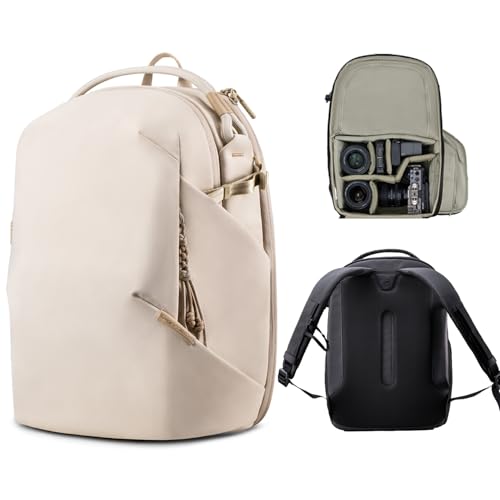
At just 3.52 pounds, the PGYTECH OneGo Lite 22L defies expectations for a bag with this much capacity. PGYTECH designed it specifically for photographers who split their time between creative shoots and daily commutes, and the result is a pack that doesn't scream "camera bag" on a crowded subway. The cream colorway is clean and modern, though it does require more vigilance against scuffs and stains than darker alternatives.
The dual quick-access system is the headline feature here. A 180-degree flip-open lid gives you full visibility into the main compartment for packing and organizing, while a dedicated side-entry panel lets you pull your camera out without swinging the bag off your shoulder. The top-opening daily-use pocket handles your wallet, keys, and phone — the essentials you need without digging past your camera gear. Removable padded dividers let you configure the interior for one body and three lenses, or strip everything out and use it as a regular day pack for non-shooting days.
The multi-storage mode versatility extends to drone shooters. A DJI Mavic-sized drone fits comfortably in the camera compartment, making this a genuine crossover bag for photographers who also fly. The 16-inch laptop sleeve sits against your back for weight distribution, and the overall silhouette stays slim enough to qualify as a personal item on most airlines. If you're a travel shooter who values weight savings and versatility above maximum gear capacity, the OneGo Lite is hard to beat in 2026.
Pros:
- Ultra-lightweight at 3.52 lbs for a 22L camera backpack
- Side-entry and top-opening access points keep gear reachable
- Converts cleanly from camera bag to everyday daypack
Cons:
- Cream color shows dirt and wear faster than darker options
- Padding is thinner than dedicated adventure packs — not ideal for rough terrain
3. Shimoda Explore v2 35 Starter Kit — Best for Landscape & Adventure
Shimoda built the Explore v2 35 for photographers who disappear into the backcountry for days at a time. This is the largest starter kit in the Explore series, and it ships with a Medium DSLR Core Unit — a modular insert that cradles your camera body and lenses in a protective shell you can lift out of the bag entirely. That modularity is Shimoda's calling card. You can swap Core Units between trips depending on whether you're packing mirrorless glass or a full DSLR rig with a vertical grip body.
The multi-access workflow sets this pack apart from competitors in the adventure category. Rear anti-theft access opens the full compartment for organized packing and gear changes at camp, while side access lets you grab a lens or body mid-hike without dropping your pack. Both access points use lockable zippers, adding real security when you set the bag down at a trailhead parking lot or hostel common room. A hidden passport pocket and luggage-handle pass-through make the transition from trail to airport seamless.
The adjustable torso height — roughly three inches of range — ensures a proper fit across different body types, which matters enormously when you're carrying 20-plus pounds over uneven terrain. Dual pockets for tripods and water bottles round out the exterior. If you're the kind of shooter chasing waterfall photography deep in national parks, the Explore v2 35 handles the punishment and keeps your gear dry. Carry-on compatibility with U.S. and select international regulations means you won't have to gate-check your livelihood.
Pros:
- Modular Core Unit system lets you reconfigure for different camera systems
- Rear and side access with lockable zippers for security
- Adjustable torso height fits a wide range of body types
- Carry-on compatible for most U.S. and international airlines
Cons:
- The starter kit price is steep — additional Core Units sold separately
- At 35 liters, it's overkill for casual day shoots
4. ONA The Brixton — Best Premium Messenger Bag
The ONA Brixton occupies a category most camera bags don't even attempt: genuine luxury. Crafted from Antique Cognac full-grain leather, this messenger bag develops a rich patina over months of use that makes it look better with age, not worse. It's the bag you carry when you want people to see a beautiful leather messenger — not a camera bag. And yet the interior is all business, with padded compartments that hold a DSLR, three lenses, and accessories without any of the telltale bulkiness that marks you as a photographer in a crowd.
The 13-inch laptop sleeve accommodates most ultrabooks, and a rear open slip-pocket fits a 10-inch tablet for quick reference to shot lists or client briefs. The brass hardware and hand-finished details put the Brixton in a completely different league from nylon bags — this is heritage craftsmanship in the tradition of brands like established leather goods makers that build products to last decades. The shoulder strap is comfortable enough for walking between locations in a city, though the single-shoulder design means this isn't the bag for all-day hikes.
If you shoot weddings, portraits, or editorial work where appearances matter, the Brixton communicates professionalism before you ever pull a camera out. It's a statement piece that happens to protect your gear. The trade-off is weight — full-grain leather is heavier than nylon or canvas — and price. This is an investment-grade accessory for photographers who treat their bag as part of their professional image.
Pros:
- Stunning full-grain leather develops character over time
- Discreet design doesn't advertise expensive camera gear
- Fits a DSLR, three lenses, 13-inch laptop, and tablet simultaneously
Cons:
- Premium price point that exceeds most camera bag budgets
- Heavier than synthetic alternatives — not built for long carries
5. Billingham Hadley Pro 2020 — Best Heritage Shoulder Bag
Billingham has been making camera bags in England since 1973, and the Hadley Pro 2020 represents the latest evolution of their most iconic design. What makes this bag special is the FibreNyte fabric — a proprietary material with a layer of butyl rubber sandwiched between woven layers for weather resistance that rivals dedicated rain covers. You can shoot in steady drizzle without worrying about moisture reaching your gear, and the fabric cleans up easily after muddy field work.
The 2020 upgrade added refinements that longtime Billingham users immediately appreciate. The removable padded insert transforms the Hadley Pro from a dedicated camera bag into a casual shoulder bag in seconds — pull the insert out, and you've got a good-looking everyday carry. With the insert in place, you get enough room for a mirrorless body with a lens attached, one or two additional lenses, and small accessories. It's not cavernous, but Billingham deliberately sized it for photographers who carry a curated kit rather than their entire collection.
The quick-release buckles are smooth and quiet — no velcro ripping sounds to announce your presence during wedding photography or documentary work. The leather trim and brass fittings echo old-world craftsmanship, and the bag comes with Billingham's reputation for lasting well beyond a decade of daily use. If you value understated quality and weather protection above tech-forward features like modular attachments, the Hadley Pro 2020 rewards your priorities.
Pros:
- FibreNyte with butyl rubber core provides exceptional weather resistance
- Removable insert converts it to a regular shoulder bag instantly
- Silent buckle closures ideal for quiet shooting environments
Cons:
- Limited capacity — struggles with large DSLR bodies and long telephoto lenses
- No dedicated laptop compartment
6. Think Tank MindShift PhotoCross 13 — Best Sling Bag
Sling bags live or die by one question: can you actually swing them around and access your gear without stopping? The Think Tank MindShift PhotoCross 13 answers with an emphatic yes. The easy-rotation design lets you slide the bag from your back to your front in one fluid motion, unzip the main compartment, and have your camera in hand within seconds. For street photographers, event shooters, and anyone who needs to react fast, this kind of access speed is non-negotiable.
The 11-liter capacity punches above its weight class. You can fit an ungripped DSLR with a 24-70mm f/2.8 attached, plus a 70-200mm f/2.8 and a wide-angle zoom — a professional three-lens kit that covers nearly every situation. Think Tank specifically tested configurations for Canon 5D Mark III, Nikon D750, and Sony A7 series bodies, so compatibility with major systems is confirmed. A dedicated interior pocket handles 13-inch laptops or tablets, padded and positioned to avoid interfering with the camera compartment.
Touch-fastened interior dividers let you reconfigure the layout on the fly, and included straps handle a jacket or compact tripod on the exterior. The Carbon Grey colorway is understated enough for urban environments while incorporating subtle reflective elements for visibility in low light. If you carry a focused kit — one body, two to three lenses — and you value speed of access above all else, the PhotoCross 13 is the right tool for the job. It pairs especially well with a set of prime lenses where you're swapping glass frequently throughout a shoot.
Pros:
- Fastest gear access of any bag in this roundup thanks to sling rotation
- Fits a full pro three-lens kit despite compact dimensions
- 13-inch laptop pocket adds workstation capability
Cons:
- Single-strap design causes shoulder fatigue on extended all-day carries
- No rain cover included — you'll need to buy one separately
7. VANGUARD Alta Sky 66 — Best for Heavy Telephoto Gear
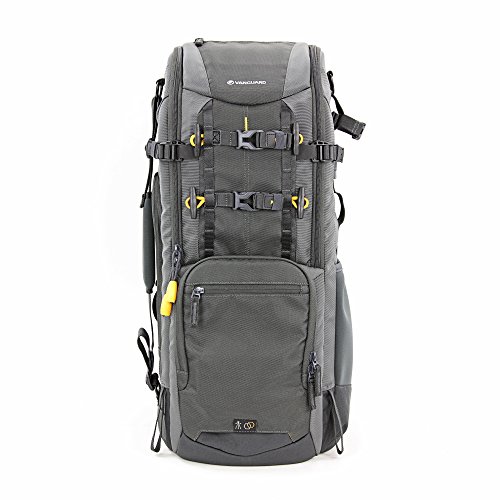
When your kit includes a 600mm f/4 super-telephoto, most camera bags are immediately disqualified. The VANGUARD Alta Sky 66 was engineered precisely for this scenario. Its flexible 100% gear to 100% personal configuration means you can dedicate the entire interior to camera equipment on a wildlife shoot, then split the space between gear and clothing for a multi-day trip. Few bags offer this kind of ratio flexibility without requiring you to buy separate inserts or modules.
The carrying system reflects serious engineering for heavy loads. An ergonomic air system back panel channels airflow to reduce sweat buildup, while the padded harness and waist belt distribute weight across your hips and shoulders. When you're carrying a gripped body with a 600mm lens attached — easily 10-plus pounds of glass and metal — this kind of load management isn't a luxury, it's a necessity. The optimal-balance tripod carrying system secures your sticks without creating a lopsided pull, which makes a meaningful difference on uneven terrain.
Access is equally well considered. Full front opening lets you see everything at once for organized packing, while top access gives you quick draws without exposing the entire compartment. Double security buckles prevent accidental opening during transport, and the bright-colored interior makes it easy to locate specific items in dim light — a small detail that wildlife photographers shooting at dawn will appreciate immediately. Large side pockets handle oversized water bottles, and a 9-inch tablet pocket covers basic review tasks in the field. For birders, wildlife photographers, and sports shooters carrying long glass, the Alta Sky 66 is built for your reality.
Pros:
- Accommodates super-telephoto lenses up to 600mm f/4 with body attached
- 100% gear to 100% personal ratio flexibility without extra inserts
- Ergonomic carry system handles very heavy loads comfortably
- Bright interior lining for easy visibility in low-light conditions
Cons:
- Too large for casual day shooting or urban photography
- The size exceeds most airline carry-on limits
Buying Guide: How to Choose the Best Camera Bag
Bag Type: Backpack vs. Messenger vs. Sling
Your shooting style should dictate the bag format you choose. Backpacks distribute weight evenly across both shoulders and are the clear choice for hiking, travel, and carrying heavy kits. They offer the most capacity but sacrifice quick access — you typically need to remove the bag to reach your gear unless the design includes side-access panels. Messenger bags keep your camera at hip level for fast draws and work beautifully in urban environments, but they load one shoulder unevenly, which becomes painful over long sessions. Sling bags split the difference — they ride on one strap but rotate to your front for quick access, making them ideal for street photography and events where speed matters.
Capacity and Gear Compatibility
Start by listing the gear you actually carry on a typical shoot — not your dream kit, your real one. If you shoot with one body and two primes, a 22-liter backpack or a compact messenger handles that comfortably. If you carry a gripped body, a trinity of f/2.8 zooms, a flash, and a laptop, you need 30-plus liters. Wildlife and sports photographers packing super-telephoto lenses should look specifically at bags like the Alta Sky 66 that are explicitly designed for long glass. Buying too large wastes weight and bulk on padding you don't need. Buying too small forces dangerous compromises like removing lens hoods or skipping a rain cover.
Weather Protection and Durability
If you shoot outdoors regularly, weather protection is a requirement, not a feature. Look for bags with integrated rain covers (like the Lowepro ProTactic's all-weather cover) or inherently waterproof materials (like Billingham's butyl rubber-lined FibreNyte). Zippers should be water-resistant or covered by storm flaps. The fabric itself matters too — recycled nylon and solution-dyed polyester resist abrasion and UV degradation better than untreated canvas. Bottom panels should be reinforced, since that's where your bag contacts wet ground, rocky surfaces, and airport carousel belts.
Comfort and Ergonomics
A camera bag loaded with gear can easily weigh 15 to 25 pounds. At that weight, the difference between a well-designed harness and a basic strap system is the difference between shooting all day and quitting after three hours. Look for contoured shoulder straps, padded hip belts that transfer load to your pelvis, and ventilated back panels that manage heat. Adjustable torso length (available on bags like the Shimoda Explore v2) ensures the weight sits on your hips rather than pulling backward on your shoulders. Test comfort with your actual gear weight, not an empty bag — a bag that feels perfect in the store can fail completely under load.
Common Questions
What size camera bag do I need for a mirrorless camera setup?
For a typical mirrorless setup with one body and two to three lenses, a bag in the 15 to 25 liter range works well. Mirrorless bodies and lenses are generally more compact than their DSLR equivalents, so you can often step down one size category. A bag like the PGYTECH OneGo Lite 22L comfortably holds a mirrorless body with three lenses plus a 16-inch laptop. If you only carry a body and one or two primes, a sling bag like the PhotoCross 13 provides enough room with faster access.
Are expensive camera bags worth the investment?
Yes, with a caveat. A well-built camera bag protects thousands of dollars in equipment, and premium materials last significantly longer than budget alternatives. Bags from Billingham, ONA, and Shimoda routinely survive a decade or more of professional use, while cheap bags often need replacing every one to two years. The real calculation is cost per year of ownership. A $300 bag that lasts 10 years costs $30 per year — less than a single lens repair from a bag failure. Invest in quality construction, and the math works in your favor.
Can I use a camera backpack as airplane carry-on luggage?
Most camera backpacks under 35 liters qualify as carry-on luggage on major U.S. airlines. The Shimoda Explore v2 35 is specifically designed for carry-on compatibility. However, international carriers and budget airlines often have stricter size and weight limits. Always check your airline's specific dimensions before flying, and consider bags that also fit under the seat as a personal item for maximum security — you never want your camera gear gate-checked into the cargo hold.
How do I protect my camera bag from rain?
The best protection is a bag with an integrated rain cover, like the Lowepro ProTactic BP 450 AW 2. These covers are sized specifically for the bag and deploy quickly. If your bag lacks a built-in cover, purchase an aftermarket cover sized to your specific bag — generic covers often leave gaps. Bags with inherently waterproof materials, like the Billingham Hadley Pro's butyl rubber-lined fabric, offer passive protection without needing a cover at all. In heavy downpours, consider lining the interior with a dry bag as an additional layer of security.
Should I choose a backpack or messenger bag for street photography?
For pure street photography, a messenger bag or sling bag gives you faster access than a backpack. You can swing the bag to your front and have your camera in hand within two to three seconds, compared to the five to ten seconds it takes to remove and open a backpack. The Think Tank PhotoCross 13 and ONA Brixton both excel in this role. However, if your street sessions extend to full-day walks covering significant distances, the even weight distribution of a backpack reduces fatigue. Your decision should prioritize shooting duration and the amount of gear you carry.
How often should I replace my camera bag?
Replace your camera bag when you notice compromised padding (foam that no longer springs back), broken or weakened zippers, frayed stitching at stress points, or delaminating waterproof coatings. A quality bag from the brands in this roundup should last five to fifteen years with proper care. Clean your bag periodically, avoid storing it compressed for long periods, and re-proof water-resistant fabrics annually with a spray-on DWR treatment. If the interior dividers lose their rigidity, you can often purchase replacement dividers rather than replacing the entire bag.
Buy on Walmart
- Lowepro ProTactic BP 450 AW 2 Pro 25L Comfortable Recycled a — Walmart Link
- PGYTECH OneGo Lite 22L Camera Backpack DSLR/Mirrorless Bag f — Walmart Link
- Shimoda Explore v2 35 Starter Kit (w/Medium DSLR Core Unit), — Walmart Link
- ONA - The Brixton - Camera Messenger Bag - Antique Cognac Le — Walmart Link
- Billingham Hadley Pro 2020 Camera Bag (Black Fibrenyte/Black — Walmart Link
- Think Tank MindShift PhotoCross 13 Sling Bag for DSLR and Mi — Walmart Link
- VANGUARD Alta Sky 66 Camera Backpack for Sony, Nikon, Canon — Walmart Link
Buy on eBay
- Lowepro ProTactic BP 450 AW 2 Pro 25L Comfortable Recycled a — eBay Link
- PGYTECH OneGo Lite 22L Camera Backpack DSLR/Mirrorless Bag f — eBay Link
- Shimoda Explore v2 35 Starter Kit (w/Medium DSLR Core Unit), — eBay Link
- ONA - The Brixton - Camera Messenger Bag - Antique Cognac Le — eBay Link
- Billingham Hadley Pro 2020 Camera Bag (Black Fibrenyte/Black — eBay Link
- Think Tank MindShift PhotoCross 13 Sling Bag for DSLR and Mi — eBay Link
- VANGUARD Alta Sky 66 Camera Backpack for Sony, Nikon, Canon — eBay Link
Key Takeaways
- The Lowepro ProTactic BP 450 AW 2 delivers the best all-around performance with sustainable materials, modular design, and outstanding comfort for full-day carries.
- Travel and urban photographers should prioritize the PGYTECH OneGo Lite 22L for its ultra-light weight and seamless conversion between camera bag and daily pack.
- For adventure and landscape shooters who need rugged carry-on-compatible protection, the Shimoda Explore v2 35 with its modular Core Unit system is the clear choice.
- If fast gear access trumps everything else, the Think Tank MindShift PhotoCross 13 sling bag gets your camera in hand faster than any backpack or messenger on this list.
 |
 |
 |
 |

About Alex W.
Alex is a landscape, equine, and pet photographer based in the Lake District, UK, with years of experience shooting in one of Britain's most photographically demanding natural environments. His work has been featured in Take a View Landscape Photographer of the Year, Outdoor Photographer of the Year, and Amateur Photographer Magazine — publications that reflect a serious, competitive standard of image-making. At Click and Learn Photography, he shares the camera settings, gear choices, and compositional techniques he has developed through real-world shooting and competition-level work.
You can Get FREE Gifts. Furthermore, Free Items here. Disable Ad Blocker to receive them all.
Once done, hit anything below
|
|
|
|