Leading Lines – How Can They Improve Your Photography Composition?
by Alex W.
What separates a snapshot from a photograph that holds someone's attention? More often than not, the answer lies in how the viewer's eye moves through the frame. Leading lines photography composition is one of the most powerful techniques our team relies on to transform flat, forgettable images into compelling visual stories. These lines — whether roads, fences, rivers, or shadows — act as visual pathways that guide the viewer exactly where we want them to look. For anyone looking to build on the fundamentals covered in our beginner's guide to photography composition, mastering leading lines is the logical next step.
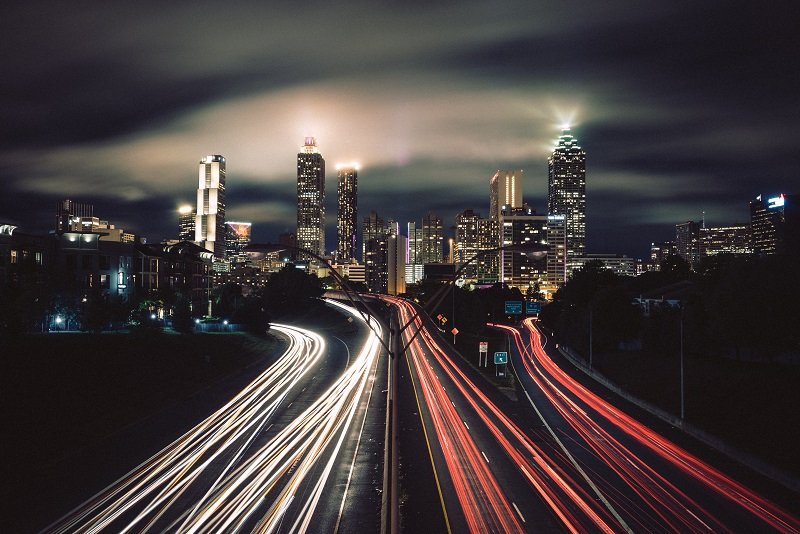
Notice how the eye is drawn to the skyscrapers in the distance, following the lines created by the light trails from passing cars.
The beauty of leading lines is their versatility. They appear in every genre — landscapes, street photography, architecture, and even night and astrophotography. Our team has found that once photographers train their eye to spot these lines, composition decisions become almost instinctive. The trick is knowing which types of lines work best in different situations, how to position them within the frame, and when they actually hurt an image rather than help it.
This guide breaks down everything our team has learned about using leading lines effectively. We cover the different types of lines, the mistakes that trip up most photographers, practical techniques for every skill level, and the situations where leading lines should be avoided entirely.
Contents
Types of Leading Lines and How They Work
Not all leading lines behave the same way. The direction, shape, and placement of a line within the frame determine the emotional response it creates and where the viewer's eye travels. Understanding these distinctions is fundamental to using leading lines photography composition with intention rather than accident.
Straight and Diagonal Lines
Horizontal lines convey calm and stability — think of a horizon across a lake. Vertical lines suggest strength and grandeur, like towering trees or columns. But diagonal lines are where the energy lives. A line running from one corner toward the opposite creates dynamic tension and movement. Our team almost always prefers diagonal placement because it forces the eye to travel the longest possible path through the frame, keeping the viewer engaged longer.
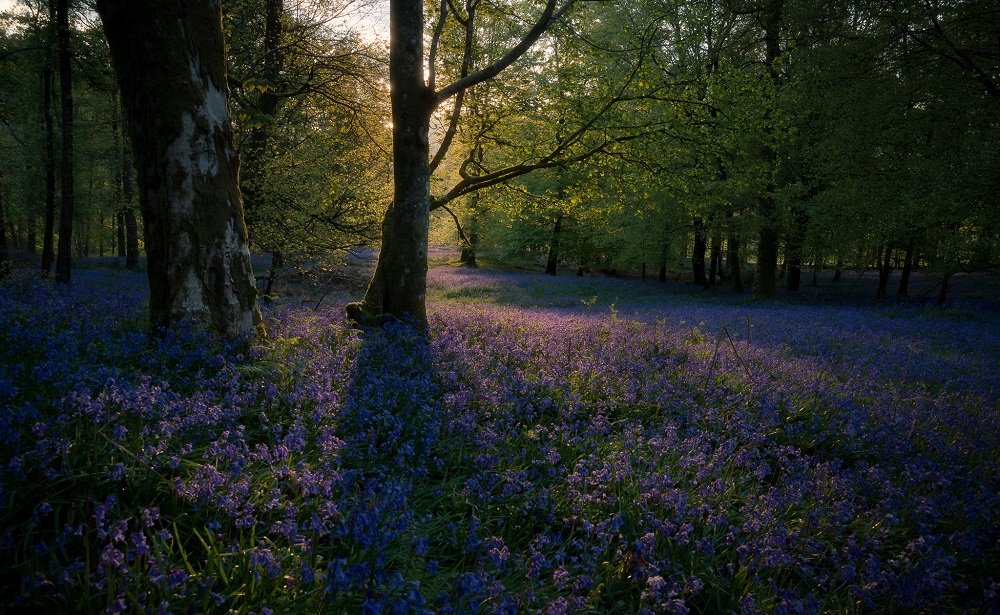
Leading lines don't have to be railway tracks or roads – They can be as subtle as the way a shadow falls on the ground to create a difference in tonality.
Shadows, fence lines, and even cracks in pavement all qualify as straight leading lines. The key is that the line needs to start somewhere logical — ideally near the edge or corner of the frame — and point toward the subject or a strong area of interest.
Curved and S-Shaped Lines
Curved lines slow the viewer down. Where a straight diagonal rushes the eye forward, a winding path or river bend creates a gentler, more exploratory journey through the image. S-curves are particularly effective because they mimic natural forms — the human eye finds S-shapes inherently pleasing. Winding roads, meandering streams, and rolling sand dunes all produce this effect.
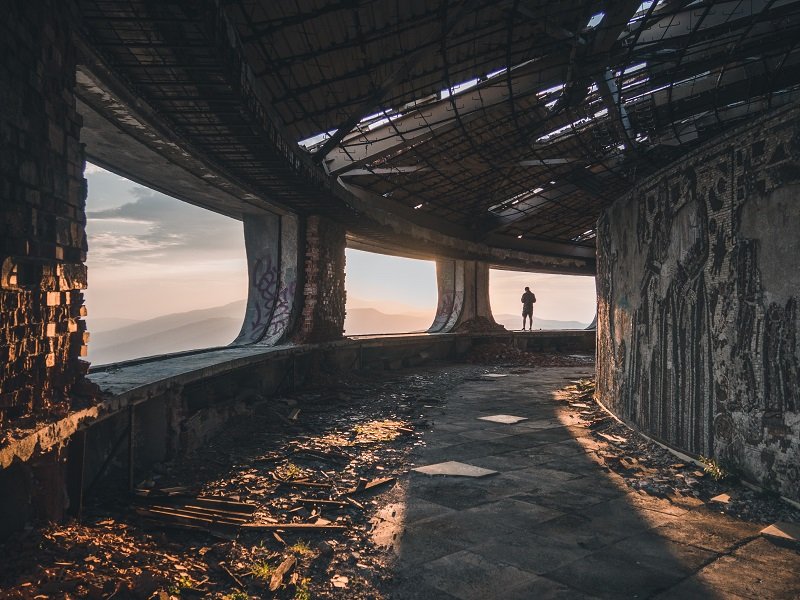
The sides of this curving pathway are converging, drawing the eye towards the lone figure that is the main subject and greatly enhancing the sense of depth to the image.
Converging Lines
When two or more lines move toward a single point — a vanishing point — the result is a powerful sense of depth and three-dimensionality. Railway tracks are the classic example, but converging lines appear everywhere: rows of trees, building edges, bridge railings, even furrows in a ploughed field. Our team considers converging lines the strongest type for creating depth in an otherwise flat medium.
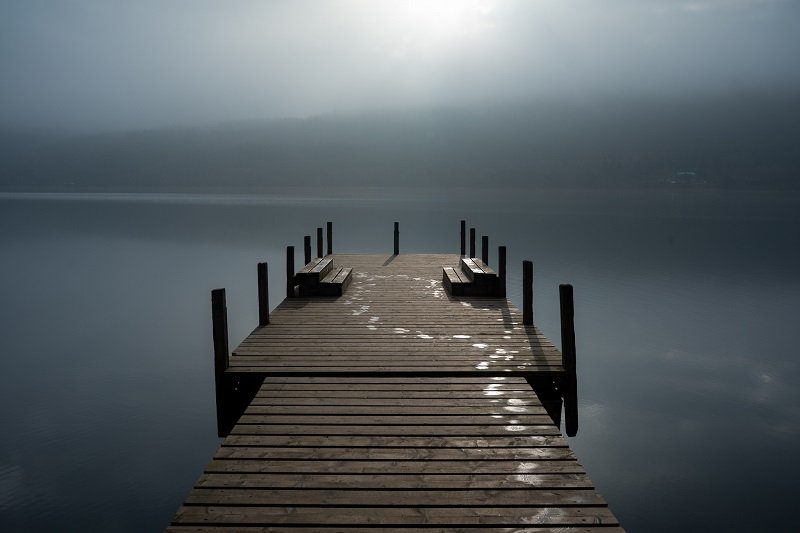
Converging lines don't have to go all the way to a single point – Just having two lines drawing closer to one another works very well.
| Line Type | Emotional Effect | Best Used For | Common Examples |
|---|---|---|---|
| Horizontal | Calm, stability | Landscapes, seascapes | Horizons, shorelines, fences |
| Vertical | Strength, grandeur | Architecture, forests | Columns, trees, buildings |
| Diagonal | Energy, movement | Action, street, dynamic scenes | Roads, staircases, shadows |
| Curved / S-Shape | Grace, exploration | Landscapes, nature | Rivers, paths, dunes |
| Converging | Depth, perspective | Architecture, railways, piers | Tracks, bridges, corridors |
Mistakes That Weaken Leading Line Composition
Leading lines can backfire spectacularly when used carelessly. Our team has reviewed thousands of portfolio images, and these are the errors that appear most often.
Lines That Lead to Nothing
The single biggest mistake is including a strong line that leads the viewer's eye to an empty, uninteresting part of the frame. A road that runs off the edge of the image without reaching a subject, or a fence that points straight into a blown-out sky — these lines create tension without payoff. Every leading line needs a destination. If there is no subject or visual reward at the end of the line, the composition feels incomplete and the viewer's eye wanders aimlessly.
Competing and Contradictory Lines
Another common problem is having multiple lines pulling the eye in different directions. A scene might have a strong diagonal running left-to-right while a second line cuts right-to-left. Instead of guiding the viewer, the composition creates confusion. The solution is to simplify. Our team recommends either moving to eliminate one of the competing elements or choosing a focal length and angle that reduces one line's dominance. When multiple lines are present, they should ideally converge or at least move in complementary directions.
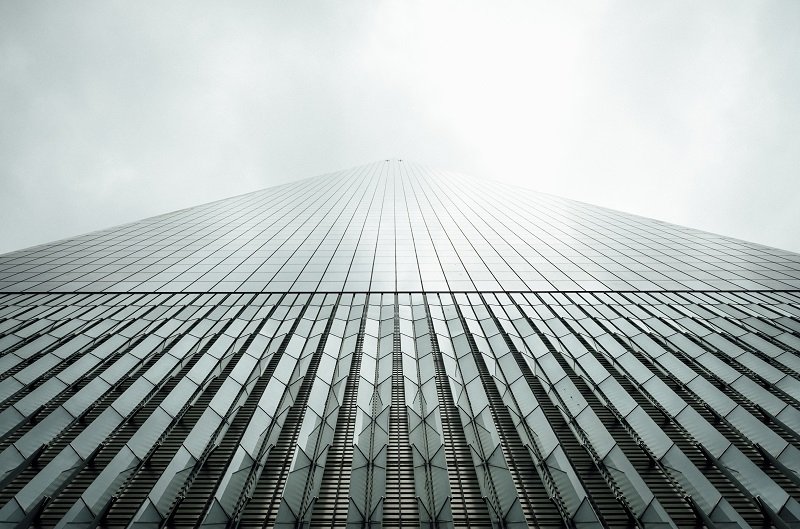
Leading lines aren't just the domain of the landscape photographer – They're everywhere in cities and towns!
A less obvious mistake is centering the line dead in the middle of the frame. While symmetry works in certain architectural shots, most compositions benefit from placing the line's entry point off-centre, ideally in the lower-left or lower-right corner. This creates a more natural visual flow that aligns with how most people scan an image.
From First Attempts to Advanced Techniques
Leading lines photography composition scales beautifully from beginner exercises to sophisticated multi-layered compositions. The fundamental principles stay the same — the execution becomes more refined.
Foundation Skills
Anyone just starting out should focus on finding obvious, unmistakable lines. Roads, paths, railways, and fences are ideal practice subjects because the lines are literal and impossible to miss. The goal at this stage is to build awareness. Before pressing the shutter, most beginners benefit from asking one simple question: where does this line lead? If the answer is "nowhere interesting," it is time to reposition.
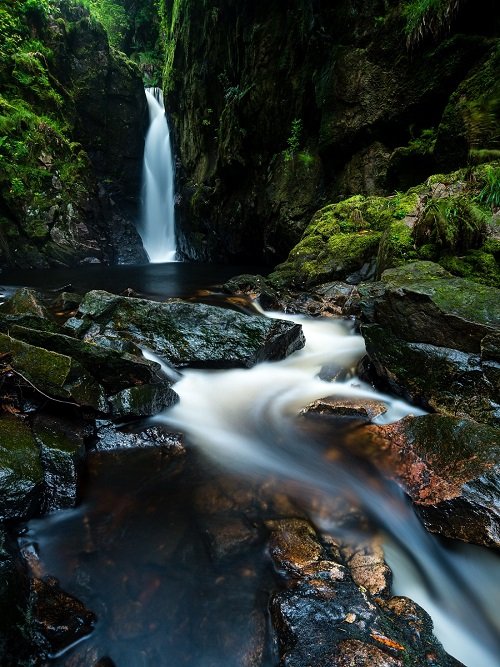
Leading lines often work very effectively when they begin from the bottom corner of your frame.
Our team recommends starting with wide-angle lenses (16–35mm) because they exaggerate perspective and make leading lines more dramatic. A wider field of view also makes it easier to include both the line's origin point and its destination in a single frame.
Advanced Approaches
More experienced photographers can start working with implied lines — edges of light and shadow, the direction of a person's gaze, or the alignment of objects that the brain connects subconsciously. These aren't physical lines at all, but the viewer's eye follows them just the same. Implied lines are what separate technically competent composition from truly compelling visual storytelling.
Layering multiple leading lines is another advanced technique. A foreground line draws the eye in, a mid-ground line continues the journey, and a background element provides the destination. This creates what our team calls "compositional stacking" — each layer reinforces the others, resulting in images with remarkable depth and visual complexity.
Proven Techniques for Stronger Compositions
Theory only goes so far. These are the practical, field-tested techniques our team uses consistently to strengthen leading line compositions.
Camera Position and Perspective
Camera height changes everything. Getting low to the ground exaggerates converging lines dramatically — a technique that works brilliantly for roads, paths, and any ground-level leading element. Our team keeps this simple: if the leading line is on the ground, the camera should be close to the ground too.
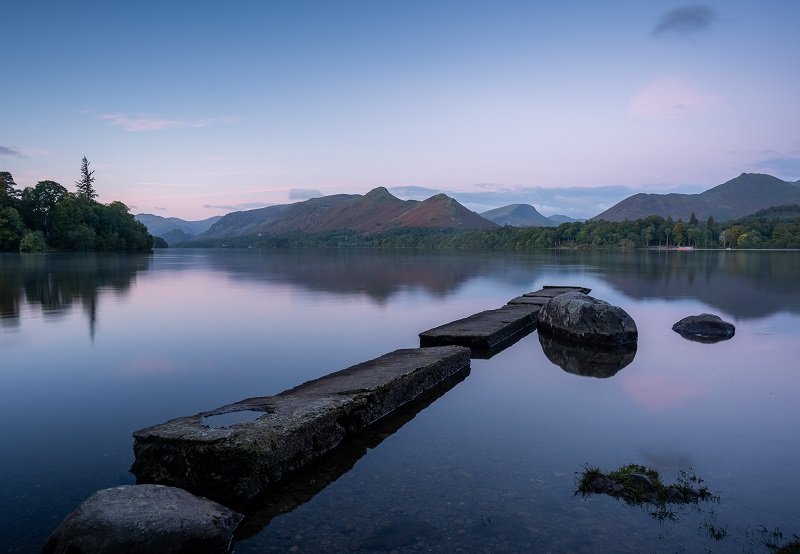
Elevation works in the opposite way. Shooting from above — a bridge, a hillside, or even just standing on a bench — reveals lines that are invisible from eye level. Rivers winding through valleys, paths through parks, and road patterns all become more apparent from an elevated vantage point.
Moving laterally matters just as much. A step or two to the left or right can transform a cluttered scene into one with a clean, unobstructed line. Our team always takes a few extra seconds to explore slight positional shifts before committing to a composition.
Combining Leading Lines with Other Rules
Leading lines work best when combined with other compositional principles. Placing the subject where a leading line intersects a rule-of-thirds gridline creates an especially strong anchor point. Similarly, using a leading line that originates from the foreground and terminates at a subject framed with negative space produces a clean, focused result.
Pairing leading lines with framing elements — doorways, arches, overhanging branches — adds another layer of compositional strength. The frame contains the viewer's eye while the line guides it. This combination is particularly effective in cityscape photography, where architectural elements naturally provide both frames and lines.
Finding and Refining Lines in the Field
The difference between a photographer who occasionally uses leading lines and one who uses them consistently comes down to practice and awareness. Lines are everywhere — the challenge is recognising them in real time.
Natural Environments
Nature rarely offers perfectly straight lines, and that is an advantage. Riverbeds, fallen logs, rock formations, tree branches, and shorelines all create organic leading lines that feel authentic rather than forced. In landscape work, our team looks for lines created by terrain changes — the edge where grass meets gravel, the ridge of a hillside, or the boundary between light and shadow during golden hour.
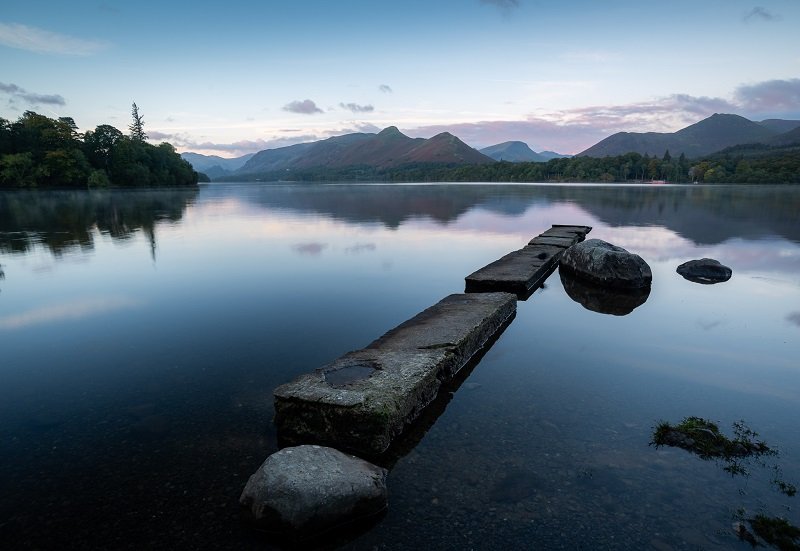
Water is one of the most versatile leading line sources in nature. A stream running through a forest, waves retreating from a beach, or the still reflection of a mountain range — water draws the eye naturally and adds movement to a composition even in a still photograph.
Urban and Man-Made Environments
Cities are a goldmine for leading lines. Pavements, tram tracks, rows of streetlights, building edges, and even the painted markings on roads all serve as compositional guides. The geometric precision of man-made structures means urban leading lines tend to be cleaner and more defined than their natural counterparts.
- Architecture: Corridors, staircases, escalators, and colonnades provide converging lines with built-in vanishing points
- Infrastructure: Bridges, railway platforms, and tunnels offer strong symmetrical compositions
- Street elements: Kerb lines, shadows cast by buildings, and rows of parked vehicles create subtle but effective diagonal lines
Our team finds that shooting urban leading lines during early morning or late evening dramatically improves results. Long shadows add secondary lines, and reduced foot traffic means cleaner compositions without distracting elements.
When Leading Lines Help and When They Hurt
Leading lines are not a universal solution. Knowing when to use them — and when to deliberately leave them out — is the mark of a mature compositional eye.
Ideal Scenarios
Leading lines deliver the most value when a scene has clear depth and a defined subject. Landscapes with a strong foreground-to-background relationship, architectural interiors with vanishing points, and street scenes with natural pathways are all ideal candidates. They also work beautifully when the goal is to direct attention to a small or easily overlooked subject. A lone figure at the end of a pier, a lighthouse at the terminus of a jetty, or a mountain peak sitting at the convergence of valley walls — in each case, the line amplifies the subject's presence.
When to Leave Them Out
Sometimes a scene's strength lies in chaos, texture, or pattern rather than directed flow. Abstract compositions, macro photography, and many portrait situations do not benefit from leading lines. Forcing a line into a composition where it does not naturally exist often produces awkward, contrived results. Our team is blunt about this: a forced leading line is worse than no leading line at all.
Minimalist compositions can also suffer from leading lines. When the power of an image comes from vast empty space and a solitary subject, a strong line can undermine the sense of isolation. Similarly, in documentary or photojournalist work, prioritising compositional rules over authentic moment-capture is almost always the wrong call. As explored in our piece on when to break the photography rules, knowing when to abandon a technique is just as important as mastering it.
Frequently Asked Questions
What exactly are leading lines in photography?
Leading lines are any visual elements within a photograph — roads, rivers, fences, shadows, architectural edges — that guide the viewer's eye through the frame toward a subject or point of interest. They are a compositional tool, not a specific type of line.
Do leading lines have to be straight?
Not at all. Curved lines, S-shapes, and even zigzag patterns all function as leading lines. Curved lines tend to create a gentler, more leisurely visual journey, while straight diagonals produce a stronger sense of energy and direction.
Where should a leading line start in the frame?
The most effective placement is typically from a corner or edge of the frame, particularly the bottom corners. Starting a line at the bottom-left or bottom-right corner creates a natural entry point that draws the viewer into the scene progressively.
Can leading lines work in portrait photography?
Absolutely, though the approach is more subtle. Architectural elements, fences, pathways, and even the lines created by arms or posture can direct attention toward the subject's face. The key is ensuring the line supports the portrait rather than competing with it.
What is the difference between leading lines and converging lines?
Converging lines are a specific type of leading line where two or more lines move toward a single vanishing point. All converging lines are leading lines, but not all leading lines converge — a single diagonal road across the frame is a leading line without convergence.
Which lens focal length works best for leading lines?
Wide-angle lenses (14–35mm) exaggerate perspective and make leading lines more dramatic, which is why our team prefers them for this technique. However, telephoto lenses can compress leading lines in interesting ways, stacking elements closer together for a different effect.
How do leading lines relate to the rule of thirds?
They complement each other perfectly. Placing the subject where a leading line intersects a rule-of-thirds gridline creates a doubly strong focal point. Many experienced photographers use leading lines as the path and rule-of-thirds placement as the destination.
Can a photograph have too many leading lines?
Yes. Multiple lines pulling in different directions create visual confusion rather than guidance. If a scene contains competing lines, it is best to simplify by changing position, adjusting focal length, or choosing an angle that eliminates or subordinates the weaker lines.
Final Thoughts
Leading lines photography composition is one of those rare techniques that is simple to understand yet endlessly rewarding to master. Our team's strongest recommendation is this: grab a camera, head outside, and spend an hour photographing nothing but lines — roads, shadows, fences, rivers, anything that draws the eye forward. Shoot each scene from at least three different angles and heights, then review the results side by side. That single exercise will do more for compositional instincts than any amount of reading ever could.
 |
 |
 |
 |

About Alex W.
Alex is a landscape, equine, and pet photographer based in the Lake District, UK, with years of experience shooting in one of Britain's most photographically demanding natural environments. His work has been featured in Take a View Landscape Photographer of the Year, Outdoor Photographer of the Year, and Amateur Photographer Magazine — publications that reflect a serious, competitive standard of image-making. At Click and Learn Photography, he shares the camera settings, gear choices, and compositional techniques he has developed through real-world shooting and competition-level work.
You can Get FREE Gifts. Furthermore, Free Items here. Disable Ad Blocker to receive them all.
Once done, hit anything below
|
|
|
|