Last autumn, our team spent three days in the Lake District chasing a single shot of morning mist rolling over Buttermere. We came home with hundreds of frames — and exactly one keeper. That experience reinforced something we've learned over years of fieldwork: great landscape photography rarely happens by accident. It demands preparation, patience, and a handful of reliable landscape photography tips and tricks that separate a forgettable snapshot from a frame worth printing. Whether someone is just picking up a camera or has been shooting for decades, the fundamentals covered in our ultimate guides always apply — and this post distills the most impactful ones into a single resource.
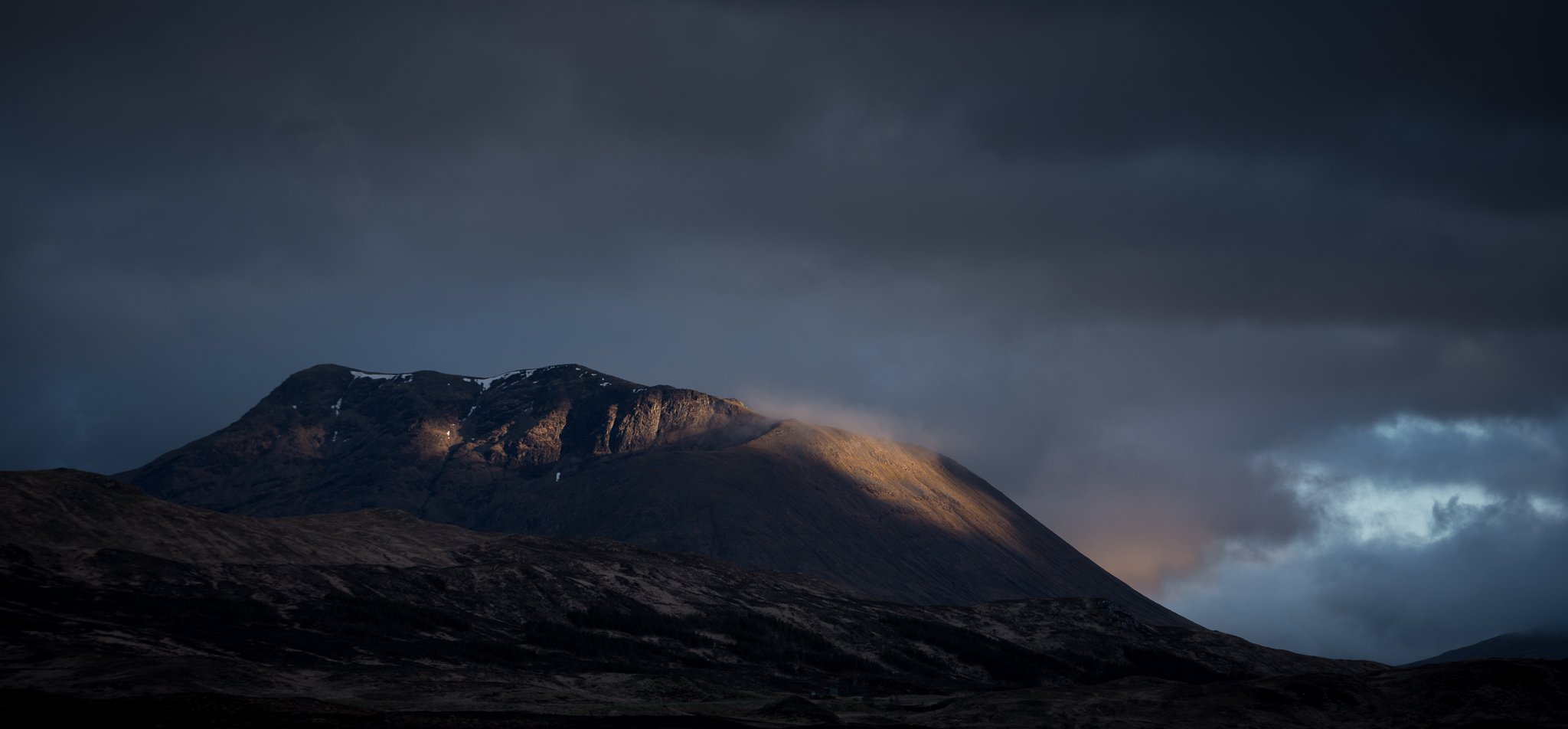
The difference between a flat, lifeless landscape image and one that stops a viewer mid-scroll often comes down to a few deliberate decisions made before the shutter fires. Composition, light, and timing matter far more than megapixel counts or lens price tags. Our team has refined these principles across countless shoots in environments ranging from coastal cliffs to alpine meadows, and the patterns are remarkably consistent.
What follows is a comprehensive walkthrough of everything that consistently elevates landscape work — from planning and gear choices to post-processing and field troubleshooting. Each section builds on the last, so reading straight through gives the clearest picture, but anyone can jump to the section most relevant to their current sticking point.
Contents
- How to Plan a Landscape Shoot from Start to Finish
- Understanding Light and Its Role in Landscape Images
- Gear and Budget: What Every Landscape Photographer Actually Needs
- Five Mistakes That Ruin Otherwise Great Landscape Shots
- Landscape Photography Tips and Tricks for Every Environment
- Troubleshooting Flat, Lifeless Images in the Field
- From Beginner Snapshots to Advanced Compositions
How to Plan a Landscape Shoot from Start to Finish
Spontaneous shooting has its charm, but our most successful landscape images almost always trace back to deliberate planning. Knowing where the sun rises, what the weather will do, and which foreground elements are available at a location eliminates guesswork and maximizes the odds of coming away with strong frames.
Scouting Locations and Checking Conditions
Before packing any gear, our team researches a location thoroughly. Apps like PhotoPills and The Photographer's Ephemeris reveal sun and moon positions for any date and GPS coordinate. Satellite imagery on Google Earth helps identify foreground candidates — rock formations, leading lines from rivers, or tree clusters that could anchor a composition. Checking tide tables matters for coastal work, and avalanche forecasts are non-negotiable in mountain terrain during winter months.
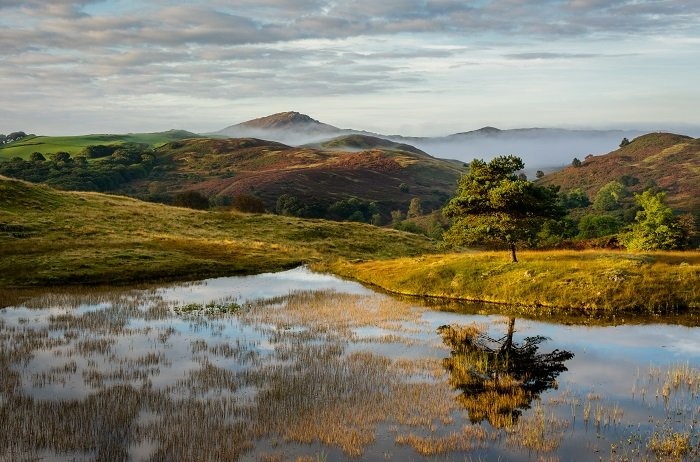
We also recommend arriving at a location well ahead of the intended shooting window. Walking the terrain in flat midday light reveals angles that look entirely different once golden hour hits. Anyone who has visited the best landscape photography locations in the UK knows that the most iconic viewpoints get crowded fast — arriving early secures the best tripod positions.
Timing the Light
Light is the single biggest variable in landscape photography. Our team sets alarms for well before sunrise and stays past sunset without exception. The fifteen minutes surrounding sunrise and sunset produce the most dramatic colour shifts, and missing that window by even five minutes can mean the difference between a publishable image and a mediocre one. Planning apps remove the guesswork entirely — trust the data, not gut feeling.
Understanding Light and Its Role in Landscape Images
Every landscape photography tutorial mentions light, but few explain why certain lighting conditions create emotional responses in viewers. The science is straightforward: low-angle light produces long shadows that reveal texture and depth, while the colour temperature shifts from warm amber to cool blue as the sun moves below the horizon. Understanding this transforms light from a happy accident into a tool.
Golden Hour vs Blue Hour
The golden hour — roughly the first and last hour of sunlight each day — bathes landscapes in warm, directional light with soft shadows. Blue hour follows sunset (or precedes sunrise) and offers cooler, more ethereal tones that suit moody compositions. Our team tends to favour blue hour for seascapes and golden hour for rolling terrain, though both windows are worth shooting in any environment.
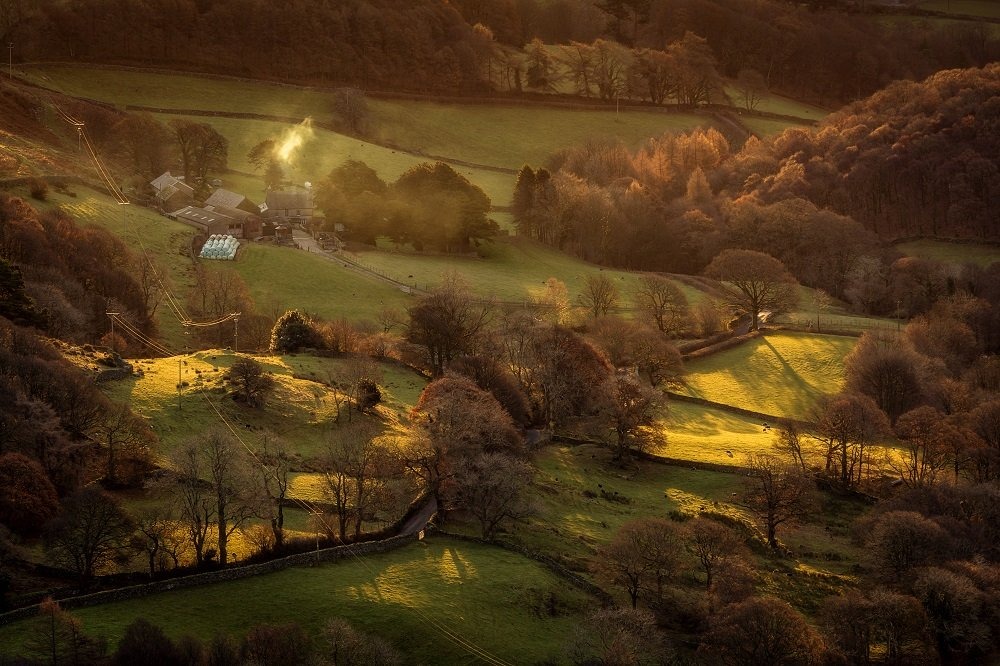
Harsh midday sun is not wasted time — use it to scout compositions and mark tripod positions so everything is dialled in when the light turns.
Working with Overcast Skies
Overcast conditions are not a reason to stay home. Cloud cover acts as a giant softbox, eliminating harsh shadows and producing even illumination that suits intimate woodland scenes, waterfalls, and macro details. Our team has produced some of its strongest portfolio images under thick grey skies. The key is to exclude featureless white sky from the frame and focus on mid-ground and foreground subjects instead. Long exposures that blur moving clouds into streaks can also salvage an otherwise flat sky.
Gear and Budget: What Every Landscape Photographer Actually Needs
Gear conversations tend to spiral into expensive wish lists, but effective landscape photography requires surprisingly little. Our team has broken down the essentials by budget tier so that anyone can identify where to invest first and where diminishing returns set in.
Essential Kit at Every Price Point
| Budget Tier | Camera Body | Lens | Tripod | Approx. Total |
|---|---|---|---|---|
| Entry (~$500) | Used APS-C DSLR (Canon T7, Nikon D3500) | Kit 18-55mm | Aluminium travel tripod | $400–600 |
| Mid-Range (~$1,500) | Mirrorless APS-C (Fujifilm X-T30, Sony a6400) | 16-55mm f/2.8 or equivalent | Carbon fibre mid-range | $1,200–1,800 |
| Advanced (~$3,500+) | Full-frame mirrorless (Sony A7 IV, Nikon Z6 III) | 14-24mm f/2.8 + 24-70mm f/2.8 | Premium carbon (Gitzo, RRS) | $3,500–5,000+ |
A solid tripod matters more than most people realise. It enables long exposures, ensures sharp images at low ISO, and forces a slower, more deliberate shooting process. Our recommendation is always to invest in the best tripod the budget allows — bodies and lenses get replaced, but a quality tripod lasts decades.
Filters That Make a Real Difference
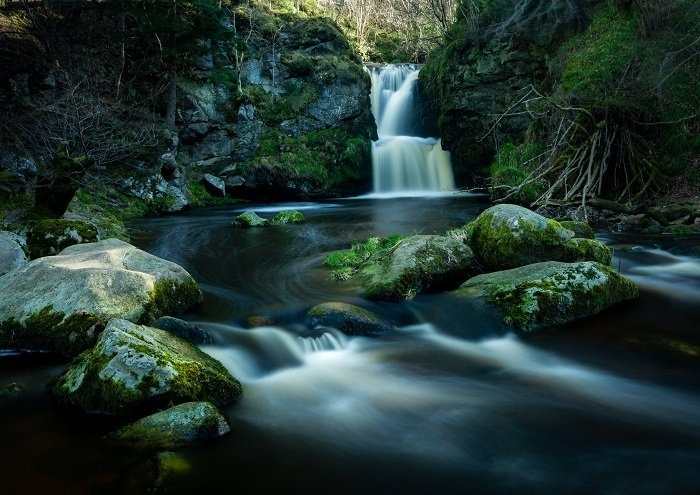
Three filters earn a permanent spot in our kit. A circular polariser cuts glare from water and wet foliage while boosting sky contrast. A 6-stop or 10-stop ND filter enables long exposures in daylight — essential for silky water effects. And a graduated ND filter balances bright skies against darker foregrounds without resorting to heavy-handed HDR blending. Everything else is optional and situational.
Five Mistakes That Ruin Otherwise Great Landscape Shots
Our team reviews thousands of landscape images annually across workshops and portfolio reviews. The same errors appear over and over, and most are entirely preventable with a bit of awareness.
Crooked Horizons and Sloppy Framing
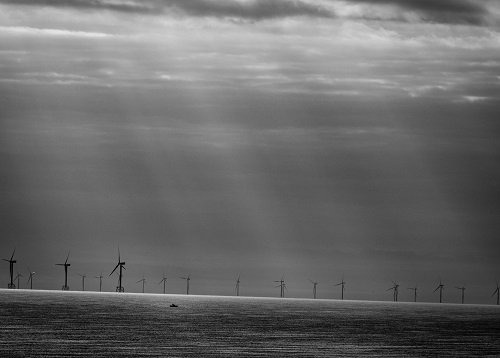
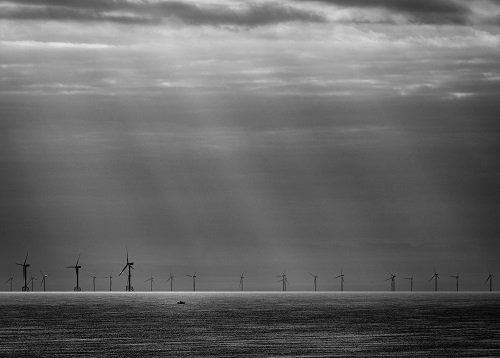
A horizon tilted by even one degree creates a subconscious sense of unease that undermines an otherwise strong image. Most cameras have a built-in electronic level — turning it on costs nothing and solves the problem instantly. Beyond the horizon, sloppy framing that includes distracting edge elements is the next most common compositional failure. Our team always scans the edges of the viewfinder before firing the shutter. Anyone unfamiliar with the fundamentals of framing should study the rule of thirds as a starting point — it remains one of the most reliable composition frameworks in landscape work.
Overprocessing in Post
Over-saturated skies, aggressive HDR halos, and cranked clarity sliders are hallmarks of over-edited landscape work. Our editing philosophy is simple: if the processing is noticeable, it has gone too far. Subtle adjustments to contrast, white balance, and local luminosity masks produce far more natural and timeless results. The goal is to enhance what was already there, not to fabricate a scene that never existed.
- Saturation: Keep global adjustments under +15; use targeted HSL shifts instead for specific colour channels.
- Sharpening: Apply at export, not during raw development — and always at output resolution, not at 100% crop.
- Sky replacement: Our team avoids it entirely. If the sky was boring, the composition should have been adjusted in the field.
Landscape Photography Tips and Tricks for Every Environment
Different environments demand different approaches. The camera settings, composition strategies, and safety considerations for a windswept beach differ markedly from those for a high-altitude ridge. Our team adapts the core principles to suit the terrain rather than applying a one-size-fits-all formula.
Coastal and Waterfront Scenes
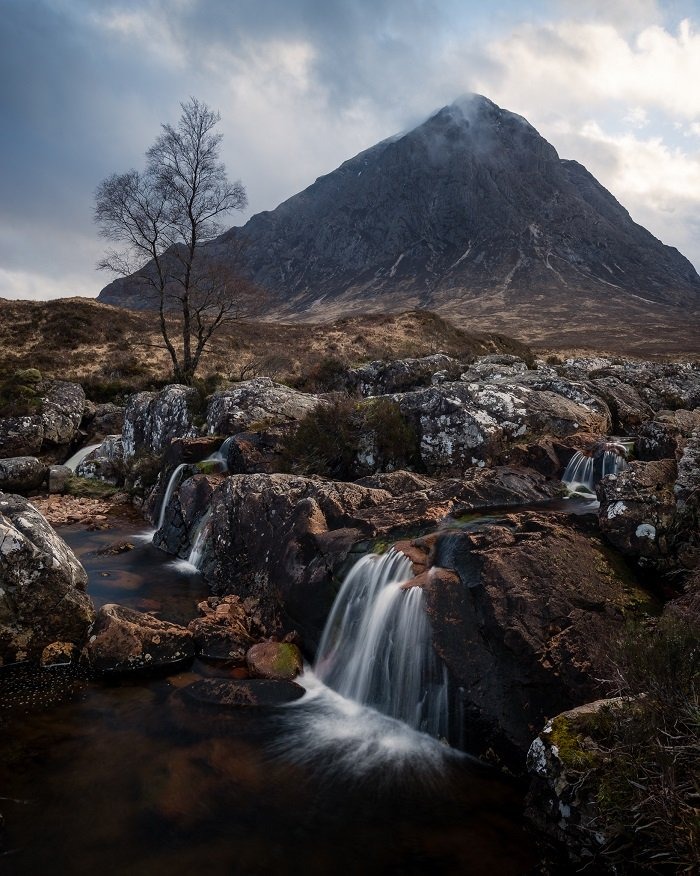
Water introduces motion, and motion introduces creative choices. A fast shutter speed (1/500s or higher) freezes wave crests and spray, revealing raw power and texture. A slow shutter speed (0.5–30 seconds) smooths water into a glassy or misty surface that contrasts with sharp rocks and cliffs. Both approaches work — the mistake is defaulting to one without considering which serves the composition better. Anyone interested in motion blur techniques will find that coastal work is the ideal testing ground.
Salt spray is a constant threat at the coast. Our team keeps a microfibre cloth accessible at all times and uses a UV filter as a sacrificial front element. Wiping the lens between every few shots prevents the soft, hazy look that salt residue creates — a problem most people only notice when reviewing images at home.
Mountain and Alpine Terrain
Altitude introduces thin air, rapidly changing weather, and dramatic scale. Wide-angle lenses excel here, but including a foreground anchor — wildflowers, a cairn, or a trail — prevents the viewer from feeling lost in the vastness. Our team shoots at f/11 to f/16 for maximum depth of field across distant peaks and near foreground, accepting the minimal diffraction at those apertures as a worthwhile trade-off. Weather windows in mountain environments can close in minutes, so having camera settings pre-dialled and the tripod already set up is essential.
In the mountains, the best landscape photography tips and tricks all reduce to one principle: be ready before the moment arrives, because the light will not wait.
Troubleshooting Flat, Lifeless Images in the Field
Every landscape photographer hits stretches where images feel uninspired despite good conditions. The problem is usually diagnosable in the field, and fixing it before leaving a location beats trying to rescue flat files in post-processing.
Exposure and Histogram Problems
A landscape image that looks dull on the back of the camera often has a histogram bunched in the midtones, with neither true blacks nor bright highlights. Our team exposes to the right (ETTR) — pushing the histogram as far right as possible without clipping highlights — to capture maximum tonal data. This technique yields cleaner shadow recovery in post and produces images with more perceived depth and contrast straight out of camera.
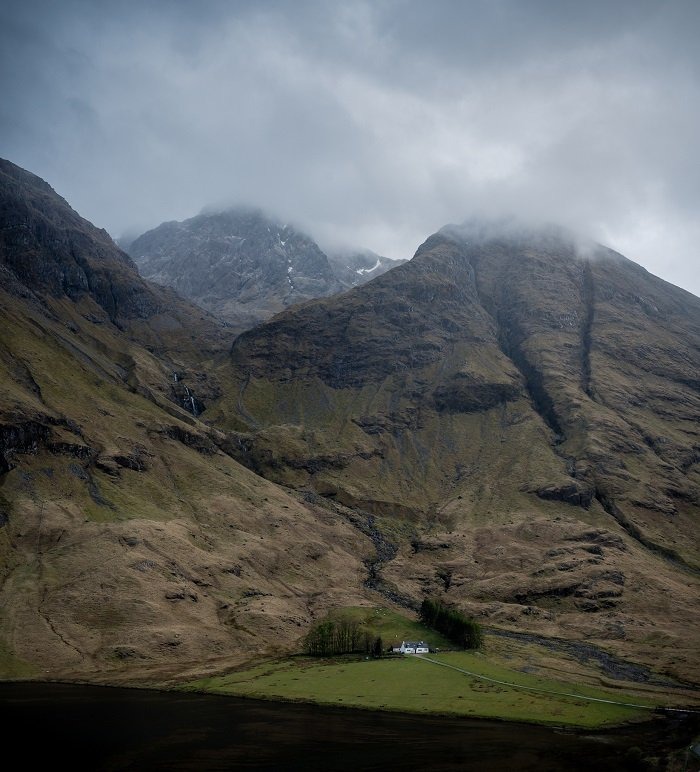
When the dynamic range exceeds what a single exposure can hold — common with bright skies and shadowed valleys — bracketing three exposures at two-stop intervals provides the raw material for a clean luminosity blend. This is not the same as heavy-handed HDR; done well, the result looks entirely natural.
Sharpness and Focus Failures
Soft landscape images typically stem from one of three causes: camera shake, missed focus, or diffraction from excessively small apertures. A sturdy tripod with a remote release or two-second timer eliminates shake entirely. For focus, our team uses manual focus with live view magnification on the hyperfocal point rather than relying on autofocus, which can hunt or lock onto the wrong plane in complex scenes. Apertures beyond f/16 on APS-C (or f/22 on full frame) introduce visible diffraction softening — staying at f/8 to f/13 hits the sharpness sweet spot for most landscape lenses.
From Beginner Snapshots to Advanced Compositions
The gap between a beginner and an advanced landscape photographer is less about gear or talent and more about intentionality. Beginners point the camera at a pretty scene and hope for the best. Advanced shooters deconstruct a scene into foreground, mid-ground, and background layers, then compose deliberately to guide the viewer's eye through each one.
Building a Solid Foundation
Anyone new to landscape photography benefits most from mastering three fundamentals before chasing advanced techniques. First, learn to read light — notice how shadows shift, where highlights fall, and how colour temperature changes through the day. Second, develop a consistent composition process: identify the subject, choose a foreground anchor, and eliminate distractions before touching the shutter button. Third, shoot in RAW format exclusively. JPEG compression discards tonal data that is impossible to recover, and landscape work depends heavily on post-processing latitude.
These fundamentals are not just beginner concerns — our team revisits them constantly. The photographers who produce consistently strong work are the ones who never stop refining the basics.
Pushing Into Advanced Territory
Once the foundations are solid, several techniques open up that dramatically expand creative range. Focus stacking — capturing multiple frames at different focus distances and blending them in post — produces front-to-back sharpness that no single exposure can match, especially with wide-angle lenses at close foreground distances. Panoramic stitching with a telephoto lens produces images with both massive resolution and the compressed perspective that wide-angle lenses cannot deliver. And astro-landscape composites — combining a tracked sky exposure with a static foreground — unlock Milky Way images without sacrificing ground-level sharpness.
Each of these techniques introduces complexity in both capture and post-processing, but the results justify the effort. Our team approaches them as tools in a toolkit rather than default settings — deployed when the scene calls for them, not applied indiscriminately. The best landscape photography tips and tricks are always the ones matched to the specific challenge of the moment.
The camera captures light, but the photographer captures intention — every great landscape image starts with a decision made before the shutter clicks.
 |
 |
 |
 |

About Alex W.
Alex is a landscape, equine, and pet photographer based in the Lake District, UK, with years of experience shooting in one of Britain's most photographically demanding natural environments. His work has been featured in Take a View Landscape Photographer of the Year, Outdoor Photographer of the Year, and Amateur Photographer Magazine — publications that reflect a serious, competitive standard of image-making. At Click and Learn Photography, he shares the camera settings, gear choices, and compositional techniques he has developed through real-world shooting and competition-level work.
You can Get FREE Gifts. Furthermore, Free Items here. Disable Ad Blocker to receive them all.
Once done, hit anything below
|
|
|
|