What if one simple gear change could dramatically sharpen images, improve low-light performance, and force better compositional habits all at once? For our team, the answer came years ago when we first picked up a 50mm f/1.8 — and the reasons to use prime lenses have only become more convincing since then. Whether someone is just getting started with a beginner mirrorless camera or has been shooting for decades, primes offer advantages that zoom lenses simply cannot match. In this ultimate guide, we break down six compelling reasons to make the switch and share practical advice for getting the most out of fixed focal length glass.

Prime lenses — also called fixed focal length lenses — have a single focal length rather than a zoom range. That constraint sounds limiting at first, but it turns out to be their greatest strength. Less glass inside the barrel means sharper optics, wider maximum apertures, and lighter weight. These aren't marginal improvements either; the difference is visible in real-world shooting from the very first frame.
Our experience across portrait sessions, street photography, and landscape work has consistently shown that primes push photographers to think more creatively. Instead of standing still and zooming, most people find themselves physically moving, exploring angles, and engaging with scenes in ways that zoom lenses never encouraged. The results speak for themselves.
Contents
What Makes Prime Lenses Different from Zooms
Before diving into specific reasons to use prime lenses, it helps to understand what sets them apart at a fundamental level. The distinction goes far deeper than "one zooms, one doesn't."
The Optical Design Advantage
Zoom lenses contain multiple lens groups that shift internally to change focal length. That mechanical complexity introduces optical compromises — more glass elements mean more opportunities for optical aberrations like chromatic fringing and distortion. Prime lenses, by contrast, are engineered for a single focal length. Manufacturers can optimize every element for that one job, resulting in noticeably sharper output from corner to corner.
Our team has tested dozens of lenses over the years, and the pattern holds consistently. A mid-range prime almost always outresolves a premium zoom at the same focal length. Fewer internal elements also mean less flare and better contrast, which matters enormously for backlit scenes.
The Aperture Gap
Most kit zoom lenses max out at f/3.5–5.6. Even professional constant-aperture zooms top out at f/2.8. Meanwhile, affordable primes routinely offer f/1.8 or f/1.4 — letting in two to four times more light. For anyone serious about understanding how aperture affects images, our f-stop chart and cheat sheet breaks down the math visually.
6 Reasons to Use Prime Lenses
Here are the core reasons our team recommends primes to photographers at every skill level. Each one compounds the others — the benefits aren't isolated.
Superior Sharpness and Image Quality
This is the headline advantage. Prime lenses deliver sharper images at every aperture compared to zoom lenses at equivalent focal lengths. That sharpness advantage is most dramatic wide open, where zooms tend to soften noticeably. Primes maintain excellent corner-to-corner resolution even at their widest settings.
The practical impact shows up in large prints, heavy crops, and commercial work where every pixel counts. Anyone who has ever compared a 50mm f/1.8 shot against a 24–70mm f/2.8 at 50mm side by side can see the difference immediately.
Low-Light Performance
Wide apertures let primes gather significantly more light. That translates directly into practical benefits:
- Faster shutter speeds in dim environments, reducing motion blur
- Lower ISO settings, which means less noise and cleaner files
- Reliable autofocus in conditions where slower lenses hunt and miss
- Usable handheld shooting in venues where flash is prohibited
For anyone interested in pushing into astrophotography and night shooting, a fast prime is practically essential. Stars demand every photon available.
Pro tip: A 35mm f/1.4 prime gathers roughly 4x more light than a kit zoom at f/2.8 — that's the difference between a clean shot and a noisy, blurred mess in a dimly lit venue.
Beautiful Background Blur
Wide maximum apertures produce shallow depth of field and creamy bokeh that separates subjects from busy backgrounds. This is why portrait photographers have relied on 85mm and 50mm primes for decades. The look simply cannot be replicated with slower zoom lenses, regardless of post-processing tricks.
How to Choose the Right Prime Lens
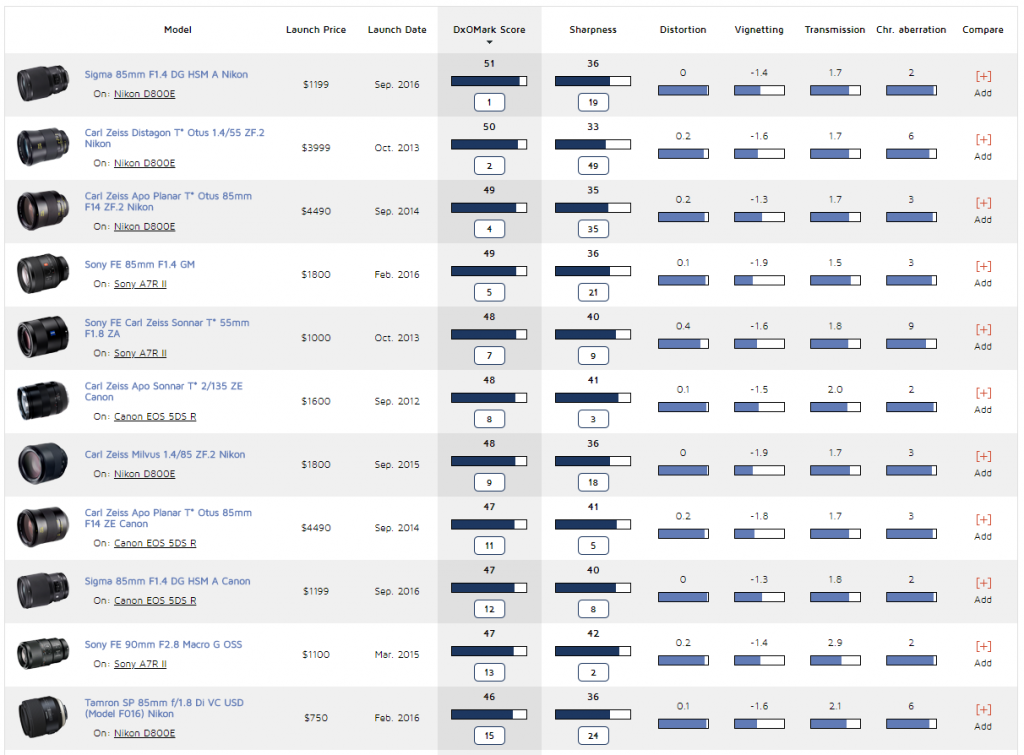
With so many options on the market, picking the right prime can feel overwhelming. The decision really comes down to two factors: what genre of photography dominates one's shooting, and what budget is realistic.
Matching Focal Length to Genre
| Focal Length | Best For | Typical Aperture | Notes |
|---|---|---|---|
| 24mm | Landscape, Architecture | f/1.4 – f/2.8 | Wide perspective, great for environmental portraits |
| 35mm | Street, Documentary | f/1.4 – f/1.8 | Natural field of view, versatile walkaround |
| 50mm | General, Portraits | f/1.2 – f/1.8 | Classic "nifty fifty" — the best starting prime |
| 85mm | Portraits, Events | f/1.4 – f/1.8 | Flattering compression, creamy bokeh |
| 100mm+ | Macro, Headshots | f/2.0 – f/2.8 | Excellent working distance for detail shots |
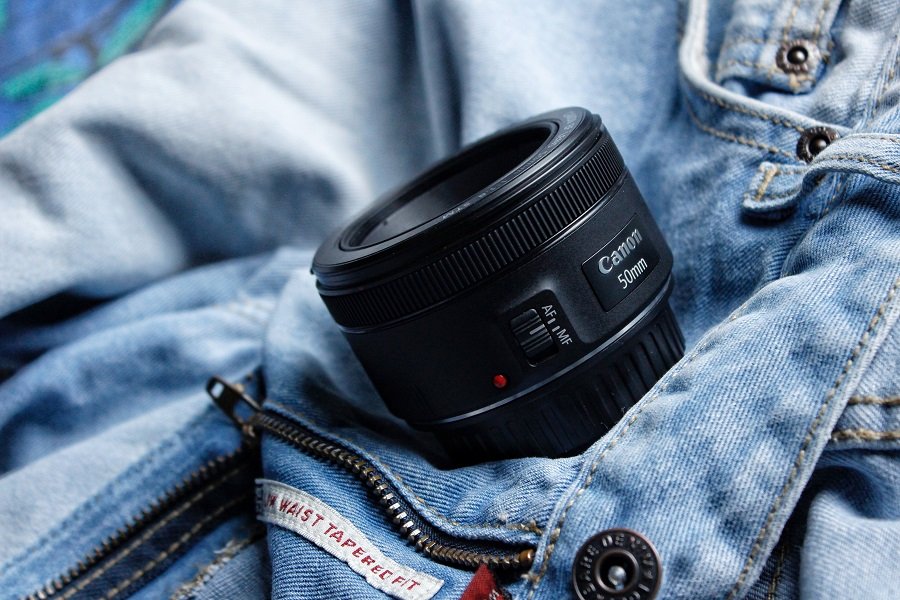
For most people starting out, a 50mm f/1.8 is the obvious first choice. It's affordable (often under $200), sharp, and works well across multiple genres. Our team's recommendation for anyone on the fence: start with the 50mm, shoot with it exclusively for a month, and then decide what focal length to add next.
Budget Considerations
One of the most compelling reasons to use prime lenses is affordability. Entry-level primes often cost less than mid-range zooms while delivering superior optical performance. A few examples across major systems:
- Canon's RF 50mm f/1.8 STM costs a fraction of the RF 24–70mm f/2.8
- Nikon's Z 50mm f/1.8 S is one of the sharpest lenses in the entire Z lineup — check our best Nikon lenses roundup for alternatives
- Sony's FE 50mm f/1.8 remains a bargain alongside the options in our best Sony lens guide
Premium primes (f/1.2 or f/1.4 from first-party manufacturers) do get expensive. But even those typically cost less than professional zoom trinity equivalents while offering wider apertures and better image quality.
Prime Lens Mistakes That Hold Photographers Back
Switching to primes is only half the equation. Our team has seen the same mistakes repeated across hundreds of workshops and portfolio reviews.
Always Shooting Wide Open
The temptation to shoot at f/1.4 or f/1.8 all the time is real — that bokeh is addictive. But wide-open shooting introduces problems:
- Paper-thin depth of field misses critical focus on eyes during portraits
- Optical performance at maximum aperture is never a lens's sharpest setting
- Group photos become impossible when only one face is in focus
Most lenses hit their sweet spot between f/4 and f/8. Our team's approach is to shoot wide open only when the situation genuinely demands it — low light, intentional subject isolation, or creative effect. Otherwise, stopping down even one or two stops dramatically improves sharpness and consistency.
Picking the Wrong Focal Length
Buying a 35mm when most shooting happens at 85mm (or vice versa) leads to frustration and a lens that stays in the bag. The best approach is to review existing photos' EXIF data before purchasing. Most cameras and editing tools can sort images by focal length. Whatever focal length appears most frequently in a portfolio is the prime to buy first.
Common pitfall: Many photographers assume they need a wide-angle prime for landscape work, but some of the most striking landscape images are shot at 50mm or longer — compression can add tremendous depth to layered scenes.
Keeping Prime Lenses in Top Condition
Prime lenses are generally more durable than zooms because they have fewer moving parts. Still, proper care extends their lifespan considerably and protects that optical performance.
Cleaning and Storage Basics
A few straightforward habits make all the difference:
- Always use a UV or clear filter for protection — replacing a $30 filter is far cheaper than recoating a front element
- Store lenses with rear caps attached in a dry, temperature-stable environment
- Use a rocket blower before wiping — dragging dust particles across glass causes micro-scratches
- Keep silica gel packets in camera bags to prevent fungus growth in humid climates
- Mount lenses on the camera body whenever possible rather than leaving sensor or rear elements exposed
Fungus is the silent killer of prime lenses. Once it establishes inside a lens barrel, professional cleaning is the only option — and it doesn't always succeed. Anyone storing gear in humid environments should consider a dry cabinet, which maintains relative humidity around 40%. The investment pays for itself after saving even one lens.
For photographers who shoot in rugged conditions — waterfalls, rain, coastal environments — pairing a prime with a sturdy tripod like the Vanguard Veo 2 and a rain cover keeps the entire setup protected while still taking advantage of that prime lens sharpness.
Prime Lenses in Action: Real Shooting Scenarios
Theory is useful, but seeing how primes perform in real situations makes the strongest case. Here are scenarios where our team has found primes consistently outperform zooms.
Portraits and Street Photography
Portrait work is where primes truly shine. An 85mm f/1.4 creates a look that no zoom can replicate — razor-sharp eyes with a smoothly dissolved background that keeps all attention on the subject. Our team has shot corporate headshots, engagement sessions, and editorial work with primes, and clients consistently notice the difference in quality even when they can't articulate what changed.
Street photography benefits enormously from the compact size and light weight of primes. A small 35mm or 28mm prime on a mirrorless body draws far less attention than a large zoom rig. That discretion leads to more natural candid moments. Henri Cartier-Bresson famously shot nearly everything with a 50mm — the constraint of a single focal length forced him to develop one of the most celebrated compositional eyes in photography history.
Landscape and Astrophotography
Wide-angle primes (14mm, 20mm, 24mm) are staples of landscape photography. Their optical superiority shows up in corner sharpness — a critical factor when capturing sweeping vistas where every part of the frame matters. Anyone working on waterfall photography will appreciate how a sharp wide prime renders moving water details even in long-exposure shots.
Astrophotography is arguably the genre where primes are most essential. Fast apertures (f/1.4 or f/1.8) capture dramatically more starlight, and the superior corner performance prevents the star-smearing that plagues many zoom lenses wide open. A 14mm or 24mm f/1.4 is considered standard equipment for serious Milky Way work.
The lightweight nature of primes also benefits anyone hiking to remote locations. Carrying two or three small primes instead of one large zoom often weighs less overall while covering more creative ground.
Frequently Asked Questions
Are prime lenses worth it for beginners?
Absolutely. A 50mm f/1.8 is one of the best investments any beginner can make. It teaches compositional discipline by removing the crutch of zooming, delivers noticeably sharper images than kit zooms, and costs under $200 on most camera systems. Our team considers it essential learning gear — the constraints it imposes accelerate skill development faster than almost any other single piece of equipment.
Can prime lenses replace zoom lenses entirely?
For some photographers, yes. Many professionals carry two or three primes (a 35mm, 50mm, and 85mm, for example) and cover nearly every situation. However, certain genres like wildlife or sports photography demand the reach and flexibility of telephoto zooms. The most practical approach for most people is to use primes as primary lenses and keep a zoom in the bag for situations where lens changes aren't feasible.
What is the sharpest prime lens focal length?
Sharpness depends on the specific lens rather than the focal length itself. That said, 50mm primes are generally the sharpest in any manufacturer's lineup because the optical design at that focal length is well-understood and relatively simple. The Canon RF 50mm f/1.2L, Nikon Z 50mm f/1.2 S, and Sony FE 50mm f/1.2 GM are all among the sharpest lenses ever produced for their respective systems.
Final Thoughts
The reasons to use prime lenses are clear — sharper optics, wider apertures, lighter weight, lower cost, and the creative growth that comes from working within constraints. Our team's recommendation is straightforward: pick up a 50mm f/1.8 for the relevant camera system, commit to shooting with it exclusively for thirty days, and pay attention to how compositions evolve. That single lens is often all it takes to understand why so many photographers consider primes their most valued glass.
 |
 |
 |
 |

About Alex W.
Alex is a landscape, equine, and pet photographer based in the Lake District, UK, with years of experience shooting in one of Britain's most photographically demanding natural environments. His work has been featured in Take a View Landscape Photographer of the Year, Outdoor Photographer of the Year, and Amateur Photographer Magazine — publications that reflect a serious, competitive standard of image-making. At Click and Learn Photography, he shares the camera settings, gear choices, and compositional techniques he has developed through real-world shooting and competition-level work.
You can Get FREE Gifts. Furthermore, Free Items here. Disable Ad Blocker to receive them all.
Once done, hit anything below
|
|
|
|