Is Sky Replacement Harmful to the Landscape Photography Industry?
by Alex W.
Sky replacement landscape photography is not inherently harmful — but the way most people use it absolutely is. The debate has fractured the landscape photography community for years, and our team believes the real problem isn't the tool itself but the dishonesty surrounding it. When a photographer passes off a composited sky as a single-capture moment, that crosses a line from editing into fabrication. The technique has legitimate uses, but the industry needs clearer boundaries.

We've spent considerable time testing sky replacement tools, talking to working landscape photographers, and examining competition entries that were disqualified for undisclosed compositing. The consensus from our experience is straightforward: transparency is what separates art from deception. This piece breaks down the real-world impact, the tools involved, and where the line should sit.
Contents
- Practical Guidelines for Honest Sky Replacement
- Software That Powers Sky Replacement
- Sky Replacement vs. In-Camera Techniques
- When Sky Replacement Actually Makes Sense
- Protecting Creative Integrity in the AI Editing Era
- Simple Alternatives to Full Sky Replacement
- Common Sky Replacement Pitfalls
- Frequently Asked Questions
- Next Steps
Practical Guidelines for Honest Sky Replacement
Our team's position is blunt: sky replacement in landscape photography is fine as long as it's disclosed. The problem is that almost nobody discloses it. We've seen Instagram posts with clearly composited Milky Way skies over daytime-lit foregrounds receiving thousands of likes from people who genuinely believe the scene was real. That erodes trust across the entire genre.
Disclosure Standards That Actually Work
The simplest approach is tagging composited images clearly in captions. A quick note like "sky composited from a separate exposure" takes five seconds and preserves credibility. Some photographers we respect, including those featured in our interview with Anton Gorlin on creative process, have spoken openly about where they draw the line between processing and manipulation. Honesty doesn't diminish the art — it reframes it as digital art rather than documentary photography.
Context Changes Everything
A real estate photographer swapping a grey sky for blue is industry standard. A landscape photographer entering a competition with an undisclosed composite is fraud. The technique itself is neutral. The context and intent determine whether it harms the industry or serves a creative purpose.
Software That Powers Sky Replacement
The tools have become frighteningly good. What once required hours of painstaking masking in Photoshop now takes a single click in several applications. This accessibility is precisely what makes the ethical conversation so urgent.
AI-Driven Options
Luminar Neo's sky replacement is the most well-known one-click solution. It automatically masks foreground elements, matches lighting, and even adds reflections in water. Adobe Photoshop's Sky Replacement tool (introduced in version 22.0) does similar work. Both produce results that are nearly undetectable to casual viewers, which is exactly the problem for documentary-style landscape work.
Manual Compositing Tools
For those who prefer manual control, traditional layer masking in Photoshop or digital compositing through GIMP offers more precision. Manual methods actually produce better results at treelines and fine detail edges, though they demand significantly more skill. Anyone serious about understanding light and color will benefit from learning the manual approach first, even if AI tools handle the heavy lifting later.
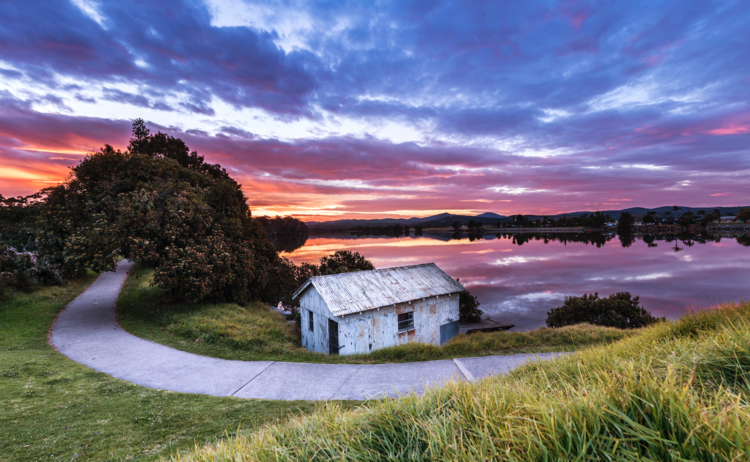
An example of exposure stacking – I did this a lot in my early days to compensate for not having a graduated ND filter. It's a technique I still use to this day.
Sky Replacement vs. In-Camera Techniques
Before reaching for sky replacement software, it's worth considering what can be achieved in the field. Our team strongly prefers getting it right in-camera whenever possible, and the comparison below shows why most traditional techniques still outperform compositing for authenticity.
| Technique | Skill Level | Authenticity | Time Investment | Best For |
|---|---|---|---|---|
| Sky replacement (AI) | Beginner | Low | Minutes | Commercial, social media |
| Sky replacement (manual) | Advanced | Low–Medium | 1–3 hours | Artistic composites |
| Graduated ND filter | Intermediate | High | Field time | High dynamic range scenes |
| Exposure bracketing/HDR | Intermediate | High | Post-processing | Sunrise/sunset shoots |
| Waiting for conditions | Any | Highest | Hours–days | Competition, fine art prints |
| Polarizing filter | Beginner | High | Field time | Deepening existing blue skies |
The table makes something clear: every in-camera technique scores higher on authenticity. That matters enormously for anyone building a reputation in landscape photography. Understanding exposure fundamentals, as covered in our guide to the exposure triangle, eliminates the need for sky replacement in most situations.
When Sky Replacement Actually Makes Sense
Commercial and Client Work
Real estate, travel marketing, and editorial illustration all have legitimate reasons to replace skies. A tourism board promoting a coastal destination doesn't need a grey overcast sky killing the mood. In commercial contexts, the audience understands that images are styled and enhanced. Nobody expects a hotel brochure to be photojournalism.
Learning and Experimentation
Sky replacement is an excellent training exercise for masking, color matching, and understanding how light direction affects a scene. Our team actually recommends it as a learning tool — the process of matching a replacement sky's color temperature and lighting angle to a foreground teaches more about light than most tutorials. The key is treating these images as practice, not portfolio pieces presented as straight photography.
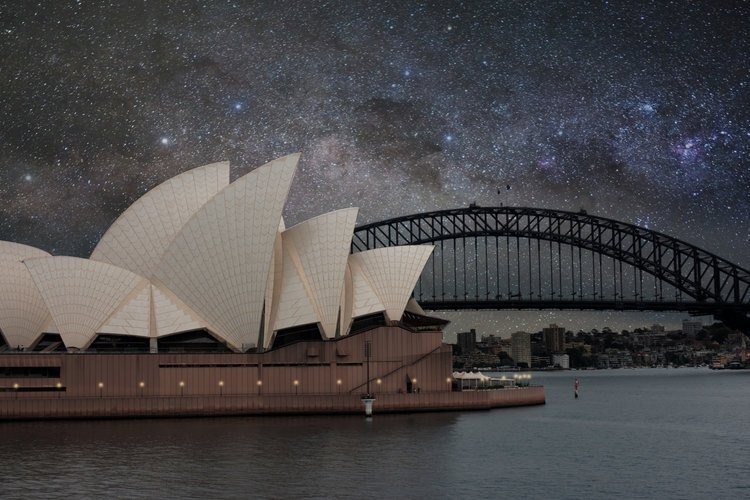
This is definitely not a sky replacement. The bottom half is not day for night. The city lights just weren't on when I took this very real image.
Protecting Creative Integrity in the AI Editing Era
AI-powered editing is advancing faster than the ethical frameworks surrounding it. Sky replacement landscape photography is just the beginning — generative fill, object removal, and full scene synthesis are already mainstream. The industry needs to adapt or risk losing the credibility that makes landscape photography meaningful.
Competition and Contest Standards
Major competitions like the Landscape Photographer of the Year and Natural Landscape Photography Awards have explicit rules against sky replacement. The Natural Landscape Photography Awards go further, banning any compositing whatsoever. Our team applauds this stance. Competitions should celebrate what photographers actually witnessed and captured, not what they assembled in post.
If a landscape image can't stand on its own without a borrowed sky, the real problem is the composition or the timing — not the weather.
Social Media Accountability
Platforms like Instagram have no mechanism for flagging composited images. This creates a distorted playing field where honest photographers compete against enhanced composites without any distinction. Some photographers have started using hashtags like #composite or #digitalart to self-identify, which is a step in the right direction. The broader community benefits when transparency becomes normalized rather than penalized.
Simple Alternatives to Full Sky Replacement
Before swapping an entire sky, there are several techniques that can dramatically improve a bland sky while keeping the image authentic. Our team relies on these regularly, and they solve the problem in roughly 80% of cases where someone might reach for sky replacement.
A graduated ND filter darkens the sky relative to the foreground, preserving cloud detail that would otherwise blow out. Exposure bracketing captures multiple exposures that can be blended for a natural HDR result. Even basic adjustments — pulling down highlights, boosting clarity in the sky region, or adding a subtle gradient in Lightroom — can rescue a washed-out sky. For dramatic cityscape and urban landscape work, shooting during blue hour eliminates the bland-sky problem entirely.
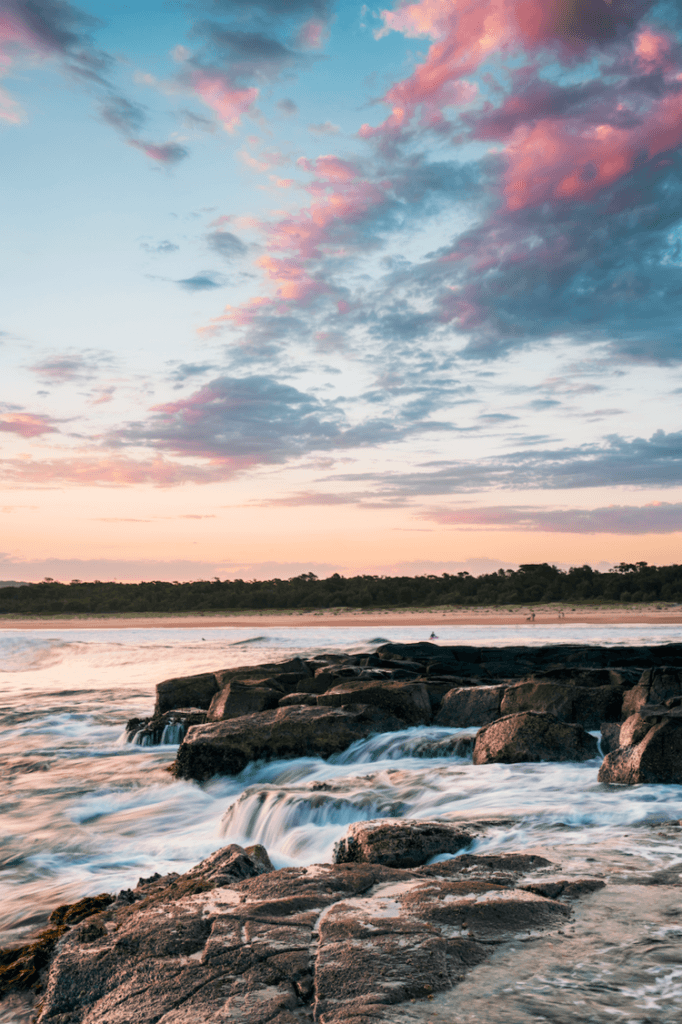
This was a sky movement I did earlier in the year. I took a photo of the clouds to the left on this composition and laid it on top. I later removed this image from my social media because of my dislike for it.
Common Sky Replacement Pitfalls
Even when sky replacement is appropriate for the context, poor execution makes it obvious and undermines the image. These are the mistakes our team sees most frequently.
Lighting Direction Conflicts
The most common giveaway is mismatched light direction. A foreground lit from the left with a sky where the sun is clearly on the right instantly reads as fake. Shadows on the ground must agree with the light source in the replacement sky. This requires studying both images carefully before compositing and sometimes flipping the sky horizontally to match.
Edge Blending Failures
Trees, hair-like grasses, and complex horizon lines are where sky replacement falls apart. AI tools have improved dramatically at handling fine edges, but they still struggle with wispy branches against bright skies. The telltale halo — a thin bright or dark line along the horizon — is visible to anyone who knows to look for it. Manual refinement of the mask edge using feathering and defringe tools remains essential even when AI does the initial selection.
Color temperature mismatch is the other dead giveaway. A warm golden-hour foreground paired with a cool midday sky creates a visual disconnect that the brain registers even before the eyes identify the specific problem. Matching white balance between the two exposures is a non-negotiable step.
Frequently Asked Questions
Is sky replacement considered cheating in photography?
It depends entirely on context. In competitions and documentary work, undisclosed sky replacement is widely considered dishonest. In commercial photography, digital art, or clearly labeled composites, it's an accepted creative tool. The dishonesty — not the technique — is what constitutes cheating.
Can judges detect sky replacement in photo competitions?
Experienced judges often can. Lighting inconsistencies, edge artifacts, and metadata analysis all reveal composites. Major competitions increasingly use forensic analysis tools that detect statistical anomalies in pixel data, making undisclosed sky replacement a risky gamble.
Does sky replacement devalue real landscape photography?
It can. When audiences can't distinguish composites from genuine captures, the perceived effort and skill behind authentic landscape work diminishes. This is why our team believes disclosure is the critical issue — labeled composites and straight photography can coexist without devaluing either.
What software produces the most realistic sky replacements?
Adobe Photoshop and Luminar Neo lead the market. Photoshop offers more manual control for advanced users, while Luminar Neo provides faster one-click results. Both handle edge detection and light matching well, though manual refinement still improves the final output significantly.
Is exposure blending the same as sky replacement?
No. Exposure blending combines multiple exposures of the same scene taken at the same time, preserving the actual sky that was present. Sky replacement swaps in a completely different sky from another time, location, or stock library. The distinction is fundamental to authenticity.
Should landscape photographers disclose all editing techniques?
Basic adjustments like contrast, white balance, and cropping don't require disclosure — these are darkroom-era standards. Compositing, sky replacement, and significant element additions or removals cross into manipulation and should be disclosed, especially in portfolio or competition contexts.
Will AI make sky replacement undetectable in the future?
Likely yes. As generative AI advances, detecting composites will become increasingly difficult through visual inspection alone. This makes establishing clear community norms and metadata-based verification systems more important now, before the technology outpaces accountability entirely.
Next Steps
- Audit any existing portfolio images that use sky replacement and add disclosure tags or captions — most people will respect the honesty, and it builds long-term credibility.
- Practice graduated ND filter techniques and exposure bracketing on the next landscape shoot to reduce dependence on post-processing sky fixes.
- Build a personal sky library from genuine shoots — same-location, same-session skies can be blended ethically and will always match lighting conditions better than stock alternatives.
- Review the entry rules for any photography competitions before submitting, paying specific attention to compositing and manipulation policies that could result in disqualification.
 |
 |
 |
 |

About Alex W.
Alex is a landscape, equine, and pet photographer based in the Lake District, UK, with years of experience shooting in one of Britain's most photographically demanding natural environments. His work has been featured in Take a View Landscape Photographer of the Year, Outdoor Photographer of the Year, and Amateur Photographer Magazine — publications that reflect a serious, competitive standard of image-making. At Click and Learn Photography, he shares the camera settings, gear choices, and compositional techniques he has developed through real-world shooting and competition-level work.
You can Get FREE Gifts. Furthermore, Free Items here. Disable Ad Blocker to receive them all.
Once done, hit anything below
|
|
|
|