Best Drone for Under 200 in 2026 – A Guide to Budget Photography Drones
by Alex W.
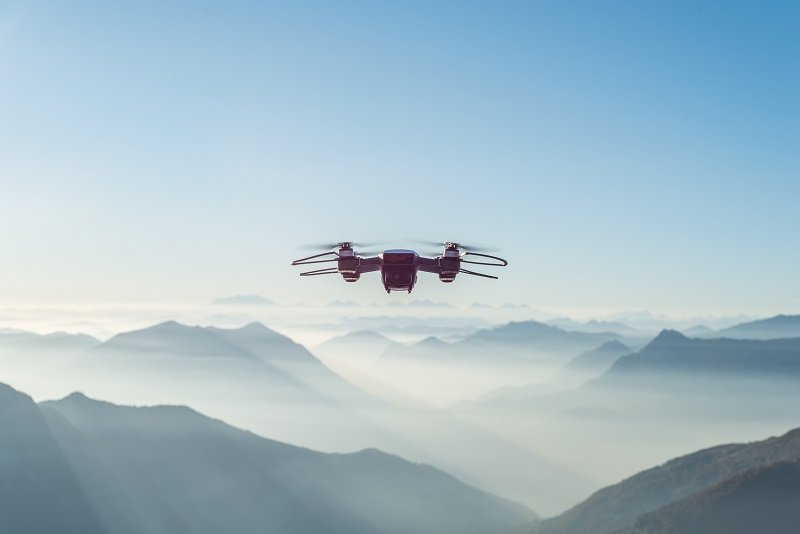
You're scrolling through dozens of drone listings, each one promising cinematic 4K footage and GPS precision, yet your budget tops out at two hundred dollars. The good news is that 2026's sub-$200 drone market has matured dramatically, and several models now deliver features that cost four times as much just a few years ago. The challenge is sorting the genuinely capable flyers from the overhyped toys.
Whether you're a photographer looking to add aerial perspectives to your gear zone or a hobbyist who wants smooth video without a steep learning curve, a budget drone can open up creative possibilities you never had before. Modern sensors, brushless motors, and electronic image stabilization have trickled down to this price range, giving you real photographic tools rather than novelty gadgets. We've evaluated seven of the most popular options available right now, testing everything from camera quality to wind resistance, flight time, and ease of use.
Below you'll find our top picks, detailed reviews of each drone, a comprehensive buying guide, and answers to the questions we hear most often. If you're also building out your photography kit on a budget, our guide to the best budget photography accessories pairs nicely with the drones we recommend here.
Contents
Top Rated Picks of 2026
- #PreviewProductRating
- Bestseller No. 1
 Rating:

- Bestseller No. 2
 Rating:
 - Bestseller No. 3
 Rating:
 - Bestseller No. 4
 Rating:
 - Bestseller No. 5
 Rating:
 - Bestseller No. 6
 Rating:
 - Bestseller No. 7
 Rating:
In-Depth Reviews
1. DJI Mini 4K — Best Overall
There's a reason DJI dominates the consumer drone market, and the Mini 4K demonstrates exactly why. Coming in at just under 249 grams, this drone sidesteps FAA registration requirements for recreational flyers in the United States, which means you can unbox it and be airborne within minutes. The 4K Ultra HD camera paired with a genuine 3-axis mechanical gimbal delivers footage that remains butter-smooth even when you're flying through moderate wind, and the difference between a mechanical gimbal and electronic stabilization is immediately apparent when you review your clips on a larger screen.
The 10-kilometer video transmission range is extraordinary at this price point, giving you confidence to explore distant vantage points without worrying about signal dropout. You'll get up to 31 minutes of flight time on a single battery, which is competitive with drones costing twice as much. Level 5 wind resistance and brushless motors mean the Mini 4K holds its position reliably even on breezy days, and the automatic return-to-home function ensures your investment flies back safely if the signal weakens or the battery runs low. For photographers who want aerial shots that genuinely match the quality of their ground-level work, this is the drone to beat in the sub-$200 category.
Where the DJI Mini 4K truly separates itself from the pack is in the DJI Fly app ecosystem. The software is polished, intuitive, and offers intelligent flight modes like QuickShots that automate complex cinematic maneuvers. If you're already invested in photography gear and want a drone that integrates seamlessly into a professional workflow, this one delivers without compromise.
Pros:
- True 3-axis mechanical gimbal produces cinema-grade stabilization at a budget price
- Under 249 grams eliminates FAA registration hassle for recreational pilots
- 10km transmission range and 31-minute flight time lead the sub-$200 segment
Cons:
- Single battery included means you'll want to purchase extras for extended shooting sessions
- No obstacle avoidance sensors at this price tier
2. Potensic ATOM SE — Best Value for Beginners
The Potensic ATOM SE is a remarkably well-rounded drone that punches above its weight in nearly every category. Weighing under 249 grams with a foldable design compact enough to slip into a jacket pocket, it's the kind of drone you'll actually bring along on trips rather than leaving at home because it's too bulky to pack. The 1/3-inch Sony CMOS sensor captures 12-megapixel stills and 4K video at 30 frames per second, and Potensic's proprietary ShakeVanish electronic image stabilization does a respectable job of smoothing out footage across the generous 118-degree field of view.
What makes the ATOM SE particularly appealing for newcomers is the SurgeFly flight control system with a dedicated Beginner Mode. You start with restricted speed and altitude limits, then graduate through Normal and Sport modes as your confidence grows. In Sport Mode the drone reaches a maximum speed of 16 meters per second in just 2.8 seconds, which is genuinely thrilling once you've built up your piloting skills. The camera tilts from +20 to -90 degrees vertically, giving you everything from forward-facing perspectives to straight-down overhead compositions.
With two batteries delivering a combined 62 minutes of flight time, the ATOM SE offers one of the longest total airtime figures in its class. The 4-kilometer FPV transmission range keeps you connected at distances that feel nearly limitless for a recreational drone, and GPS-enabled auto return adds a safety net that beginners will appreciate. If you're stepping into drone photography for the first time and want a forgiving yet capable platform, this is where your search should start.
Pros:
- 62-minute total flight time with two included batteries is exceptional value
- Foldable pocket-friendly design with sub-249g weight for registration-free flying
- Three progressive flight modes make it ideal for skill development
Cons:
- Electronic stabilization can't match a mechanical gimbal in low-light or high-wind situations
- 4K recording is limited to 30fps with no slow-motion options
3. Ruko F11PRO 2 — Best for Long Flight Time
The Ruko F11PRO 2 enters the conversation with a bold spec sheet: a 3-axis mechanical gimbal, 6K photo resolution, 4K/30fps video, and two batteries that deliver a combined 70 minutes of flight time. That last figure is the headline here, because 70 minutes of total airtime gives you the freedom to plan ambitious shoots without constantly watching the battery indicator. Whether you're documenting a family gathering in the backyard or capturing sweeping panoramas on a road trip, the extended flight time removes the pressure that shorter-lived drones impose on your creative process.
The 3-axis mechanical gimbal is the same type of stabilization system found on professional-grade platforms, and it eliminates the vibration and micro-jitter that plague drones relying solely on electronic correction. Your footage comes out smooth and steady without requiring post-production stabilization, which saves significant time if you're editing aerial clips for a photography portfolio or social media content. The one-key takeoff and landing feature combined with a dedicated Beginner Mode makes this drone accessible even if you've never touched a controller before, and the auto-return function adds a reliable safety margin for less experienced pilots.
At its price point the F11PRO 2 represents a strong proposition for anyone who prioritizes airtime and gimbal-stabilized video above all else. The 6K photo resolution captures impressive detail for stills that you can crop and enlarge without noticeable degradation, making it a solid companion for landscape photographers who want to add dramatic overhead angles to their portfolios. If you're building a photography kit from scratch, pairing this drone with one of the best cameras under $500 gives you both ground and aerial coverage without breaking the bank.
Pros:
- 70 minutes of combined flight time with dual batteries leads the budget category
- 3-axis mechanical gimbal delivers genuinely smooth 4K video
- 6K photo resolution offers impressive detail and cropping flexibility
Cons:
- Heavier than 249 grams, so FAA registration is required for recreational use
- Transmission range is shorter than some competitors in this roundup
4. Holy Stone HS175D — Best Lightweight GPS Drone
Holy Stone has built a loyal following among budget drone enthusiasts, and the HS175D shows exactly why. This foldable quadcopter weighs under 249 grams, keeping it in the registration-free category, while packing a 4K camera with a 110-degree wide-angle lens that fits impressively broad landscapes into every frame. The 90-degree adjustable camera angle lets you switch between sweeping horizon shots, dramatic top-down perspectives, and follow-along tracking angles without needing to reposition the entire aircraft, which is a significant convenience when you're trying to capture a specific composition.
The 5GHz FPV live view is a standout feature that delivers noticeably smoother and more responsive real-time video to your phone compared to drones operating on the more congested 2.4GHz band alone. When you're framing a shot in real time, that low-latency feed makes the difference between nailing your composition and missing the moment entirely. GPS positioning enables intelligent flight modes including Follow Me, Circle Fly, and Waypoint navigation, all of which automate complex flight paths so you can focus on the camera rather than the sticks.
With dual batteries providing approximately 46 minutes of total flight time and brushless motors ensuring quieter, more efficient operation, the HS175D is a well-balanced package for photographers and hobbyists alike. The auto-return function uses GPS to navigate back to the takeoff point automatically when the battery drops low or signal is lost, which provides genuine peace of mind when you're flying over water or unfamiliar terrain. It's not the flashiest drone on this list, but it's one of the most reliable and consistently satisfying to fly.
Pros:
- Under 249 grams with GPS, 4K camera, and intelligent flight modes at a competitive price
- 5GHz FPV transmission provides smoother, lower-latency live view than many rivals
- 46-minute dual-battery flight time with brushless motor reliability
Cons:
- No mechanical gimbal means footage requires electronic stabilization that can crop the frame
- 110-degree lens introduces some barrel distortion at the edges of wide shots
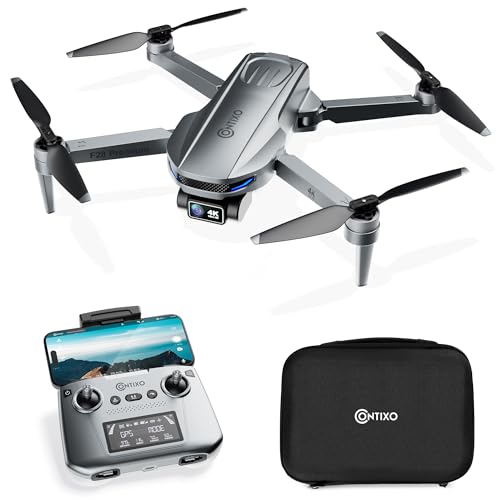
5. Contixo F28 — Best Budget Gimbal Drone
The Contixo F28 occupies an interesting middle ground in the budget drone market by offering a two-axis gimbal stabilization system at a price where most competitors rely entirely on electronic correction. While a two-axis gimbal doesn't match the full three-axis systems found on the DJI Mini 4K or Ruko F11PRO 2, it still provides noticeably smoother footage than pure EIS solutions, particularly when you're panning or flying forward at moderate speeds. The 4K zoom camera captures detailed stills and video that hold up well for social media, blog content, and casual aerial photography projects.
Brushless motors give the F28 a quieter flight profile and improved durability compared to brushed alternatives, and the optimized energy consumption translates to a respectable 23 minutes of flight time per battery. Accurate GPS positioning powers the auto-return and Follow Me functions, both of which work reliably in open-sky conditions and add significant convenience to your flying experience. The 110-degree wide-angle FPV feed keeps you informed of your surroundings, and the foldable design makes transport straightforward whether you're heading to a local park or packing for a trip.
For pilots who want gimbal stabilization without stretching to the top of the price range, the F28 represents a sensible compromise. The two-axis system handles pitch and roll correction effectively, and the 4K zoom capability lets you frame tighter compositions without physically moving the drone closer to your subject, which is particularly useful when filming wildlife or architectural details from a safe distance.
Pros:
- Two-axis gimbal provides mechanical stabilization that outperforms EIS-only competitors
- 4K zoom camera allows tighter framing without repositioning the aircraft
- GPS-enabled Follow Me and auto-return functions work reliably
Cons:
- 23-minute single-battery flight time is shorter than several alternatives on this list
- Two-axis gimbal lacks yaw stabilization, so rapid turning can introduce some wobble
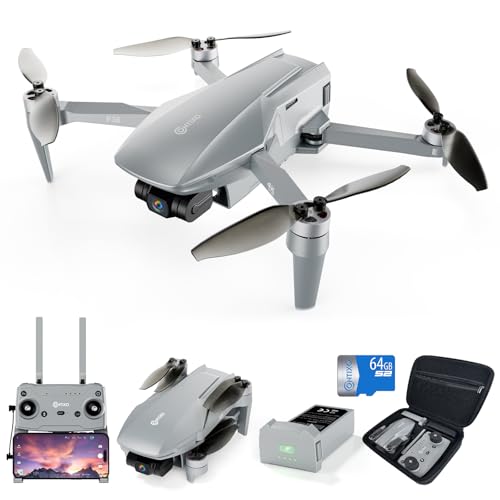
6. Contixo F36 — Best for Range
If maximum range is your priority, the Contixo F36 stands out with an impressive 3,000-meter control and transmission distance that lets you explore distant landscapes, coastlines, and terrain features that shorter-range drones simply cannot reach. The 5.8GHz real-time FPV feed maintains sharp, low-latency visuals across that full range, so you're never flying blind even when the drone is a small speck on the horizon. Paired with a 4K UHD camera mounted on a full 3-axis gimbal, the F36 delivers stabilized footage that competes directly with drones at higher price points.
The dual-positioning system combining GPS and optical flow navigation is a thoughtful engineering choice that pays dividends in real-world flying. GPS handles precision outdoors while optical flow maintains stable hovering indoors or in GPS-denied environments, giving you flexibility that single-system drones can't match. The Return to Home function, 25-minute flight time, and brushless motors round out a specification sheet that reads like a mid-range professional drone rather than a budget option. The camera captures footage at 4K resolution and 15 frames per second, which is suitable for photography-focused work and cinematic slow pans, though action-heavy shooting may benefit from higher frame rates.
For photographers and videographers who want to capture perspectives from genuine distance—think sweeping valley shots, following a river from high altitude, or documenting large properties—the F36's range advantage is transformative. The 3-axis gimbal ensures that distance doesn't come at the cost of stability, and the overall build quality inspires confidence for extended outdoor sessions. This drone pairs exceptionally well with landscape photography workflows, especially if you're already familiar with the principles covered in our guide to transforming your landscape photography.
Pros:
- 3,000-meter range with 5.8GHz FPV is the longest in this roundup by a wide margin
- 3-axis gimbal and 4K camera deliver smooth, detailed aerial footage
- Dual GPS and optical flow positioning works reliably in diverse environments
Cons:
- 4K recording at 15fps limits usefulness for fast-moving subjects
- Weighs over 249 grams, requiring FAA registration for recreational pilots
7. Ryze Tello — Best for Learning and Programming
The Ryze Tello takes an entirely different approach from every other drone on this list, and that's precisely what makes it worth including. Developed in partnership with DJI and Intel, this compact quadcopter prioritizes education, programmability, and pure fun over raw camera specifications. The 5-megapixel camera shoots JPEG photos and 720p video, which won't compete with the 4K options above for serious aerial photography, but that's not the point. The Tello is designed to teach you how drones work, how to code automated flight paths, and how to perform tricks that'll impress anyone watching.
With Scratch programming support, the Tello lets you write code that controls its flight behavior, making it an outstanding educational tool for aspiring drone pilots, students, and anyone curious about the technology behind autonomous flight. The DJI flight controller technology built into this tiny frame provides surprisingly stable hovering and responsive controls that belie its budget-friendly price. You get up to 13 minutes of flight per charge and a modest 100-meter horizontal range, both of which are perfectly adequate for indoor flying and backyard sessions.
The Tello is a renewed unit at this listing, which brings the price down even further while still delivering the same core experience. If you're buying a first drone for a teenager interested in STEM, picking up a practice platform before investing in a more expensive model, or simply wanting a fun indoor flyer for rainy days, the Tello fills a niche that the more capable but more serious drones in this roundup don't address. Think of it as the entry point that makes you a better pilot before you step up to something with a 4K camera and GPS.
Pros:
- Scratch programming support makes it a genuine educational STEM tool
- DJI flight controller technology provides stable, reliable indoor flying
- Extremely affordable entry point for first-time drone owners
Cons:
- 720p camera is far behind the 4K capabilities of every other drone reviewed here
- 13-minute flight time and 100-meter range limit its usefulness for outdoor aerial photography
Choosing the Right Budget Drone: A Buying Guide
Camera Quality and Stabilization
The camera system is the most important consideration when you're buying a drone primarily for photography or videography. In the sub-$200 range you'll encounter three stabilization approaches: 3-axis mechanical gimbals, 2-axis gimbals, and electronic image stabilization. A 3-axis gimbal like those found on the DJI Mini 4K and Contixo F36 delivers the smoothest footage because it physically counteracts movement along the pitch, roll, and yaw axes. A 2-axis gimbal handles pitch and roll but leaves yaw uncorrected, while EIS crops the image digitally to simulate stability. For serious photography work, prioritize a mechanical gimbal if your budget allows, because the difference in output quality is visible in every clip and still you capture.
Resolution matters too, but don't let big numbers mislead you. A 4K camera with proper stabilization will produce far better results than a 6K camera mounted on a shaky platform. Pay attention to the sensor size as well—the Potensic ATOM SE's 1/3-inch Sony CMOS sensor, for example, captures more light and detail than a smaller generic sensor even at the same stated resolution. Frame rate is another consideration: 30fps at 4K is the standard at this price point, but some drones cap out at 15fps in their highest resolution mode, which limits their suitability for capturing movement.
Flight Time and Battery Strategy
Advertised flight times represent ideal conditions with minimal wind, no aggressive maneuvering, and a fully charged battery, so expect roughly 75-80% of the stated figure in real-world use. A drone rated for 31 minutes will typically give you 23 to 25 minutes of practical flying. This makes the number of included batteries critically important: the Ruko F11PRO 2 and Potensic ATOM SE both ship with two batteries, effectively doubling your field time before you need to recharge. Always factor in the cost of additional batteries when comparing total value across models, because a cheaper drone that requires a $50 battery purchase to match a competitor's included dual-battery kit isn't actually saving you money.
Weight, Registration, and Legal Considerations
In 2026 the 249-gram threshold remains the key regulatory boundary for recreational drone pilots in the United States. Drones weighing under 249 grams—including the DJI Mini 4K, Potensic ATOM SE, and Holy Stone HS175D—do not require FAA registration or Remote ID equipment for recreational use, which significantly simplifies your experience as a new pilot. Drones above that weight, like the Ruko F11PRO 2 and Contixo F36, are excellent aircraft but do require registration, a small fee, and compliance with Remote ID broadcasting rules. If convenience and regulatory simplicity matter to you, staying under 249 grams eliminates a meaningful layer of hassle.
GPS, Range, and Safety Features
GPS capability is no longer a premium feature at this price point, and every drone on this list except the Ryze Tello includes it. GPS enables auto-return functions that fly the drone back to its takeoff point when the battery drops low or the signal is lost, which provides essential insurance against losing your drone during an ambitious flight. Transmission range varies dramatically—from 100 meters on the Tello to 10 kilometers on the DJI Mini 4K—so match the range to your intended use. If you're shooting landscapes from distance you'll want maximum range, but if you're primarily flying in parks and backyards, even a 2-kilometer range is more than sufficient. Follow Me modes, waypoint navigation, and circle fly functions all depend on GPS accuracy, so check user reviews for real-world GPS lock speed and reliability if these automated modes are important to your workflow.
Questions Answered
Do you need to register a drone under $200 with the FAA?
It depends on the weight rather than the price. Drones weighing under 249 grams—such as the DJI Mini 4K, Potensic ATOM SE, and Holy Stone HS175D—do not require FAA registration or Remote ID compliance for recreational use in 2026. Heavier drones like the Ruko F11PRO 2 and Contixo F36 do require registration regardless of their retail price. Always check the FAA's current guidelines before your first flight, as regulations can change.
Is a mechanical gimbal worth it on a budget drone?
Absolutely. A mechanical gimbal physically stabilizes the camera by counteracting movement in real time, producing noticeably smoother footage than electronic image stabilization alone. EIS works by cropping and digitally adjusting the frame, which reduces effective resolution and can introduce artifacts in challenging conditions. If aerial video quality is your primary goal, a 3-axis gimbal should be at the top of your priority list even if it means compromising slightly on another specification.
How much flight time should you expect from a budget drone?
Most quality drones in the sub-$200 range deliver between 23 and 35 minutes per battery under real-world conditions. Advertised times represent optimal scenarios, so plan for roughly 75-80% of the stated figure. Purchasing additional batteries is the simplest way to extend your flying sessions, and models that include two batteries in the box—like the Ruko F11PRO 2 and Potensic ATOM SE—offer the best out-of-box endurance without extra spending.
Can a sub-$200 drone produce professional-quality aerial photos?
A budget drone with a 4K camera and mechanical gimbal can absolutely produce aerial photos suitable for professional use in contexts like real estate listings, social media content, blog photography, and personal portfolio work. The DJI Mini 4K in particular delivers results that rival drones costing significantly more. However, for commercial cinematography or high-end print work requiring maximum dynamic range and RAW file support, you'll eventually want to step up to a more advanced platform.
What is the best drone under $200 for a complete beginner?
The Potensic ATOM SE is the strongest choice for beginners thanks to its dedicated Beginner Mode with restricted speed and altitude, progressive skill-building through three flight modes, forgiving flight characteristics, and an impressive 62-minute total flight time across two batteries. The DJI Mini 4K is also very beginner-friendly with excellent app guidance, but the ATOM SE's structured learning path gives first-time pilots a more gradual introduction to the hobby.
Are budget drones safe to fly in windy conditions?
Several drones in this price range are rated for Level 5 wind resistance, which corresponds to fresh breezes between 29 and 38 kilometers per hour. The DJI Mini 4K and Potensic ATOM SE both carry this rating and use brushless motors that help maintain stable positioning in moderate wind. That said, lighter sub-249-gram drones are inherently more susceptible to gusts than heavier models, so exercise additional caution on windy days and avoid flying near obstacles where turbulence can be unpredictable.
Buy on Walmart
- DJI Mini 4K, Drone with 4K UHD Camera for Adults, Under 249 — Walmart Link
- Potensic ATOM SE GPS Drone with 4K EIS Camera, Under 249g, 6 — Walmart Link
- Ruko F11PRO 2 Drone with 6K Camera for Adults, 3-Axis Gimbal — Walmart Link
- Holy Stone HS175D GPS Drone with 4K Camera for Adults, Under — Walmart Link
- Contixo F28 Premium Two-Axis Gimbal Drone for Adults, 4K Zoo — Walmart Link
- Contixo F36 GPS Drone with 4K Camera, 3-Axis Gimbal Stabiliz — Walmart Link
- TELLO Quadcopter Drone (Renewed) — Walmart Link
Buy on eBay
- DJI Mini 4K, Drone with 4K UHD Camera for Adults, Under 249 — eBay Link
- Potensic ATOM SE GPS Drone with 4K EIS Camera, Under 249g, 6 — eBay Link
- Ruko F11PRO 2 Drone with 6K Camera for Adults, 3-Axis Gimbal — eBay Link
- Holy Stone HS175D GPS Drone with 4K Camera for Adults, Under — eBay Link
- Contixo F28 Premium Two-Axis Gimbal Drone for Adults, 4K Zoo — eBay Link
- Contixo F36 GPS Drone with 4K Camera, 3-Axis Gimbal Stabiliz — eBay Link
- TELLO Quadcopter Drone (Renewed) — eBay Link
A 3-axis gimbal and sub-249-gram weight will serve you better than any spec-sheet superlative — buy the drone that flies steady and stays legal, and your footage will speak for itself.
 |
 |
 |
 |

About Alex W.
Alex is a landscape, equine, and pet photographer based in the Lake District, UK, with years of experience shooting in one of Britain's most photographically demanding natural environments. His work has been featured in Take a View Landscape Photographer of the Year, Outdoor Photographer of the Year, and Amateur Photographer Magazine — publications that reflect a serious, competitive standard of image-making. At Click and Learn Photography, he shares the camera settings, gear choices, and compositional techniques he has developed through real-world shooting and competition-level work.
You can Get FREE Gifts. Furthermore, Free Items here. Disable Ad Blocker to receive them all.
Once done, hit anything below
|
|
|
|