You're standing in front of your camera bag, staring at a body that deserves better glass. Maybe you just picked up an A7 IV or upgraded to the A7R V, and the kit lens isn't cutting it anymore. You know Sony's G Master line sits at the top, but with prices ranging from a few hundred to well over two thousand dollars, picking the right lens for your shooting style matters more than ever.
We've spent extensive time testing and comparing the best Sony lenses available in 2026, from versatile zoom workhorses to razor-sharp primes that produce jaw-dropping bokeh. Whether you're shooting portraits, weddings, landscapes, or macro, this guide breaks down seven standout options across Sony's FE mount lineup. If you're also weighing other systems, check out our roundups of the best Canon lenses and best Nikon lenses to see how they stack up.
Every lens below is full-frame E-mount compatible and works beautifully on APS-C bodies too (with the expected crop factor). We've evaluated sharpness, autofocus speed, build quality, and real-world handling to help you invest wisely. Let's get into it.

Contents
Top Rated Picks of 2026
- #PreviewProductRating
- Bestseller No. 1
 Rating:

- Bestseller No. 2
 Rating:
 - Bestseller No. 3
 Rating:
 - Bestseller No. 4
 Rating:
 - Bestseller No. 5
 Rating:
 - Bestseller No. 6
 Rating:
 - Bestseller No. 7
 Rating:
Detailed Product Reviews
1. Sony FE 24-70mm f/2.8 GM II — Best Overall Zoom
If you could only own one Sony lens, this is the one. The second-generation 24-70mm f/2.8 GM II takes everything photographers loved about the original and strips away the bulk. At just 695 grams, it's over 20% lighter than its predecessor and 16mm shorter — a difference you genuinely feel after a full day of shooting weddings or events. Sony achieved this without sacrificing a single ounce of optical quality.
The optical formula includes two XA (extreme aspherical) elements, two ED glass elements, and two Super ED elements working together through a floating focus mechanism. In practice, this translates to corner-to-corner sharpness that holds up wide open at f/2.8 across the entire zoom range. Chromatic aberration is virtually nonexistent, and the bokeh transitions are creamy and natural — hallmarks of the G Master designation. The upgraded autofocus system uses four XD linear motors, delivering fast, near-silent focusing that tracks subjects with confidence during both stills and video work.
For video shooters, reduced focus breathing and a smooth, linear manual focus response make this lens a serious cinema tool without needing dedicated cine glass. The 24-70mm focal range covers everything from environmental portraits to tight headshots, making it the ultimate do-everything lens in Sony's lineup. If you're just starting to build your lens collection around a new mirrorless body — perhaps one of the best beginner mirrorless cameras — this is the first lens you should buy.
Pros:
- Exceptional sharpness wide open across the entire zoom range
- Significantly lighter and more compact than the first generation
- Fast, silent autofocus with outstanding tracking performance
- Excellent for both photo and video with minimal focus breathing
Cons:
- Premium price point that puts it out of reach for many hobbyists
- No built-in lens hood lock mechanism
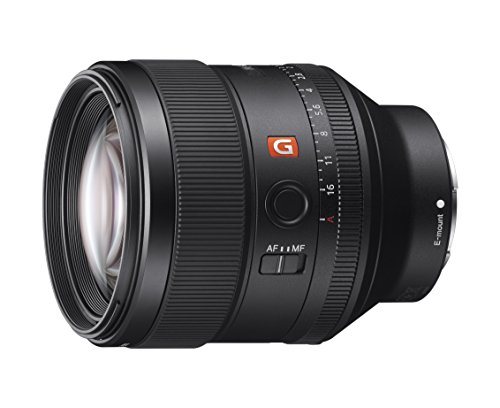
2. Sony FE 85mm f/1.4 GM — Best for Portraits
Portrait photographers, this is your lens. The Sony FE 85mm f/1.4 GM has earned its reputation as one of the finest portrait lenses ever made for any system, and in 2026 it remains the gold standard for Sony shooters. The 85mm focal length provides a flattering compression that makes faces look natural, while the f/1.4 aperture creates a depth of field so shallow that your subject separates from the background like they're standing on a different plane of existence.
What sets this lens apart from third-party 85mm options is the quality of the bokeh. Sony's XA element technology eliminates the onion-ring patterns that plague many fast primes, producing smooth, painterly background blur that enhances your subject without distraction. Sharpness at f/1.4 is remarkable — eyelashes and individual hair strands resolve with startling clarity. The 11-blade circular aperture maintains beautifully round bokeh balls even when you stop down slightly.
The minimum focus distance of 2.79 feet in AF mode gives you enough working distance for head-and-shoulders compositions without crowding your subject. Build quality is robust with full weather sealing, and the focus hold button provides quick access to AF lock during critical moments. If you shoot portraits, headshots, or fashion, this lens will transform your work. Understanding how aperture affects your images is crucial — our f-stop chart and cheat sheet is a great companion resource.
Pros:
- Stunning bokeh quality that rivals medium format rendering
- Tack-sharp at f/1.4 with excellent contrast
- Weather-sealed construction built for professional use
Cons:
- Heavier than some competing 85mm primes at 820g
- Autofocus can hunt slightly in very low light situations
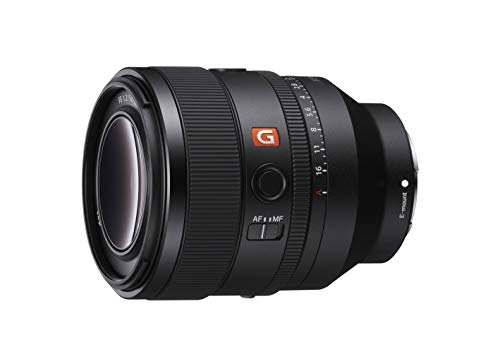
3. Sony FE 50mm f/1.2 GM — Best Low-Light Prime
Sony's answer to the question "how fast can a 50mm prime be while still delivering G Master quality?" is the FE 50mm f/1.2 GM. This is the flagship of Sony's prime lens lineup, and it delivers performance that justifies every dollar. The f/1.2 maximum aperture lets in a full stop more light than f/1.4 alternatives, giving you a meaningful advantage in low-light environments like dimly lit reception halls, concert venues, and nighttime street scenes.
Three XA (Extreme Aspherical) elements work together to maintain outstanding resolution even wide open at f/1.2 — a feat that's genuinely difficult to achieve at this aperture. Most ultra-fast primes show noticeable softness at their widest setting, but the 50mm GM bucks that trend. The depth of field at f/1.2 on a full-frame sensor is razor-thin, demanding precise focus, and Sony's latest AF algorithms deliver that precision consistently. The bokeh is extraordinary, with smooth transitions from in-focus to out-of-focus areas that give images a three-dimensional quality.
Despite the fast aperture, Sony kept the weight manageable at 778 grams. The lens balances well on A7-series bodies and doesn't feel front-heavy during extended handheld sessions. The customizable focus hold button and de-clickable aperture ring add versatility for both photo and video work. If you need the absolute best light-gathering capability in a 50mm focal length, this is the lens to own in 2026.
Pros:
- f/1.2 aperture delivers exceptional low-light performance
- Three XA elements maintain sharpness wide open — no compromise
- Beautiful three-dimensional bokeh rendering
- De-clickable aperture ring for smooth video iris pulls
Cons:
- Most expensive prime on this list by a significant margin
- Depth of field at f/1.2 is extremely thin, demanding precise technique
4. Sony FE 24-105mm f/4 G OSS — Best Value Zoom
Not everyone needs the f/2.8 aperture of the 24-70mm GM II, and that's where the FE 24-105mm f/4 G OSS becomes the smarter choice for many photographers. You get a longer zoom range — extending to 105mm instead of 70mm — with a constant f/4 aperture that maintains consistent exposure throughout. The extra reach at the telephoto end is genuinely useful for tighter portraits, candid event shots, and light wildlife work without swapping lenses.
Sony's G-series designation means this isn't a budget lens wearing premium branding. The optical formula uses four aspherical elements and three ED glass elements to deliver high resolving power from corner to corner across the entire zoom range. The 9-blade circular aperture produces pleasing background blur that, while not matching the GM-level bokeh of faster lenses, still looks natural and attractive. Built-in Optical SteadyShot image stabilization helps you shoot handheld at slower shutter speeds, which partially compensates for the one-stop aperture difference compared to f/2.8 zooms.
This is the lens we recommend as a first purchase for photographers who want one lens that covers the widest range of situations. Travel photographers especially benefit from the 24-105mm range — it handles architecture, landscapes, street photography, and portraits without a lens change. The build quality includes dust and moisture resistance, and the weight stays reasonable for all-day carry. If you're working within a tighter budget, this delivers remarkable quality per dollar. Browse our full gear zone for more lens and camera recommendations across all price ranges.
Pros:
- Versatile 24-105mm range covers most everyday shooting situations
- Constant f/4 aperture maintains consistent exposure while zooming
- Built-in optical image stabilization for handheld shooting
- Significantly more affordable than the 24-70mm f/2.8 GM II
Cons:
- f/4 maximum aperture limits low-light performance and background blur
- Autofocus speed doesn't match the XD linear motor lenses
5. Sony FE 90mm f/2.8 Macro G OSS — Best for Macro
Dedicated macro lenses occupy a special place in any photographer's kit, and Sony's FE 90mm f/2.8 Macro G OSS is one of the best available for any mirrorless system. True 1:1 magnification means your subject is reproduced at life-size on the sensor — a coin, an insect, a flower petal fills the entire frame with extraordinary detail. The minimum focus distance of just 0.28 meters gets you close enough to reveal textures invisible to the naked eye.
What makes this lens particularly practical is the built-in Optical SteadyShot stabilization. Macro photography amplifies every tiny hand movement, and at 1:1 magnification, even your heartbeat can cause blur. The OSS system compensates for this, making handheld macro shooting genuinely feasible rather than purely theoretical. The sliding focus ring provides instant switching between auto and manual focus — critical when you're fine-tuning focus at extreme magnifications where AF can struggle with flat or low-contrast subjects.
Beyond macro work, the 90mm f/2.8 doubles as an excellent portrait lens. The focal length is flattering for headshots, and the f/2.8 aperture produces enough background separation for clean, professional-looking results. Nano AR coating suppresses flare and ghosting effectively, even when shooting against backlit scenes. The dust and moisture resistant design means you won't hesitate to take this lens into the field for nature macro work. It's a specialized tool that earns its place through versatility.
Pros:
- True 1:1 macro magnification with outstanding sharpness
- Built-in image stabilization makes handheld macro practical
- Doubles as an excellent 90mm portrait lens
- Sliding focus ring for instant AF/MF switching
Cons:
- Autofocus speed is adequate but not fast — not ideal for action
- Heavier than some competing macro lenses at 602g
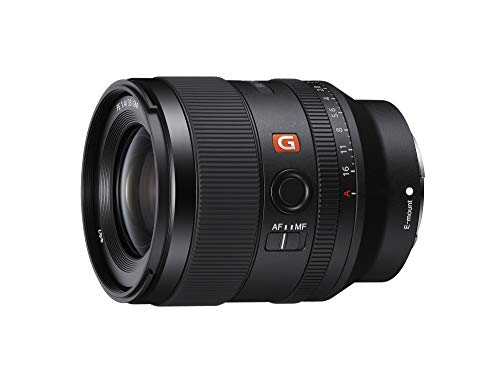
6. Sony FE 35mm f/1.4 GM — Best Wide-Angle Prime
The 35mm focal length is the storyteller's lens. It's wide enough to include environment and context, yet tight enough to isolate a single subject. Sony's FE 35mm f/1.4 GM takes this classic focal length and pairs it with G Master optics that deliver stunning resolution and bokeh simultaneously. Two XA (Extreme Aspherical) elements control aberrations so effectively that you get sharp, high-contrast images from f/1.4 all the way through the aperture range.
What impresses most about this lens is how compact Sony kept it despite the fast f/1.4 aperture. Weighing 524 grams, it's noticeably lighter than competing 35mm f/1.4 designs from other manufacturers. This matters when you're shooting street photography or documentary work where the lens lives on your camera for hours at a time. The autofocus is driven by two XD linear motors, delivering fast, quiet, and precise focusing that tracks moving subjects without hesitation.
Street photographers, photojournalists, and environmental portrait shooters will find the 35mm GM to be an indispensable tool. The f/1.4 aperture gives you enough depth-of-field control to separate your subject from busy urban backgrounds, while the wide field of view keeps the scene grounded in its surroundings. The aperture ring can be de-clicked for smooth video work, and the overall build quality matches the professional-grade standards you'd expect from the G Master line. This is the prime lens that lives on your camera when you want to shoot everything.
Pros:
- Compact and lightweight for an f/1.4 wide-angle prime
- Two XA elements deliver exceptional sharpness and bokeh
- Fast, silent XD linear motor autofocus
- De-clickable aperture ring for video versatility
Cons:
- 67mm filter thread means buying new filters if you're standardized on a different size
- Some barrel distortion visible in uncorrected RAW files
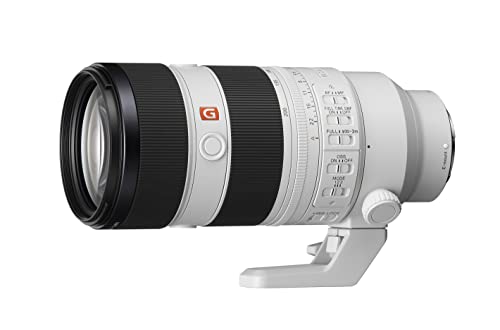
7. Sony FE 70-200mm f/2.8 GM OSS II — Best Telephoto Zoom
The 70-200mm f/2.8 is the workhorse telephoto for sports, wildlife, and event professionals, and Sony's second-generation GM version raises the bar for the entire category. Four XD (Extreme Dynamic) Linear Motors boost autofocus speed by up to 4x compared to the original, while AF tracking during zooming improves by approximately 30%. In practice, this means you can track a sprinter accelerating toward you or a bird in flight with confidence that the lens will keep up.
Optically, the lens uses two aspherical elements, one XA element, two ED elements, two Super ED elements, and one ED aspherical element — an ambitious formula that delivers superb image quality at every focal length and focus distance. Chromatic aberration is suppressed to near-invisible levels, and Sony's Nano AR Coating II fights flare and ghosting when you're shooting into challenging light. The constant f/2.8 aperture gives you beautiful subject isolation across the entire zoom range, and the bokeh is characteristically smooth.
Video capabilities set this lens apart from the competition. Sony specifically engineered reduced focus breathing, minimized focus shift when zooming, and eliminated axis shift when zooming — three issues that plague many telephoto zooms during video recording. The independent control rings for focus, zoom, and iris, combined with a click on/off switch for the aperture ring, make this a cinema-ready telephoto. It's also compatible with Sony's 1.4x and 2x teleconverters for additional reach, effectively giving you a 70-400mm system. For sports, concerts, and wildlife photography, this is the telephoto zoom to beat.
Pros:
- 4x faster autofocus than the previous generation with outstanding tracking
- Exceptional optical quality with extensive aberration control
- Designed for professional video with minimal breathing and axis shift
- Compatible with 1.4x and 2x teleconverters for extended reach
Cons:
- High price point — one of the most expensive lenses in Sony's lineup
- Still a large, heavy lens despite improvements over the first generation
Buying Guide: How to Choose the Best Sony Lens
Prime vs. Zoom: Which Type Do You Need?
This is the first decision you need to make. Zoom lenses like the 24-70mm and 70-200mm offer versatility — one lens covers multiple focal lengths, which means fewer lens changes and less gear to carry. Prime lenses like the 50mm f/1.2 and 85mm f/1.4 sacrifice that flexibility for wider maximum apertures and often sharper optics at their given focal length.
If you shoot events, travel, or need to react quickly to changing conditions, start with a zoom. If you specialize in portraits, street photography, or low-light work where maximum aperture matters, a prime will serve you better. Many professional Sony shooters eventually build a kit that includes both — a versatile zoom as their primary lens and one or two primes for specialized work.
Aperture and Low-Light Performance
Maximum aperture directly affects two things: how much light the lens gathers and how shallow your depth of field can be. An f/1.2 lens like the 50mm GM lets in over four times more light than an f/4 lens, which translates to lower ISO settings and cleaner images in dim environments. It also produces significantly more background blur for subject isolation.
However, faster apertures come with trade-offs. Lenses with wider maximum apertures are typically larger, heavier, and more expensive. The f/4 24-105mm weighs considerably less than the f/2.8 24-70mm, and costs substantially less too. Consider your actual shooting conditions honestly. If you primarily shoot outdoors in daylight, an f/4 zoom delivers excellent results. If you work in churches, concert halls, or indoor events, the extra light-gathering ability of f/2.8 or faster becomes essential rather than optional.
G Master vs. G Series: Is the Premium Worth It?
Sony's G Master (GM) line represents their absolute best optics — XA elements, the most advanced coatings, and the fastest autofocus motors. The G series sits just below, offering excellent professional quality at a lower price point. The difference is real but nuanced. G Master lenses show marginally better resolution at wide apertures, smoother bokeh characteristics, and often faster autofocus. For most photographers, G series lenses produce images that are indistinguishable from GM in normal viewing conditions.
Invest in G Master glass if you're a working professional who needs every optical advantage, you regularly shoot wide open and pixel-peep your results, or you shoot high-resolution bodies like the A7R V where lens quality becomes the limiting factor. The G series 24-105mm f/4 on this list proves that you don't need GM branding to get outstanding results.
Compatibility and Future-Proofing
Every lens on this list uses Sony's full-frame E-mount system, which Sony has committed to as their sole mirrorless mount. These lenses work on every Sony mirrorless camera from the A6000 series (with APS-C crop) through the latest A1 and A9 III flagships. Sony has consistently updated older lenses with firmware improvements, and the mount itself has remained unchanged since its introduction, so your investment is well-protected.
When budgeting, remember that quality glass holds its value far better than camera bodies. A camera body becomes outdated every 3-4 years as new sensors and processors arrive, but a great lens serves you for a decade or more. Prioritize lens quality over body features when allocating your budget — you can always upgrade the body later, and your lenses will perform even better on the newer hardware.
What People Ask
What is the best all-around Sony lens for beginners?
The Sony FE 24-105mm f/4 G OSS is the best starting point for most beginners. Its versatile zoom range covers wide-angle to short telephoto, the constant f/4 aperture keeps things simple, and built-in image stabilization forgives imperfect technique. It's significantly more affordable than G Master alternatives while delivering professional-quality images. Pair it with any Sony full-frame body, and you have a capable one-lens kit for learning and growing as a photographer.
Are Sony G Master lenses worth the extra cost over third-party options?
G Master lenses are worth it if you demand the absolute best autofocus performance, bokeh quality, and optical precision. Sony's XA element technology and XD linear motors are proprietary advantages that third-party manufacturers can't replicate exactly. That said, brands like Sigma and Tamron offer excellent Sony E-mount lenses at substantially lower prices. The gap has narrowed in recent years, but G Master glass still holds a measurable edge in resolution at wide apertures and autofocus tracking speed, particularly with Sony's latest camera bodies.
Can I use Sony full-frame lenses on APS-C camera bodies?
Yes, every lens on this list works on Sony APS-C bodies like the A6700. The camera automatically applies a 1.5x crop factor, so a 50mm lens behaves like a 75mm, and a 70-200mm effectively becomes a 105-300mm. You lose some of the wide-angle capability on wider lenses, but you gain extra reach on telephotos. The resolution hit from cropping is minimal on modern high-resolution sensors, and you're future-proofed for when you eventually upgrade to a full-frame body.
Which Sony lens is best for video and filmmaking?
The Sony FE 24-70mm f/2.8 GM II and FE 70-200mm f/2.8 GM OSS II are the top video lenses in this lineup. Both feature minimal focus breathing, quiet autofocus motors, de-clickable aperture rings, and Linear Response manual focus for precise pull-focus moves. The 70-200mm GM II specifically addresses axis shift when zooming, which is a critical consideration for professional video work. For a single video lens, the 24-70mm GM II covers the most useful focal range.
How many Sony lenses do I need to start a professional kit?
A professional Sony lens kit typically starts with two to three lenses. The classic combination is a 24-70mm f/2.8 for general work paired with a 70-200mm f/2.8 for reach — this covers roughly 90% of professional shooting situations. Add a fast prime like the 35mm f/1.4 or 85mm f/1.4 for low-light work and creative portraiture. Wedding photographers often carry all three. Specialized shooters might swap one of these for the 90mm macro or a super-telephoto depending on their genre.
Do Sony lenses come with a warranty, and how long does it last?
Sony provides a one-year limited warranty on all lenses purchased from authorized dealers in the United States. This covers manufacturing defects but not physical damage, water damage, or normal wear. Sony also offers extended warranty programs through their support portal. Buying from authorized retailers is important — gray market lenses purchased through unauthorized channels are not covered by Sony's US warranty, even though they may be optically identical to domestic versions.
Buy on Walmart
- Sony SEL2470GM2 FE 24-70mm f/2.8 GM II Full-Frame Constant-A — Walmart Link
- Sony FE 85mm f/1.4 GM Lens (Lens Only) — Walmart Link
- Sony FE 50mm f/1.2 GM Full-Frame Large-Aperture G Master Len — Walmart Link
- Sony - FE 24-105mm F4 G OSS Standard Zoom Lens (SEL24105G/2) — Walmart Link
- Sony SEL90M28G FE 90mm f/2.8-22 Macro G OSS Standard-Prime L — Walmart Link
- Sony FE 35mm f/1.4 GM Full-Frame Large-Aperture Wide Angle G — Walmart Link
- Sony FE 70-200mm F2.8 GM OSS II Full-Frame Constant-Aperture — Walmart Link
Buy on eBay
- Sony SEL2470GM2 FE 24-70mm f/2.8 GM II Full-Frame Constant-A — eBay Link
- Sony FE 85mm f/1.4 GM Lens (Lens Only) — eBay Link
- Sony FE 50mm f/1.2 GM Full-Frame Large-Aperture G Master Len — eBay Link
- Sony - FE 24-105mm F4 G OSS Standard Zoom Lens (SEL24105G/2) — eBay Link
- Sony SEL90M28G FE 90mm f/2.8-22 Macro G OSS Standard-Prime L — eBay Link
- Sony FE 35mm f/1.4 GM Full-Frame Large-Aperture Wide Angle G — eBay Link
- Sony FE 70-200mm F2.8 GM OSS II Full-Frame Constant-Aperture — eBay Link
Next Steps
- Check current prices on Amazon — Sony lens prices fluctuate frequently, and holiday sales or warehouse deals can save you hundreds. Click through to any lens above to see today's price and availability.
- Match the lens to your camera body — Confirm your Sony camera model and check that the lens autofocus features you want (like eye-tracking AF) are fully supported with a firmware update if needed.
- Rent before you buy — Services like LensRentals and BorrowLenses let you try a G Master lens for a weekend shoot before committing. This is especially worthwhile for primes where focal length preference is personal.
- Consider a two-lens starter kit — If you're building from scratch, pair the 24-70mm f/2.8 GM II with one prime (the 85mm for portraits or 35mm for street) and you'll cover the vast majority of shooting situations.
- Protect your investment — Budget for a quality UV filter and a padded lens pouch for each lens. G Master glass is built tough, but prevention is always cheaper than repair.
 |
 |
 |
 |

About Alex W.
Alex is a landscape, equine, and pet photographer based in the Lake District, UK, with years of experience shooting in one of Britain's most photographically demanding natural environments. His work has been featured in Take a View Landscape Photographer of the Year, Outdoor Photographer of the Year, and Amateur Photographer Magazine — publications that reflect a serious, competitive standard of image-making. At Click and Learn Photography, he shares the camera settings, gear choices, and compositional techniques he has developed through real-world shooting and competition-level work.
You can Get FREE Gifts. Furthermore, Free Items here. Disable Ad Blocker to receive them all.
Once done, hit anything below
|
|
|
|