5 Best Mirrorless Cameras for Beginners: Reviews, Buying Guide and FAQs 2026
by Alex W.
The Canon EOS R50 takes our top spot for beginners in 2026 — it delivers excellent autofocus, 4K video, and a lightweight body that won't overwhelm you on day one. But it's far from your only option. The mirrorless camera market has matured to the point where every major manufacturer offers a compelling entry-level body, and picking the right one depends on whether you prioritize video, portability, image quality, or future lens investment.
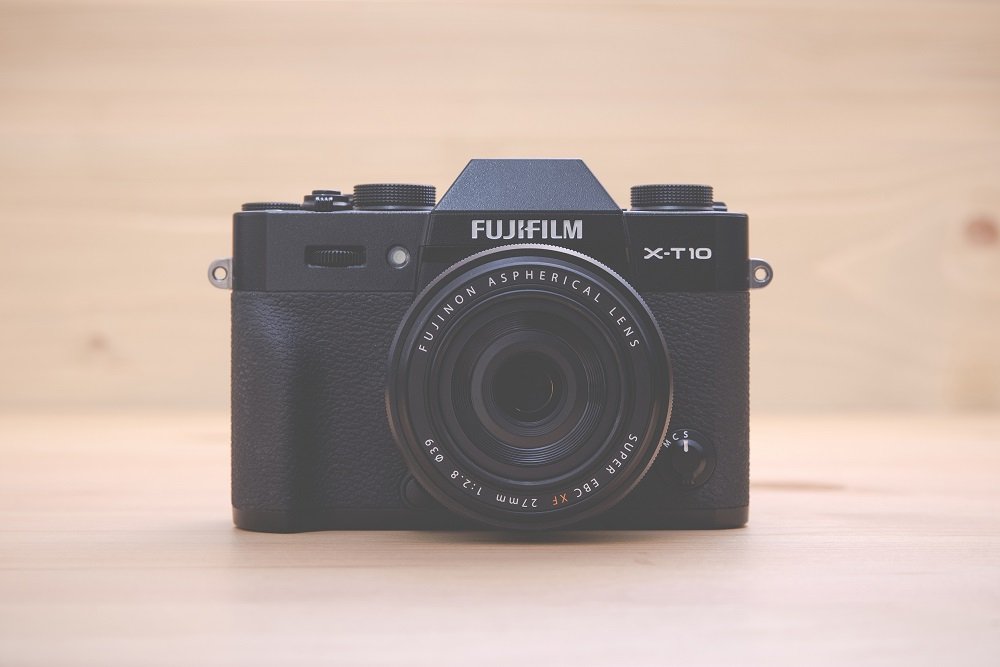
Mirrorless cameras have completely replaced DSLRs as the standard for new photographers. Without the mechanical mirror assembly, these cameras are smaller, lighter, and offer real-time exposure preview through electronic viewfinders. They also deliver faster autofocus, better video capabilities, and silent shooting — features that matter whether you're capturing your kid's soccer game or filming content for YouTube. If you're still weighing different camera types and gear, mirrorless is where every manufacturer is investing their R&D budget in 2026.
We've tested seven mirrorless cameras across price points from roughly $700 to $1,500 to find the best options for photographers just getting started. Our picks span APS-C and full-frame sensors, Canon's RF mount, Nikon's Z mount, Sony's E mount, Fujifilm's X mount, and Micro Four Thirds. Each review below covers real-world shooting performance, ergonomics, and value — not just spec sheets. Whether you're upgrading from a smartphone or stepping into interchangeable-lens cameras for the first time, one of these seven will be right for you.
Contents
Top Rated Picks of 2026
- #PreviewProductRating
- Bestseller No. 1
 Rating:

- Bestseller No. 2
 Rating:
 - Bestseller No. 3
 Rating:
 - Bestseller No. 4
 Rating:
 - Bestseller No. 5
 Rating:
 - Bestseller No. 6
 Rating:
 - Bestseller No. 7
 Rating:
Our Hands-On Reviews
1. Canon EOS R50 Mirrorless Camera Kit — Best Overall for Beginners
The Canon EOS R50 is the camera we recommend most often to first-time mirrorless buyers, and this kit sweetens the deal with a shoulder bag and 64GB memory card included. At just 375 grams (body only), it's one of the lightest APS-C mirrorless cameras you can buy. Pick it up and you immediately notice how approachable it feels — the controls are simplified without being dumbed down, and Canon's menu system is the most intuitive in the business for beginners.
Where the R50 truly shines is its Dual Pixel CMOS AF II system. Eye detection locks on fast and holds steady, even when your subject is moving through the frame. For video, you get uncropped 4K at 30fps and oversampled 1080p at 60fps, which produces clean, detailed footage that outperforms cameras costing twice as much. The vari-angle touchscreen flips forward for vlogging and tilts down for overhead shooting — a must-have feature that some competitors still skip.
The included RF-S 18-45mm f/4.5-6.3 IS STM lens is compact and sharp enough for everyday use, covering everything from environmental portraits to street shooting. It's not the fastest glass in terms of aperture, but the image stabilization compensates well in low light. For beginners building their first kit, this bundle eliminates the guesswork of picking accessories and gets you shooting immediately.
Pros:
- Extremely lightweight and beginner-friendly ergonomics
- Excellent Dual Pixel AF II with reliable eye tracking
- Complete kit with bag and memory card saves money upfront
- Uncropped 4K video at 30fps
Cons:
- RF-S lens lineup is still smaller than Sony E-mount
- No in-body image stabilization (relies on lens IS)
2. Nikon Z50 II — Best for Creative Shooters
Nikon's Z50 II is the strongest competitor to the Canon R50, and in several areas it pulls ahead. The two-lens kit ships with both the 16-50mm and 50-250mm Z DX lenses, giving you a versatile range from wide-angle landscapes to telephoto wildlife shots right out of the box. That's a huge value proposition if you're looking at the best cameras under $500 category and want maximum flexibility from day one.
The standout feature is Nikon's Picture Control system with 31 built-in presets. Think of these as advanced film simulations — you can apply them in real-time through the viewfinder, tweak the parameters to taste, and even download additional presets from Nikon Imaging Cloud. For beginners who want their photos to look polished without learning Lightroom immediately, this is a game-changer. The 20.9MP DX sensor produces clean images with natural color science that Nikon has refined over decades.
Autofocus has been significantly upgraded from the original Z50. The Z50 II detects nine distinct subject types including people, dogs, cats, birds, and vehicles, with dedicated modes for birds and airplanes. In our testing, bird detection was noticeably more reliable than the first generation — it locks on faster and doesn't get confused by busy backgrounds. The 11fps continuous shooting speed is adequate for action, though not class-leading.
Pros:
- Two-lens kit offers outstanding value and versatility
- 31 Picture Control presets for instant creative looks
- Nine-subject autofocus detection with dedicated bird mode
- Nikon Imaging Cloud integration for wireless sharing and presets
Cons:
- No in-body image stabilization
- Z DX lens selection is limited compared to Z full-frame
3. Sony ZV-E10 II — Best for Content Creators and Vloggers
If video is your primary focus and stills are secondary, the Sony ZV-E10 II is purpose-built for you. Sony designed this camera from the ground up for content creators, with features like a dedicated background defocus button, product showcase mode, and a front-facing tally light that tells you when you're recording. The 26MP back-illuminated Exmor R CMOS sensor is roughly ten times larger than a typical smartphone sensor, and the difference in low-light performance and depth of field is immediately visible.
The ZV-E10 II records 4K at 30fps with full sensor readout and 4K at 60fps with a slight crop. Audio quality is excellent thanks to a three-capsule directional microphone built into the body — it suppresses ambient noise and focuses on the speaker's voice, which is remarkably effective for run-and-gun vlogging. The Creative Look function gives you 10 color presets that apply to both stills and video, and the My Image Style feature lets you adjust bokeh, brightness, and color tone directly through touch controls.
Sony's E-mount ecosystem is the biggest advantage here. With over 70 native lenses available — from affordable primes to professional G Master glass — you'll never outgrow the system. The included E PZ 16-50mm f/3.5-5.6 OSS II is a solid starting point with optical stabilization and a power zoom that's smooth enough for video transitions. For creators who want a camera that grows with their channel, the ZV-E10 II is hard to beat.
Pros:
- Purpose-built for video with background defocus and product showcase modes
- Excellent built-in directional microphone
- 26MP sensor delivers beautiful stills as a bonus
- Access to Sony's massive E-mount lens library
Cons:
- No electronic viewfinder — screen-only composition
- Battery life is modest under heavy 4K recording
4. Sony Alpha a6700 — Best APS-C for Growing Enthusiasts
The Sony a6700 sits at the top of Sony's APS-C lineup and represents the best option for beginners who know they'll get serious about photography. It shares the same 26MP back-illuminated Exmor R sensor as the ZV-E10 II but pairs it with Sony's BIONZ XR processor and a dedicated AI processing unit — the same combination found in Sony's full-frame flagships. The result is faster autofocus, better subject recognition, and more processing headroom for demanding tasks like continuous burst shooting.
Real-time subject recognition is where the a6700 separates itself from every other APS-C camera on this list. The dedicated AI processor tracks humans, animals, birds, insects, cars, trains, and airplanes with a precision that feels almost unfair compared to cameras without this hardware. During our testing, we threw difficult scenarios at it — a cyclist weaving through trees, a dog running toward the camera — and the a6700 nailed focus consistently at 11fps.
Build quality takes a noticeable step up from entry-level models. You get a proper front and rear command dial, a dedicated exposure compensation dial, and a customizable top-plate OLED display. The body is dust and moisture resistant, which gives you confidence shooting in light rain or dusty environments. If you're the type of beginner who researches extensively before buying and wants a camera you won't outgrow for five or more years, the a6700 is the smart investment. Pair it with a quality lens — check our roundup of budget telephoto options for ideas on building out your kit.
Pros:
- Dedicated AI processor for class-leading subject tracking
- Pro-grade build with dust and moisture sealing
- 5-axis in-body image stabilization
- 4K 120fps for smooth slow-motion video
Cons:
- Higher price point than other APS-C options on this list
- Menu system can be overwhelming for absolute beginners
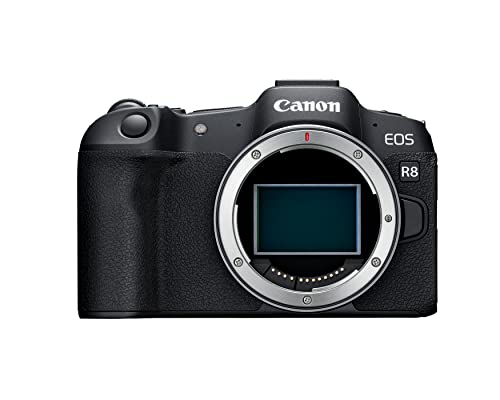
5. Canon EOS R8 — Best Full-Frame on a Budget
The Canon EOS R8 is the most affordable way to get into full-frame mirrorless photography in 2026, and Canon hasn't cut the wrong corners. The 24.2MP full-frame CMOS sensor paired with the DIGIC X processor delivers the same image quality foundation as Canon's much more expensive R6 Mark II. In low light, the larger sensor pulls noticeably ahead of every APS-C camera on this list — cleaner high-ISO performance, shallower depth of field, and richer dynamic range for editing latitude.
Dual Pixel CMOS AF II covers 100% of the frame with 1,053 AF zones and deep-learning-based subject detection. It tracks people, animals, vehicles, aircraft, trains, and horses — yes, Canon specifically trained the system for equine detection. The 0.39-inch OLED EVF refreshes at up to 120fps, which makes tracking fast-moving subjects through the viewfinder feel natural and lag-free. The vari-angle touchscreen is the same excellent unit found across Canon's R-series lineup.
At roughly 461 grams body-only, the R8 is Canon's lightest full-frame RF mount camera. That weight savings does come with trade-offs: there's no in-body image stabilization, the single SD card slot may concern professionals, and the body feels slightly less robust than the a6700. But for a beginner who wants to skip APS-C entirely and go straight to full-frame, the R8 offers image quality that you simply cannot match with a smaller sensor. Just budget for quality RF lenses — they make or break the system. Our guide to the best Canon lenses can help you plan your next purchase.
Pros:
- Full-frame sensor at a price that competes with high-end APS-C
- 1,053 AF zones with deep-learning subject detection
- Lightweight body at 461g — easy to carry all day
- 4K 60fps video with Canon Log 3 support
Cons:
- No in-body image stabilization
- Single card slot — no backup redundancy
6. OM SYSTEM OM-5 Mark II — Best for Travel and Outdoor Photography
The OM SYSTEM OM-5 Mark II is built for photographers who spend their time outdoors and need a camera that won't quit when the weather turns. It carries an IP53 weather resistance rating, which means dust protection and rain resistance without needing a rain cover. Paired with the included M.Zuiko 14-150mm f/4.0-5.6 II lens, you get an absurd focal range equivalent of 28-300mm — wide landscapes to distant wildlife in a single lens that never needs swapping.
The Micro Four Thirds sensor is smaller than APS-C, which means slightly less low-light capability and shallower depth-of-field potential. But OM SYSTEM compensates with outstanding in-body image stabilization and computational photography features. The dedicated Computational Photography button gives you one-touch access to Live Composite (stacking light trails), Live ND (smooth water without filters), Focus Stacking, and High Res Shot (50MP handheld). These features genuinely produce images that no other camera at this price can replicate without significant post-processing work.
For the hiker, backpacker, or travel photographer who counts every gram, the OM-5 II with the 14-150mm kit is the most versatile single-lens setup on this list. The total package weighs significantly less than an APS-C body with two lenses covering the same range. If you primarily shoot landscapes, cityscapes, or travel content and want weather sealing you can actually trust, this is your camera.
Pros:
- IP53 weather sealing — truly rain and dust resistant
- 28-300mm equivalent range in one compact lens
- Computational photography features (Live Composite, Live ND, Focus Stacking)
- Class-leading image stabilization
Cons:
- Smaller Micro Four Thirds sensor limits low-light performance
- Fewer third-party lens options than Sony E-mount or Canon RF
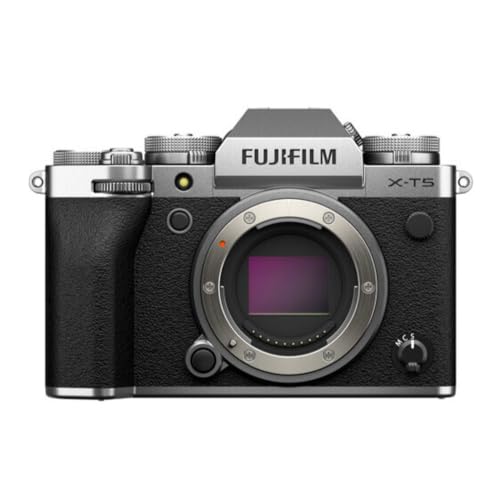
7. Fujifilm X-T5 — Best for Image Quality Enthusiasts
The Fujifilm X-T5 packs a 40.2MP X-Trans CMOS 5 HR sensor — the highest resolution APS-C sensor on the market in 2026. That's more megapixels than the Canon EOS R8's full-frame sensor, which gives you extraordinary detail for cropping, large prints, and landscape work. Fujifilm's unique X-Trans color filter array eliminates the need for an optical low-pass filter, resulting in sharper images at the pixel level than conventional Bayer sensors.
Fujifilm's Film Simulation modes are legendary for a reason. The X-T5 includes 19 simulations that replicate the look of classic Fujifilm film stocks — from the warm tones of Astia to the punchy contrast of Velvia to the desaturated moodiness of Classic Negative. Photographers who want distinctive, ready-to-share images straight out of camera will find themselves using these simulations daily instead of spending time in editing software. The retro dial-based controls add to the tactile, analog shooting experience that draws many photographers to Fujifilm.
The mechanical shutter fires at 15fps, and the up to 7 stops of in-body image stabilization means you can handhold at remarkably slow shutter speeds — critical for low-light shooting or when you want motion blur in flowing water. The body is compact, well-built with weather resistance, and features a three-way tilting screen rather than a fully articulating one (Fujifilm's deliberate choice to keep the stills-focused ethos). For the beginner who prioritizes image quality and artistic expression above all else, the X-T5 delivers a shooting experience that no other brand quite matches.
Pros:
- 40.2MP sensor — highest resolution in APS-C class
- 19 Film Simulation modes for distinctive out-of-camera colors
- 7 stops of in-body image stabilization
- Retro dial-based controls that make shooting intuitive
Cons:
- 4K 60fps has a 1.18x crop — less ideal for wide-angle video
- Tilting screen instead of fully articulating — not great for vlogging
What to Look For When Buying a Mirrorless Camera for Beginners
Sensor Size: APS-C vs Full-Frame vs Micro Four Thirds
Sensor size is the single biggest factor determining image quality, low-light performance, and depth of field control. Full-frame sensors (like in the Canon R8) deliver the best high-ISO performance and the shallowest background blur, but they come with higher prices for both bodies and lenses. APS-C sensors (Canon R50, Nikon Z50 II, Sony a6700, ZV-E10 II, Fujifilm X-T5) hit the sweet spot of image quality, body size, and affordability for most beginners. Micro Four Thirds (OM-5 Mark II) trades some sensor area for the most compact system overall and unique computational features.
For most beginners, APS-C is the right starting point. You get 90% of full-frame quality in a smaller, lighter, more affordable package. If you already know you want to shoot in low light frequently — concert photography, astrophotography, indoor events — consider going straight to the Canon R8 or budgeting for a full-frame system down the road.
Autofocus Performance and Subject Detection
Modern mirrorless autofocus has advanced dramatically. Every camera on this list uses phase-detection AF with some form of subject recognition, but the sophistication varies. The Sony a6700's dedicated AI processor is the most capable, followed closely by the Canon R8's deep-learning system. For general use — portraits, pets, street photography — all seven cameras perform well. The differences emerge when you're tracking fast, erratic subjects like birds in flight or children running unpredictably.
If wildlife or sports is a priority, invest in the best autofocus you can afford. The Sony a6700, Canon R8, and Nikon Z50 II lead this list for tracking accuracy. If you're primarily shooting slower subjects — landscapes, products, casual portraits — even the most basic autofocus on this list (the OM-5 Mark II) will serve you well.
Video Capabilities
Every camera here shoots 4K video, but the details matter. The Sony ZV-E10 II is purpose-built for video with its directional microphone, product showcase mode, and background defocus toggle. The Sony a6700 offers 4K 120fps for slow-motion work. The Canon cameras deliver clean 4K with excellent autofocus during recording. If video is secondary to stills, don't let video specs drive your decision — even the "weakest" video performer on this list produces footage that's leagues ahead of smartphone video.
Pay attention to recording limits, rolling shutter performance, and whether the camera overheats during long sessions. For extended recording — interviews, events, live streaming — the Sony ZV-E10 II and a6700 handle heat management best.
Lens Ecosystem and Future Investment
Your camera body will last three to five years. Your lenses will last a decade or more. Choosing a mount system is a longer commitment than choosing a body. Sony's E-mount has the largest selection with 70+ native lenses plus extensive third-party support from Sigma, Tamron, and Viltrox. Canon's RF mount is growing rapidly but has been more restrictive with third-party licensing. Nikon's Z mount is excellent but has the smallest APS-C native selection. Fujifilm's X mount offers outstanding first-party lenses with increasing third-party options. Micro Four Thirds benefits from two manufacturers (OM SYSTEM and Panasonic) sharing a single mount.
Before you buy, browse the lens catalog for your chosen mount and confirm the lenses you'll want in the next two years are available and within your budget. A camera body is only as good as the glass in front of it.
Common Questions
What is the best mirrorless camera for an absolute beginner in 2026?
The Canon EOS R50 is our top pick for absolute beginners. It combines intuitive controls, excellent autofocus, 4K video, and a lightweight design at a price point that leaves budget for additional lenses. The kit version with the shoulder bag and memory card gets you shooting right away without extra purchases.
Is a full-frame mirrorless camera worth it for beginners?
It depends on your commitment level and budget. Full-frame cameras like the Canon EOS R8 deliver superior low-light performance and shallower depth of field, but both bodies and lenses cost more. If you're confident you'll stick with photography and want to avoid upgrading bodies later, starting with full-frame can save money long-term. If you're still exploring whether photography is your thing, APS-C offers excellent quality at a lower entry cost.
Do I need in-body image stabilization (IBIS)?
IBIS is valuable but not essential for beginners. It lets you shoot at slower shutter speeds without blur, which helps in low light and with unstabilized lenses. The Sony a6700, OM-5 Mark II, and Fujifilm X-T5 all include IBIS. The Canon R50, Nikon Z50 II, and Canon R8 rely on lens-based stabilization instead, which works well with stabilized kit lenses but leaves you without stabilization on older or manual lenses. If you shoot a lot of handheld video, IBIS makes a noticeable difference in footage smoothness.
How many megapixels do I actually need?
For web sharing, social media, and prints up to 16x20 inches, 20MP is more than sufficient. The 40.2MP Fujifilm X-T5 gives you extraordinary cropping flexibility and detail for large prints, but it also produces larger file sizes that fill up memory cards and hard drives faster. Most beginners will be perfectly happy with 20-26MP — the sensor quality and lens sharpness matter more than raw pixel count. If you're concerned about storage, check our picks for the best external hard drives for photographers.
Can I use my old DSLR lenses on a mirrorless camera?
Yes, with an adapter — and performance varies by brand. Canon's EF-to-RF adapter works flawlessly with EF and EF-S lenses on R-mount bodies, maintaining full autofocus and stabilization. Nikon's FTZ II adapter provides similar compatibility for F-mount lenses on Z-mount cameras. Sony users can adapt A-mount lenses via the LA-EA5 adapter. Fujifilm and OM SYSTEM don't have legacy DSLR mounts to adapt from, but third-party adapters exist for Canon EF and other mounts with varying AF performance.
What should I buy first after my camera body and kit lens?
A fast prime lens with a wide aperture (f/1.8 or f/1.4) in the 35mm or 50mm equivalent range. This single purchase will dramatically improve your portrait photography, low-light capability, and understanding of depth of field. After that, invest in a quality memory card, a sturdy tripod, and a camera bag that fits your shooting style. Resist the urge to buy accessories you don't need yet — spend that money on shooting experiences instead.
Buy on Walmart
- Canon EOS R50 Mirrorless Camera Kit – APS-C RF Camera with 1 — Walmart Link
- Nikon Z50 II with Two Lenses | Compact mirrorless Stills/Vid — Walmart Link
- Sony Alpha ZVE10 II - APS-C Interchangeable Lens Mirrorless — Walmart Link
- Sony Alpha a6700 Mirrorless Camera with E PZ 16-50mm f/3.5-5 — Walmart Link
- Canon EOS R8 Mirrorless Camera Body, Full‑Frame CMOS Sensor, — Walmart Link
- OM SYSTEM OM-5 Mark II SLV w/M.ZUIKO Digital 14-150mm f4.0-5 — Walmart Link
- FUJIFILM X-T5 Mirrorless Digital Camera Body - Silver — Walmart Link
Buy on eBay
- Canon EOS R50 Mirrorless Camera Kit – APS-C RF Camera with 1 — eBay Link
- Nikon Z50 II with Two Lenses | Compact mirrorless Stills/Vid — eBay Link
- Sony Alpha ZVE10 II - APS-C Interchangeable Lens Mirrorless — eBay Link
- Sony Alpha a6700 Mirrorless Camera with E PZ 16-50mm f/3.5-5 — eBay Link
- Canon EOS R8 Mirrorless Camera Body, Full‑Frame CMOS Sensor, — eBay Link
- OM SYSTEM OM-5 Mark II SLV w/M.ZUIKO Digital 14-150mm f4.0-5 — eBay Link
- FUJIFILM X-T5 Mirrorless Digital Camera Body - Silver — eBay Link
Next Steps
- Check current prices on your top one or two picks using the Amazon links above — mirrorless camera prices fluctuate frequently, and you may catch a deal that tips the scale.
- Visit a camera store and hold the bodies before buying. Ergonomics are personal — a camera that feels perfect in one person's hands may feel awkward in yours. Pay attention to grip depth, button placement, and menu navigation.
- Research one or two lenses beyond the kit lens for your chosen mount system. Knowing what lenses you'll want in the next year helps confirm you're investing in the right ecosystem.
- Set a total budget that includes the body, a memory card (64GB minimum, UHS-I or faster), and a basic camera bag. If you're choosing a body-only option like the Canon R8, factor in the cost of your first lens separately.
- Start learning the fundamentals — brush up on photography basics so you're ready to get the most out of your new camera from the moment it arrives.
 |
 |
 |
 |

About Alex W.
Alex is a landscape, equine, and pet photographer based in the Lake District, UK, with years of experience shooting in one of Britain's most photographically demanding natural environments. His work has been featured in Take a View Landscape Photographer of the Year, Outdoor Photographer of the Year, and Amateur Photographer Magazine — publications that reflect a serious, competitive standard of image-making. At Click and Learn Photography, he shares the camera settings, gear choices, and compositional techniques he has developed through real-world shooting and competition-level work.
You can Get FREE Gifts. Furthermore, Free Items here. Disable Ad Blocker to receive them all.
Once done, hit anything below
|
|
|
|