The best photography tutorials and resources available today can compress months of trial-and-error into a single afternoon of focused learning. Our team has spent considerable time sifting through the noise — the clickbait thumbnails, the recycled beginner tips, the gear-obsessed content that never actually teaches technique. What follows is a curated breakdown of the tutorials, tools, and learning strategies that consistently deliver results, whether someone is picking up a camera for the first time or refining an advanced workflow. For a deeper dive into structured learning paths, our ultimate guides section covers many of these topics in even greater detail.
Photography education has shifted dramatically. The traditional path of expensive workshops and college courses still exists, but it now competes with free YouTube breakdowns, community-driven forums, and affordable online platforms that cover everything from the exposure triangle to advanced compositing techniques. The challenge is no longer finding resources — it's filtering the valuable ones from the filler.
Below, we've organized our findings into five key areas that cover the full spectrum of photography learning. Each section includes practical recommendations, honest assessments, and the kind of context that helps anyone make smarter decisions about where to invest their learning time.
Contents
The Landscape of Photography Education Today
Photography education looks nothing like it did a decade ago. The barrier to entry has essentially disappeared, which is both a blessing and a challenge. Our team regularly evaluates learning platforms, and the sheer volume of content available can overwhelm anyone trying to build a structured skill set.
Where Most Learners Start
Most people begin their photography journey in one of these places:
- YouTube — The largest free library of photography tutorials on the planet. Channels range from quick-tip formats to hour-long masterclasses.
- Reddit communities — Subreddits like r/photography and r/photoclass offer peer feedback and structured curricula at no cost.
- Dedicated platforms — Sites like CreativeLive, Skillshare, and KelbyOne offer structured coursework with professional instructors.
- Camera manufacturer resources — Nikon School, Canon's learning hub, and Sony's Alpha Universe all provide brand-specific tutorials.
- Local camera clubs — Often overlooked, these groups provide in-person critique sessions and group shoots that accelerate learning faster than solo study.
The best photography tutorials and resources tend to share a few traits: they teach why before how, they use real-world shooting scenarios rather than studio-only setups, and they encourage practice assignments between lessons.
How Tutorial Quality Has Changed
Early photography tutorials on the web were often poorly produced — shaky screen recordings, mumbled explanations, outdated techniques. The current generation of content creators has raised the bar substantially. Production quality alone doesn't guarantee educational value, but it does make complex topics like the Zone System and hyperfocal distance far more accessible when paired with clear visual demonstrations.
Our experience suggests that the best tutorial creators share a few characteristics:
- They shoot actively and share unedited behind-the-scenes footage.
- They acknowledge mistakes and explain what went wrong.
- They provide downloadable RAW files or practice exercises.
- They revisit topics as techniques and technology evolve.
Essential Tools and Gear for Learning Photography
Gear matters less than most people think — but it doesn't matter zero. Having the right baseline equipment removes friction from the learning process, while certain software tools can genuinely accelerate skill development.
Camera Systems and Starter Kits
The debate between camera systems remains one of the most discussed topics in photography. Anyone starting out faces the fundamental choice between DSLR and mirrorless — our detailed DSLR vs. mirrorless comparison breaks down the practical differences for every budget level.
Here's what our team recommends for different learning stages:
- Absolute beginners — A smartphone with a manual camera app (like ProCamera or Lightroom Mobile's camera). This removes the gear barrier entirely and focuses attention on composition and light.
- Committed learners — An entry-level mirrorless body with a kit lens. The electronic viewfinder alone provides real-time exposure feedback that teaches faster than optical viewfinders.
- Genre-focused shooters — Invest in one quality lens for the preferred genre before upgrading the body. A 50mm f/1.8 for portraits, a wide-angle for landscapes, or a macro lens for close-up work will transform results more than a body upgrade.
- A sturdy tripod — Often the most overlooked piece of learning gear. It forces deliberate composition and opens up long-exposure techniques that are impossible handheld.
The single fastest way to improve is to master one lens completely before buying another. Constraints breed creativity, and most professionals can trace their biggest growth periods back to shooting with limited gear.
Editing Software That Accelerates Growth
Post-processing is half the craft. The best photography tutorials and resources always include editing walkthroughs, and having the right software makes following along seamless.
| Software | Best For | Cost | Learning Curve |
|---|---|---|---|
| Adobe Lightroom Classic | RAW processing, batch editing, catalog management | Subscription (~$10/mo) | Moderate |
| Adobe Photoshop | Compositing, retouching, advanced manipulation | Subscription (~$10/mo with Lightroom) | Steep |
| Capture One | Tethered shooting, color grading, professional workflow | Subscription or perpetual license | Steep |
| DxO PhotoLab | Noise reduction, optical corrections, lens profiles | One-time purchase | Moderate |
| Darktable | Free RAW processing (open source) | Free | Moderate |
| GIMP | Free Photoshop alternative for pixel editing | Free | Steep |
| Luminar Neo | AI-assisted edits, sky replacement, quick enhancements | Subscription or one-time | Low |
| Affinity Photo | One-time-purchase Photoshop alternative | One-time purchase | Moderate |
Our team's general recommendation is to start with Lightroom Classic for catalog management and RAW processing, then add Photoshop or Affinity Photo as compositing needs grow. Anyone resistant to subscriptions should look at Darktable paired with GIMP — the learning curve is steeper, but the capability is substantial.
Best Photography Tutorials and Resources That Deliver Real Results
Theory without application is just entertainment. The tutorials that actually move the needle share one trait — they push learners to shoot, review, and iterate rather than passively consume content.
Landscape and Nature Tutorials
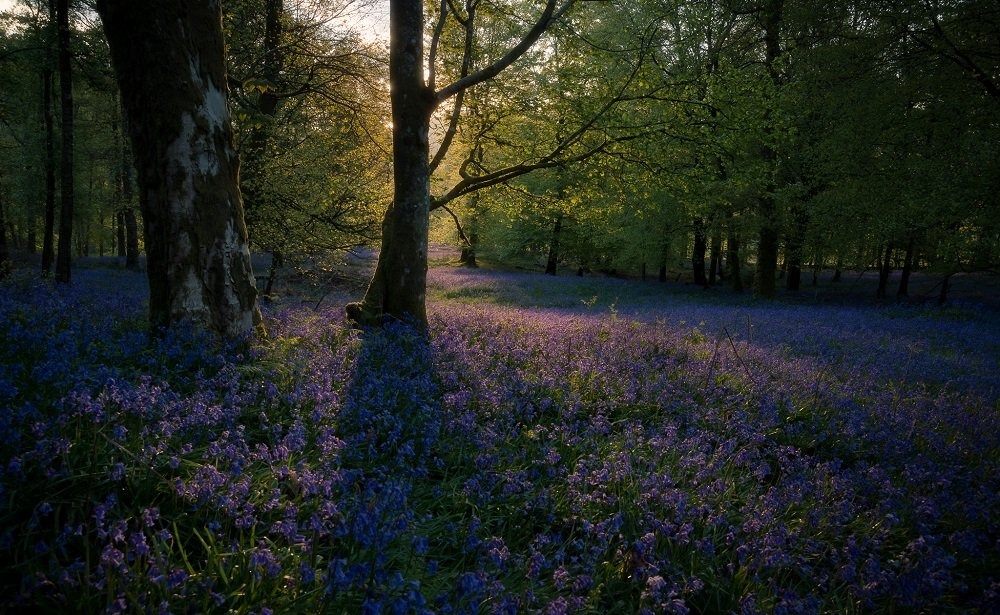
Landscape photography remains one of the most popular tutorial genres, and for good reason. It combines technical skills (exposure, focus stacking, filters) with artistic decisions (composition, timing, location scouting) in a way that challenges every skill level simultaneously.
The most effective landscape tutorials we've encountered follow this pattern:
- Pre-visualization — Teaching how to plan a shot before arriving at the location, including weather apps, sun-tracking tools, and topographic maps.
- On-location decision-making — Walking through the thought process of choosing a composition, adjusting for changing light, and adapting when conditions don't cooperate.
- Processing workflow — Showing the complete edit from RAW import to final output, including masking, color grading, and sharpening for the intended output medium.
Our team has found that tutorials featuring real field conditions — wind, rain, harsh midday light — teach more than those shot exclusively during golden hour. Perfect conditions produce pretty images, but imperfect conditions produce better photographers. Anyone interested in pushing landscape skills further should explore our guide on mountain photography techniques for terrain-specific advice.
Specialty Genre Deep Dives
Beyond the mainstream genres, some of the best learning happens in niche specialties. These tutorials force different problem-solving approaches:
- Astrophotography — Teaches long-exposure noise management, star tracking, and post-processing stacking techniques that apply broadly to low-light work.
- Macro photography — Develops patience and precision with focus, depth of field management at extreme magnifications, and creative lighting in tight spaces.
- Street photography — Builds anticipation skills, fast manual focusing, and the ability to read scenes before they unfold.
- Pet and wildlife photography — Trains autofocus tracking skills, burst mode decision-making, and the patience to wait for unpredictable subjects.
- Food photography — Teaches controlled lighting, styling, and the intersection of photography with other creative disciplines.
The common thread across all specialty tutorials that produce results: they assign specific shooting challenges rather than just demonstrating techniques. A tutorial that says "go photograph three different textures using only sidelight" will teach more than one that simply explains what sidelight does.
Free vs. Paid Photography Resources: An Honest Comparison
This is where most people get stuck. The internet is flooded with free photography content, so the natural question is whether paid courses, workshops, and mentorships are worth the investment. Our team's position is nuanced — it depends entirely on the learning stage and the specific resource.
What Free Resources Do Well
Free tutorials and resources excel in several areas:
- Foundational concepts — Exposure, composition, white balance, and basic post-processing are thoroughly covered by free content. There's no reason to pay for this level of instruction.
- Gear reviews and comparisons — YouTube reviewers and photography blogs provide more timely and unbiased gear analysis than most paid platforms.
- Inspiration and community — Platforms like Flickr, 500px, and Instagram provide endless inspiration and peer feedback at no cost.
- Quick technique demos — Short-form tutorials on specific techniques (focus stacking, panorama stitching, off-camera flash basics) are abundant and high-quality.
The limitations of free content typically emerge at intermediate and advanced levels, where structured progression matters more than individual tips.
Where Paid Courses Justify the Cost
Paid resources tend to earn their price in these scenarios:
- Structured curricula — A well-designed course builds skills sequentially, eliminating the "what should I learn next?" problem that plagues self-directed learners.
- Instructor feedback — Workshops and mentorship programs where an experienced photographer critiques submitted work provide the single highest ROI in photography education.
- Advanced post-processing — Complex retouching, compositing, and color grading workflows are difficult to teach well in free short-form content. Paid platforms like Phlearn and RGG EDU go deeper.
- Genre-specific masterclasses — Niche genres like architectural photography, underwater photography, or fine art printing have smaller audiences, so quality instruction tends to sit behind paywalls.
- Accountability and deadlines — Courses with assignments and deadlines create structure that many self-directed learners struggle to maintain independently.
A reasonable approach for most people is to exhaust free resources through the beginner and early intermediate stages, then invest in one targeted paid course or workshop in a specific genre rather than a broad "learn everything" platform. The specificity forces commitment to a direction, which matters more than covering every technique superficially.
Photography Learning Myths That Waste Everyone's Time
Every field accumulates myths, and photography is no exception. Some of these misconceptions actively harm learning progress by directing attention and money toward the wrong things.
The Gear Trap
This is the most persistent and most damaging myth in photography education: the belief that better gear produces better photos. While equipment has minimum thresholds for certain genres (astrophotography genuinely requires specific sensor capabilities, for instance), most people hit creative ceilings long before they hit equipment ceilings.
Common gear myths that our team encounters regularly:
- "Full frame is always better than crop sensor" — For most genres and print sizes, the difference is negligible. Crop sensors actually provide a reach advantage for wildlife and sports.
- "More megapixels means better photos" — Beyond roughly 20MP, additional resolution benefits only large-format printing and aggressive cropping. It adds file size, processing time, and storage costs.
- "Expensive lenses are always sharper" — Modern kit lenses are remarkably capable. The biggest jumps in image quality come from better light and better technique, not sharper glass.
- "Manual mode is more professional" — Aperture priority and shutter priority exist because they're efficient. Professional photographers use every mode depending on the situation.
The antidote to the gear trap is straightforward: when someone feels limited, they should identify the specific limitation. If the camera genuinely can't achieve what's needed (low-light autofocus for event photography, for example), an upgrade makes sense. If the limitation is compositional or technical, no amount of new gear will help.
The "Natural Talent" Fallacy
The idea that great photographers are born with an "eye" is comforting because it provides an excuse to stop trying. In reality, composition is a learnable skill, and the "eye" that experienced photographers seem to have is the product of thousands of hours of deliberate practice and study.
Here's what the research on skill acquisition actually shows about photography learning:
- Pattern recognition develops with volume — Photographers who shoot regularly begin to recognize light patterns, compositional opportunities, and decisive moments faster. This looks like intuition but is actually trained perception.
- Critique accelerates growth — Submitting work for honest critique — and giving critique to others — develops analytical skills that passive viewing cannot match.
- Studying other art forms transfers — Painters, cinematographers, and graphic designers all work with composition and light. Cross-pollination from other visual disciplines consistently produces more creative photographers.
- Deliberate practice beats casual shooting — Going out with a specific goal (practice leading lines, shoot only at f/2.8, compose without centering the subject) produces faster improvement than shooting without intention.
The photography tutorials and resources that acknowledge this reality — and build practice structures around it — are vastly more effective than those that treat photography as a collection of tips and tricks to memorize.
Another common myth worth addressing: the idea that shooting RAW is optional or only for professionals. RAW files preserve all sensor data, giving far more flexibility in post-processing. This is especially critical during the learning phase, when exposure and white balance mistakes are frequent and recoverable in RAW but often destructive in JPEG.
The best camera is the one that makes someone want to go out and shoot — the best tutorial is the one that makes them want to shoot differently when they come back.
 |
 |
 |
 |

About Alex W.
Alex is a landscape, equine, and pet photographer based in the Lake District, UK, with years of experience shooting in one of Britain's most photographically demanding natural environments. His work has been featured in Take a View Landscape Photographer of the Year, Outdoor Photographer of the Year, and Amateur Photographer Magazine — publications that reflect a serious, competitive standard of image-making. At Click and Learn Photography, he shares the camera settings, gear choices, and compositional techniques he has developed through real-world shooting and competition-level work.
You can Get FREE Gifts. Furthermore, Free Items here. Disable Ad Blocker to receive them all.
Once done, hit anything below
|
|
|
|