According to a survey by The Knot, the average couple spends over $2,500 on wedding photography, making it one of the top three budget items for any ceremony. That level of investment means the pressure on photographers — especially newcomers — is enormous, and having solid wedding photography tips for beginners can mean the difference between a thriving side business and a career-ending bad review. Our team at ClickAndLearnPhotography has spent years coaching new photographers through their first weddings, and we've distilled everything into this comprehensive guide for anyone exploring the photography beginners category for the first time.
Weddings are uniquely challenging because every moment is fleeting, the lighting changes constantly, and there are no second takes on the first kiss or the ring exchange. Our experience has shown that beginners who walk in with a clear plan, the right equipment, and a practiced workflow consistently outperform those who rely on talent alone. The good news is that wedding photography is a learnable craft, and the fundamentals covered here apply whether someone is shooting a backyard elopement or a 300-guest ballroom reception.
We've organized this guide around seven core areas that every aspiring wedding photographer needs to master, from understanding when these skills matter most to building a long-term portfolio strategy that attracts paying clients.
Contents
- When Wedding Photography Skills Matter Most
- What Separates Amateur Wedding Shots from Professional Results
- Essential Gear for Shooting Weddings
- A Step-by-Step Workflow for the Wedding Day
- Common Wedding Photography Myths That Hold Beginners Back
- Building a Wedding Photography Portfolio Over Time
- Proven Practices That Deliver Consistent Results
- Frequently Asked Questions
- Next Steps
When Wedding Photography Skills Matter Most
Wedding photography tips for beginners aren't just useful on the big day itself — they apply across an entire timeline that stretches from engagement sessions to anniversary shoots. Our team has found that most newcomers underestimate how many distinct photographic scenarios a single wedding presents, and each one demands a slightly different approach to lighting, composition, and timing.
Ceremonies, Receptions, and Everything Between
The ceremony is where nerves peak for both the couple and the photographer, since the lighting is often dim and movement is restricted. Our recommendation is to scout the venue at least one day in advance, noting the direction of natural light and identifying backup positions in case the officiant blocks the primary angle. Receptions present the opposite challenge: fast movement, mixed lighting from DJ rigs, and candid moments that happen without warning.
- Getting-ready shots — these intimate moments in hotel rooms or dressing areas require a fast prime lens and the ability to work in tight spaces without disrupting the mood
- First-look sessions give photographers a controlled environment to nail exposure and composition before the ceremony chaos begins
- Cocktail hour is prime time for candid guest interactions, and our team treats it as a critical storytelling window rather than a break
- Sunset golden-hour portraits, typically squeezed into a 20-minute window, demand pre-planned locations and quick posing direction
The Second Shooter Opportunity
One of the best wedding photography tips for beginners that our team consistently recommends is to start as a second shooter for an experienced professional. This role provides real-world exposure without the full weight of client expectations, and it builds a portfolio faster than almost any other method. Most lead photographers welcome reliable second shooters who can cover the opposite angle during the ceremony and handle candid reception coverage independently.
Pro Tip: Always bring a second shooter to any wedding with more than 100 guests — our team has never regretted the investment, but we've deeply regretted not having one.
What Separates Amateur Wedding Shots from Professional Results
The gap between amateur and professional wedding photography comes down to two factors that most beginners overlook: consistency and intentionality. A beginner might capture one stunning shot of the bride's veil in backlight, but a professional delivers 400 consistently well-exposed, thoughtfully composed images across an eight-hour day. Our team has reviewed thousands of beginner portfolios, and the pattern is always the same — flashes of brilliance surrounded by technically inconsistent filler.
Exposure Consistency Across Venues
Understanding photographic exposure at a deep level separates working professionals from hobbyists who rely on auto mode. Our team shoots in manual mode for ceremonies and aperture priority for receptions, switching based on how predictable the lighting is in each environment. The key is to meter for skin tones rather than the overall scene, since wedding venues often feature extreme contrast between bright windows and dark interiors.
- Shoot in RAW format exclusively — JPEG compression destroys the shadow detail needed to recover underexposed reception shots
- Set a custom white balance for each venue rather than relying on auto, which shifts unpredictably under mixed lighting
- Use back-button focus to separate focusing from the shutter release, giving far more control over timing during fast-moving ceremony moments
Emotional Storytelling Through Composition
Technical competence is the foundation, but emotional storytelling is what makes wedding photography memorable and worth the premium clients pay for it. Our approach focuses on capturing genuine reactions — the father's face during the first dance, the flower girl's wide-eyed wonder, the best man's barely-contained laughter during the toast. These moments require anticipation rather than reaction, and that anticipation comes from understanding the flow of a wedding day.
Composition principles like leading lines apply powerfully in wedding photography, where architectural elements like doorways, aisles, and staircases naturally draw attention toward the couple. Our team actively looks for framing opportunities during venue scouting, noting archways, windows, and reflective surfaces that add depth to portrait compositions.
Essential Gear for Shooting Weddings
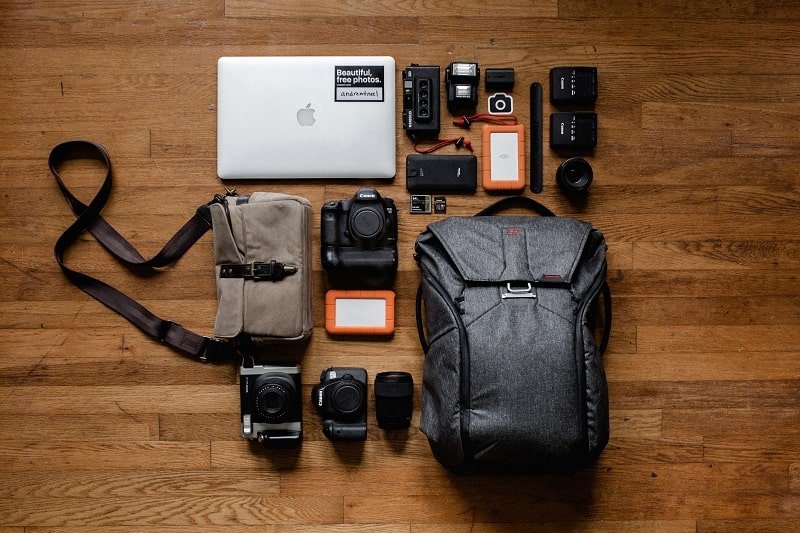
Gear selection for wedding photography requires balancing reliability, versatility, and weight — since most photographers are on their feet for eight to twelve hours straight. Our team has tested dozens of configurations over the years and settled on a core kit that covers every scenario without overloading the camera bag. The table below outlines the essentials alongside their primary use case at a wedding.
| Gear Item | Recommended Spec | Primary Wedding Use | Priority |
|---|---|---|---|
| Camera Body (primary) | Full-frame, dual card slots | All-day coverage with backup recording | Essential |
| Camera Body (backup) | Same system, any sensor size | Failsafe if primary body fails | Essential |
| Fast zoom lens | 24-70mm f/2.8 | Ceremonies, portraits, group shots | Essential |
| Telephoto zoom | 70-200mm f/2.8 | Ceremony from back of venue, candids | Essential |
| Wide prime | 35mm f/1.4 | Getting-ready, venue details, dancing | Recommended |
| Portrait prime | 85mm f/1.4 or f/1.8 | Couple portraits, bokeh-rich shots | Recommended |
| Speedlight | TTL-compatible, swivel head | Reception, bounce flash, fill light | Essential |
| Light modifier | MagMod or similar magnetic system | Softening flash, adding color gels | Recommended |
| Memory cards | 128GB UHS-II (minimum 3) | Redundant storage across the day | Essential |
| Batteries | 4+ fully charged spares | All-day power without interruption | Essential |
Camera Bodies and Lenses
Dual card slots are non-negotiable for professional wedding photography because a single card failure during the ceremony means irreplaceable moments lost forever. Our team writes to both cards simultaneously — one as the primary and one as a real-time backup — and we've had two card failures over the years that would have been catastrophic without this redundancy. Full-frame sensors deliver superior low-light performance, which matters enormously in dim churches and evening receptions.
The 24-70mm f/2.8 and 70-200mm f/2.8 combination covers roughly 90% of wedding photography scenarios, and our team keeps both mounted on separate bodies to avoid lens changes during critical moments. A fast 35mm or 50mm prime rounds out the kit for low-light situations where even f/2.8 isn't fast enough, and an 85mm f/1.4 produces the creamy bokeh that couples love in close-up portraits.
Lighting and Accessories
Flash photography intimidates many beginners, but mastering bounce flash technique transforms dark reception halls into beautifully lit environments without the harsh, deer-in-headlights look of direct flash. Our team angles the speedlight toward a white ceiling or wall, letting the light scatter naturally across the scene. When ceilings are too high or too dark, a small diffuser dome paired with a slightly higher ISO produces acceptable results.
- A sturdy monopod serves double duty as a camera support during long ceremonies and an elevated flash holder for creative lighting angles
- Gaffer tape belongs in every wedding photography bag — it secures cables, marks floor positions, and fixes wardrobe malfunctions in emergencies
- A small LED panel provides continuous light for video-style detail shots of rings, invitations, and table settings
A Step-by-Step Workflow for the Wedding Day
Having a structured workflow eliminates decision fatigue and ensures nothing gets missed during the controlled chaos of a wedding day. Our team follows the same sequence at every wedding, adjusting the timeline based on the couple's schedule but never skipping steps in the process itself.
Pre-Ceremony Preparation
- Arrive 90 minutes early and walk the venue with both camera bodies, testing exposure in every room and noting light direction through windows
- Photograph detail shots first — rings, dress, shoes, invitation suite, bouquet — while the environment is calm and undisturbed
- Set up an off-camera flash in the ceremony space if permitted, testing output levels before guests arrive and positions become restricted
- Meet the wedding coordinator and confirm the timeline, asking specifically about any surprises like sparkler exits or special dances
- Check all memory cards are formatted and batteries are fully charged, then stow backup gear in an accessible but unobtrusive location
Warning: Never format memory cards at the venue until confirming all images from the previous shoot have been safely backed up to at least two separate drives.
Ceremony Through Reception
During the ceremony, our team positions the primary shooter at an angle that captures both the couple's faces and the officiant, typically offset 30 degrees from center rather than shooting straight down the aisle. The second shooter covers guest reactions from the opposite side and captures the processional from the back of the venue. This dual-angle approach ensures complete coverage without either photographer crossing into the other's frame.
The transition from ceremony to reception is where many beginners lose control of the timeline, so our team follows a strict post-ceremony sequence:
- Immediate family formals — organized by a pre-made shot list shared with the coordinator in advance
- Bridal party portraits — move quickly through group configurations, allowing no more than 15 minutes total
- Couple portraits during golden hour — the most creatively important window of the entire day, requiring pre-scouted locations within walking distance
- Reception details — table settings, cake, signage, and décor shot while the room is pristine and before guests disturb the arrangements
Common Wedding Photography Myths That Hold Beginners Back
Misinformation circulates constantly in online photography forums, and our team has seen talented beginners held back by myths that sound plausible but crumble under real-world testing. Clearing these up early saves both money and frustration.
Gear-Related Myths
"An expensive camera automatically produces better wedding photos" is the most persistent myth our team encounters, and it misses the point entirely. A photographer with a mid-range body and excellent light-reading skills consistently outperforms someone with a flagship camera shooting on full auto mode. The sensor matters far less than the person behind it, and most modern cameras — even enthusiast-level APS-C bodies — produce files that are indistinguishable from full-frame at standard print sizes.
- Myth: Prime lenses are always better than zooms for weddings. Reality: the versatility of a 24-70mm zoom during fast-moving ceremony moments outweighs the marginal sharpness advantage of a prime in almost every practical scenario
- Myth: Natural light only is the superior approach. Reality: many venues have terrible natural light, and knowing how to use flash skillfully produces better results than struggling with ISO 12800 in a dark church
- Myth: More megapixels mean better quality. Reality: sensor size, dynamic range, and high-ISO noise performance matter far more than raw pixel count for wedding work
Style and Editing Myths
The idea that every wedding photo needs heavy editing or a trendy filter is another misconception that wastes enormous amounts of post-processing time. Our team's editing workflow focuses on correcting exposure, white balance, and minor skin retouching — the images are built to look right in camera, not rescued in Lightroom afterward. Anyone interested in understanding when to break conventional rules will find that the best wedding photographers develop a consistent, timeless editing style rather than chasing trends.
Another damaging myth is that posed photography is outdated and everything should be documentary-style candid. The truth is that family formal portraits remain among the most-requested and most-treasured images from any wedding, and our team dedicates 20–30 minutes specifically to organized group shots because families genuinely value them decades later.
Insight: The most profitable wedding photographers our team has studied deliver a mix of 60% candid and 40% posed work — that balance consistently earns the highest client satisfaction ratings.
Building a Wedding Photography Portfolio Over Time
A wedding photography career doesn't launch overnight, and our team advises a deliberate portfolio-building strategy rather than the common approach of booking paid weddings before having the work to justify the price. The progression from free to premium pricing follows a predictable path when handled strategically.
Getting the First Portfolio Pieces
Styled shoots are the fastest way to build a portfolio without the pressure of a live wedding, and our team has organized over a dozen of them by partnering with wedding planners, florists, and venues who also need portfolio content. Everyone benefits from the collaboration, and the photographer controls every variable — lighting, timing, location, and wardrobe — in a way that's impossible at an actual wedding.
- Offer to photograph friends' and family members' weddings at no charge in exchange for full creative freedom and portfolio usage rights
- Second-shoot for established photographers who permit the assistant to use images in their own portfolio, which is standard practice in the industry
- Photograph engagement sessions as standalone bookings, since they simulate couple-portrait conditions with far lower stakes and shorter time commitments
Creating a Client Pipeline
Consistent social media posting drives more wedding photography inquiries than any other marketing channel, and our team posts three times per week on Instagram with a mix of final images, behind-the-scenes process shots, and short-form video content from recent weddings. Each post includes location tags for the venue, which attracts couples actively planning events at those locations.
Building relationships with wedding planners and venue coordinators generates referrals that convert at a far higher rate than cold inquiries from social media, because the recommendation carries built-in trust. Our team sends a curated gallery of venue-specific images to every coordinator after each wedding, making it easy for them to share our work with future couples and reinforcing the professional relationship.
Proven Practices That Deliver Consistent Results
After covering hundreds of weddings collectively, our team has identified the habits and systems that separate photographers who thrive from those who burn out or deliver inconsistent work. These practices aren't glamorous, but they form the operational backbone of a sustainable wedding photography business.
Backup and Delivery Workflow
Data loss is the single greatest risk in wedding photography, and a bulletproof backup system is more important than any lens or camera body in the bag. Our team follows a 3-2-1 backup strategy: three copies of every file, stored on two different types of media, with one copy kept off-site in cloud storage. The workflow begins the moment cards leave the camera and doesn't end until the final gallery is delivered and confirmed.
- Import all cards to a primary drive immediately after arriving home — never wait until the next morning when fatigue makes mistakes more likely
- Clone the primary drive to a secondary external drive before beginning any culling or editing work on the images
- Upload selects to cloud storage overnight, providing geographic redundancy against theft, fire, or hardware failure at the home office
- Retain original RAW files for a minimum of one calendar year after delivery, since clients occasionally request additional edits or prints months later
Client Communication Standards
Setting clear expectations before the wedding prevents the most common sources of client dissatisfaction, which almost always stem from miscommunication rather than photo quality. Our team sends a detailed questionnaire eight weeks before the wedding covering the timeline, must-have shot list, family groupings for formals, and any logistical constraints at the venue.
Delivery timelines are specified in the contract — our standard is six to eight weeks for a fully edited gallery — and we send a preview of 15–20 highlight images within 48 hours of the wedding to build excitement during the waiting period. This small gesture generates more social media shares and referrals than almost any other part of our process, because couples are eager to share fresh images while the event is still top-of-mind among their friends and family.
Frequently Asked Questions
What camera settings work best for a dimly lit wedding ceremony?
Our team recommends shooting in manual mode with an aperture of f/2.8, ISO between 1600 and 3200, and a shutter speed no slower than 1/125s to freeze movement. Using back-button focus and continuous autofocus mode helps track subjects in low light, and shooting in RAW provides the latitude needed to recover shadow detail without introducing excessive noise during post-processing.
How many photos should a wedding photographer deliver to the client?
The industry standard ranges from 50 to 100 edited images per hour of coverage, so an eight-hour wedding typically yields 400–800 final images. Our team leans toward the higher end of that range because couples consistently tell us they prefer more variety, and modern online galleries handle large collections easily without overwhelming the viewing experience.
Is it necessary to have a second camera body for wedding photography?
A backup camera body is essential for professional wedding work, not optional. Camera electronics fail without warning, and a wedding ceremony cannot be paused while a photographer troubleshoots equipment. Our team carries two identical bodies with both loaded and ready to shoot at all times, often with different lenses mounted for quick focal-length switching.
How long does it take to build enough skill to charge for wedding photography?
Most photographers need between 10 and 15 second-shooter experiences before they're prepared to lead a wedding independently, which typically takes one to two seasons of active work. Our team suggests tracking a checklist of scenarios — dim ceremonies, outdoor harsh light, large group formals, fast-paced receptions — and ensuring confident proficiency in each before accepting a lead-shooter booking.
Next Steps
- Book a second-shooter position with an established wedding photographer in the local area — reach out to at least three professionals this week and offer reliable, enthusiastic assistance in exchange for portfolio-building experience and mentorship.
- Assemble the minimum viable gear kit listed in the equipment table above, prioritizing a dual-card-slot body and the 24-70mm f/2.8 lens, then practice shooting in dim indoor environments with bounce flash until the results are consistent and natural-looking.
- Create a wedding-day shot list template covering every phase from getting-ready details through the last dance, and refine it after each event based on what was missed or what the couple specifically praised in the final gallery.
- Organize a styled shoot by contacting a local wedding planner or florist who also needs portfolio content, coordinating a collaborative session that simulates real wedding conditions while allowing full creative control over lighting and composition.
- Set up a 3-2-1 backup system before the next shoot — purchase a secondary external drive, sign up for a cloud storage service with sufficient capacity, and build the import-clone-upload habit into the post-shoot workflow immediately.
 |
 |
 |
 |

About Alex W.
Alex is a landscape, equine, and pet photographer based in the Lake District, UK, with years of experience shooting in one of Britain's most photographically demanding natural environments. His work has been featured in Take a View Landscape Photographer of the Year, Outdoor Photographer of the Year, and Amateur Photographer Magazine — publications that reflect a serious, competitive standard of image-making. At Click and Learn Photography, he shares the camera settings, gear choices, and compositional techniques he has developed through real-world shooting and competition-level work.
You can Get FREE Gifts. Furthermore, Free Items here. Disable Ad Blocker to receive them all.
Once done, hit anything below
|
|
|
|