Sony and Tamron have both expanded the E-mount telephoto ecosystem with lenses that target wildlife, sports, and event photographers seeking sharper reach at competitive price points. The Sony Tamron new telephoto lenses represent a significant shift in how each manufacturer approaches focal length, aperture, and optical stabilization — giving shooters in the Gear Zone more options than ever. Whether the priority is maximum aperture, minimum weight, or autofocus tracking speed, these announcements reshape the decision matrix for anyone building or upgrading a long-lens kit.
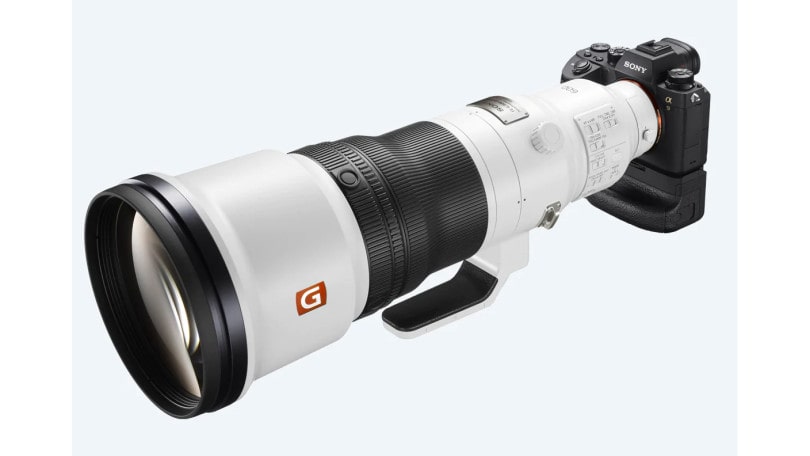
Sony's FE 50-150mm f/2 GM delivers a constant wide aperture across a versatile zoom range, while Tamron counters with a refreshed 50-400mm f/4.5-6.3 Di III VC VXD that prioritizes all-in-one reach at a fraction of the weight and cost. Both lenses leverage the latest in linear motor AF and advanced optical coatings, but they serve fundamentally different shooting philosophies. Understanding those differences — and how each lens fits into a broader kit strategy — matters more than any spec-sheet comparison.
The announcements also arrive at a moment when third-party lens quality has closed the gap with first-party optics. Tamron's VXD autofocus motors now rival Sony's XD Linear Motors in tracking consistency, and the optical performance gap between GM glass and premium third-party alternatives continues to narrow. That context makes the buying decision less about brand loyalty and more about matching focal range, aperture needs, and budget to actual shooting scenarios.
Contents
- Full Specs Breakdown: Sony FE 50-150mm f/2 vs. Tamron 50-400mm
- Real-World Performance: Early Field Reports
- How Sony Tamron New Telephoto Lenses Fit Different Workflows
- Optimizing Camera Settings for New Telephoto Glass
- Quick Pairing Upgrades for Telephoto Shooters
- When to Buy Native Sony vs. Third-Party Tamron
- Strengths and Trade-Offs Side by Side
Full Specs Breakdown: Sony FE 50-150mm f/2 vs. Tamron 50-400mm
Before diving into real-world implications, the raw specifications reveal how differently Sony and Tamron have engineered these lenses. Sony's offering prioritizes light-gathering and bokeh separation at the cost of reach, while Tamron trades maximum aperture for an 8:1 zoom ratio that eliminates lens changes in the field.
| Specification | Sony FE 50-150mm f/2 GM | Tamron 50-400mm f/4.5-6.3 Di III VC VXD |
|---|---|---|
| Mount | Sony E | Sony E |
| Focal Range | 50–150mm | 50–400mm |
| Maximum Aperture | f/2 (constant) | f/4.5–6.3 |
| Minimum Focus Distance | 0.52m (wide) / 0.68m (tele) | 0.25m (wide) / 1.5m (tele) |
| Optical Formula | 20 elements / 14 groups | 24 elements / 18 groups |
| AF Motor | 4x XD Linear | VXD (Voice-coil eXtreme Drive) |
| Image Stabilization | Optical SteadyShot (5.5 stops claimed) | VC (Vibration Compensation) |
| Weather Sealing | Full dust/moisture | Moisture-resistant construction |
| Weight | ~1,370g | ~1,155g |
| Filter Thread | 77mm | 67mm |
| Approx. Price (USD) | $3,900 | $1,300 |
Optical Design and Coatings
Sony packs three XA (extreme aspherical) elements and two ED glass elements into the 50-150mm, targeting chromatic aberration control at f/2. The Nano AR Coating II suppresses flare and ghosting, critical for backlit sports shooting. Tamron responds with its BBAR-G2 coating and pairs it with LD and XLD elements across a more complex 24-element design — necessary to maintain sharpness across a much wider zoom range. At 400mm, edge resolution predictably softens compared to a dedicated super-telephoto, but center sharpness remains serviceable through f/8.
Autofocus Motor Architecture
Sony's quad XD Linear motor arrangement delivers the fastest AF acquisition in the E-mount zoom lineup. Four independent linear motors control two focus groups simultaneously, enabling precise focus shifts that keep pace with AI-based subject recognition. Tamron's VXD motor — a single linear unit — performs admirably in good light but shows slightly higher hunting rates in low-contrast, low-light scenarios below -3 EV. For photographers who regularly push Sony lens systems to their limits in dim arenas or twilight wildlife sessions, that AF gap remains the most tangible difference between the two.
Tamron's VXD motor has improved dramatically in recent firmware cycles. Before dismissing third-party AF, update to the latest lens firmware and re-test — the gap may be smaller than expected.
Real-World Performance: Early Field Reports
Spec sheets only tell half the story. Early adopters and review outlets have started publishing controlled and field comparisons that reveal how these lenses behave outside the lab.
Wildlife and Sports Tracking
In birds-in-flight testing, the Sony 50-150mm f/2 GM demonstrates near-instantaneous subject acquisition when paired with an A9 III or A1 body. The constant f/2 aperture enables shutter speeds above 1/4000s even in overcast conditions, freezing wing detail that slower lenses simply cannot capture. However, 150mm limits reach for small passerines — a 1.4x teleconverter stretches to 210mm f/2.8, but many wildlife shooters will need a dedicated long prime alongside this zoom.
The Tamron 50-400mm excels as a single-lens safari or sideline solution. At 400mm f/6.3, light limitations become real at golden hour, but the ability to frame a wide establishing shot at 50mm and punch in to 400mm without swapping glass proves invaluable during fast-moving action. Several sports photographers report using it as a primary lens for high school and collegiate events where a lighter, more versatile rig outweighs the aperture advantage of heavier glass.
Event and Portrait Work
The Sony's f/2 constant aperture at 135-150mm produces portrait-grade background separation rivaling dedicated 135mm primes. Event photographers covering conferences and receptions gain a zoom range that replaces the classic 70-200mm f/2.8 while gaining a full stop of light. The Tamron, while not a portrait-first lens, offers workable compression at 200mm with pleasing — if slightly busier — bokeh character thanks to its 7-blade circular aperture.
How Sony Tamron New Telephoto Lenses Fit Different Workflows
Choosing between these lenses — or deciding both belong in a bag — depends on shooting discipline, body count, and tolerance for lens swaps. Neither lens is universally superior; each anchors a different kit philosophy.
Single-Body Kits
Photographers working with a single A7-series body benefit most from the Tamron 50-400mm. The extreme zoom range minimizes missed shots during events where lens changes cost time and introduce sensor dust risk. Pair it with a fast 24-70mm or wide prime, and the entire focal spectrum from 24mm to 400mm is covered with just two lenses. The Sony 50-150mm f/2, by contrast, leaves a significant reach gap that a single-body shooter cannot fill without a bag full of primes.
Dual-Body Setups
Professionals running two bodies — common in wedding, sports, and photojournalism — can mount the Sony 50-150mm f/2 on one body and a wide zoom on the other, gaining a constant f/2 workhorse that replaces both a 70-200 and a fast portrait prime. This approach maximizes image quality per shot at the expense of maximum reach. Adding a 1.4x converter bridges the gap to 210mm when needed.
A constant f/2 zoom eliminates the aperture math that slows down fast-paced event work. One less variable in the exposure triangle means faster decision-making when the moment matters.
Optimizing Camera Settings for New Telephoto Glass
New lenses often perform best with deliberate camera configuration — default body settings rarely extract maximum performance from specialized optics.
AF Configuration
For the Sony 50-150mm, set AF Subject Shift Sensitivity to "Locked On" (level 4-5) when tracking predictable subjects like runners or cyclists. Drop to level 2-3 for erratic subjects like small birds. With the Tamron 50-400mm, expand the AF area slightly wider than default at the telephoto end to compensate for the VXD motor's marginally slower re-acquisition. Both lenses respond well to Sony's Real-Time Tracking AF, but enabling the focus limiter on the Tamron — restricting to 3m+ — noticeably reduces hunting at 400mm for distant subjects.
Stabilization Stacking
Both lenses feature optical stabilization that coordinates with Sony's in-body IBIS. For static subjects at 150mm or beyond, the combined system yields roughly 7 stops of effective stabilization on bodies like the A7R V. Handholding at 1/10s at 150mm becomes viable for landscape and architectural work. At 400mm on the Tamron, realistic handheld limits sit closer to 1/30s — still impressive, but technique matters. Lock elbows, exhale, and fire in bursts to leverage the stabilization window. Photographers who regularly shoot in low light may want to revisit the case for fast primes as a complement to these zooms.
Quick Pairing Upgrades for Telephoto Shooters
A new telephoto lens often exposes weaknesses elsewhere in the kit. These quick upgrades maximize the return on a lens investment without requiring a full system overhaul.
Support Gear
The Sony 50-150mm f/2 at 1,370g benefits from a monopod during extended sideline or wildlife sessions. A gimbal head is overkill for this weight class, but an Arca-Swiss compatible lens foot — Sony includes one — paired with a quality ball head keeps the rig balanced on a tripod. The lighter Tamron pairs well with travel tripods and does not demand a dedicated lens support plate, though adding one improves balance at 400mm. Consider a protective neoprene sleeve for either lens when shooting in rain or dusty environments — weather sealing protects the internals, but abrasion damage to coatings accumulates over time.
Storage and Post-Processing
Shooting at f/2 on a 61MP A7R V generates files where even slight misfocus is visible at 100%. Upgrading to CFexpress Type A cards ensures the write buffer clears fast enough for sustained bursts. On the post-processing side, telephoto images shot wide open at f/2 benefit from lens-profile-aware sharpening in Lightroom or Capture One — Sony's profiles ship at launch, while Tamron profiles typically follow within weeks via Adobe updates.
When to Buy Native Sony vs. Third-Party Tamron
The native-versus-third-party debate has evolved beyond the simplistic "OEM is always better" framing. Modern third-party lenses from Tamron, Sigma, and others deliver optical and mechanical quality that justifies serious consideration.
Cases for Native Glass
Native Sony G Master lenses guarantee day-one compatibility with new body firmware, full AF feature access (including pre-capture burst on the A9 III), and typically faster AF motor implementations. Professional shooters who depend on absolute AF reliability in unpredictable conditions — think sideline NFL or Olympic events — generally default to native glass because even marginal AF advantages compound across thousands of frames. Resale value also favors Sony-branded lenses, which depreciate more slowly on the used market.
Cases for Third-Party
Tamron's price-to-performance ratio remains its strongest argument. The 50-400mm delivers roughly 80% of the optical performance of Sony's dedicated telephotos at roughly 33% of the cost. For enthusiasts, semi-professionals, and photographers who shoot telephoto occasionally rather than daily, the savings free up budget for accessories, travel, or a second body. Tamron's warranty and service network has also expanded significantly, reducing the historical risk of third-party ownership. Firmware updates via the Tamron Lens Utility app address compatibility issues proactively — a stark improvement from the era when third-party lenses broke with every body update.
Budget allocation matters more than brand loyalty. A Tamron telephoto paired with a better tripod and more field time will outperform a Sony GM lens sitting in a bag because the remaining budget was exhausted.
Strengths and Trade-Offs Side by Side
Every lens involves compromise. Evaluating each option's strongest and weakest attributes side by side clarifies which trade-offs align with a given photographer's priorities. For a broader look at how these fit within the full Gear Zone ecosystem, both lenses fill gaps that the current E-mount lineup left open.
Sony FE 50-150mm f/2 GM
The constant f/2 aperture across this zoom range is unprecedented in full-frame mirrorless. It collapses the need for separate 85mm, 100mm, and 135mm primes into a single barrel while maintaining GM-level resolving power. The quad XD Linear AF motor tracks with near-zero lag. On the trade-off side, the $3,900 price positions it as a professional investment rather than an enthusiast purchase. The 150mm ceiling limits wildlife and distant sports utility without teleconverters, and at 1,370g, extended handheld sessions demand good technique or support. The 77mm filter thread adds cost for CPL and ND filters, though it matches much of Sony's existing GM lineup for filter sharing.
Tamron 50-400mm f/4.5-6.3
Tamron's all-in-one zoom philosophy delivers extraordinary versatility. Covering 50mm to 400mm in a single weather-resistant barrel under 1,200g makes it the most practical telephoto option for travel, hiking, and mixed-discipline shooting. The $1,300 price point opens super-telephoto reach to a much wider audience. The compromises are predictable: variable aperture limits low-light performance, particularly beyond 200mm where f/6.3 demands higher ISOs. Bokeh character lacks the refinement of faster glass, and corner sharpness at 400mm trails dedicated super-telephoto primes. For photographers who value reach and flexibility over maximum aperture, these are acceptable trade-offs. For those who need both, budgeting for two lenses — or the Sony plus a teleconverter — remains the answer.
Frequently Asked Questions
Are the Sony Tamron new telephoto lenses compatible with APS-C E-mount bodies?
Both lenses mount natively on any Sony E-mount body, including APS-C models like the A6700 and ZV-E10 II. On APS-C, the 1.5x crop factor transforms the Sony 50-150mm into an effective 75-225mm and the Tamron 50-400mm into a 75-600mm equivalent — significantly extending reach for wildlife and sports shooters who already own a crop-sensor body.
Does the Sony 50-150mm f/2 GM support teleconverters?
Sony has confirmed compatibility with the 1.4x (SEL14TC) and 2x (SEL20TC) teleconverters. With the 1.4x, the lens becomes a 70-210mm f/2.8 — still faster than most 70-200mm f/2.8 zooms on the market. With the 2x, it reaches 100-300mm f/4. Autofocus performance remains strong with the 1.4x but shows some degradation with the 2x, particularly in low light below -1 EV.
How does the Tamron 50-400mm compare to Sony's FE 200-600mm f/5.6-6.3 G?
The Tamron trades the Sony 200-600mm's extra 200mm of reach and slightly faster maximum aperture at the telephoto end for dramatically more versatility at the wide end. The 200-600mm remains the better pure wildlife and birding lens, but the Tamron eliminates the need for a second mid-range zoom. At roughly half the weight and a lower price point, the Tamron suits generalist photographers who need one lens to cover most scenarios. Optical quality at equivalent focal lengths favors the Sony, particularly in corner sharpness and chromatic aberration control. For a broader overview of telephoto lens design principles, the fundamental trade-off between reach, aperture, and size applies to every option in this category.
The best telephoto lens is the one that gets used — reach and aperture mean nothing if the weight or cost keeps it at home.
 |
 |
 |
 |

About Alex W.
Alex is a landscape, equine, and pet photographer based in the Lake District, UK, with years of experience shooting in one of Britain's most photographically demanding natural environments. His work has been featured in Take a View Landscape Photographer of the Year, Outdoor Photographer of the Year, and Amateur Photographer Magazine — publications that reflect a serious, competitive standard of image-making. At Click and Learn Photography, he shares the camera settings, gear choices, and compositional techniques he has developed through real-world shooting and competition-level work.
You can Get FREE Gifts. Furthermore, Free Items here. Disable Ad Blocker to receive them all.
Once done, hit anything below
|
|
|
|