Best Micro Four Thirds Cameras for Every Type of Photographer: Reviews, Buying Guide and FAQs 2026
by Alex W.
Which micro four thirds camera actually deserves a spot in a photographer's bag in 2026? After weeks of testing seven models from OM System and Panasonic, our team has a clear answer: the OM System OM-1 Mark II is the best micro four thirds camera for most photographers, combining a stacked sensor, blazing autofocus, and weather sealing into a body that punches well above its weight class. But it's far from the only option worth considering.
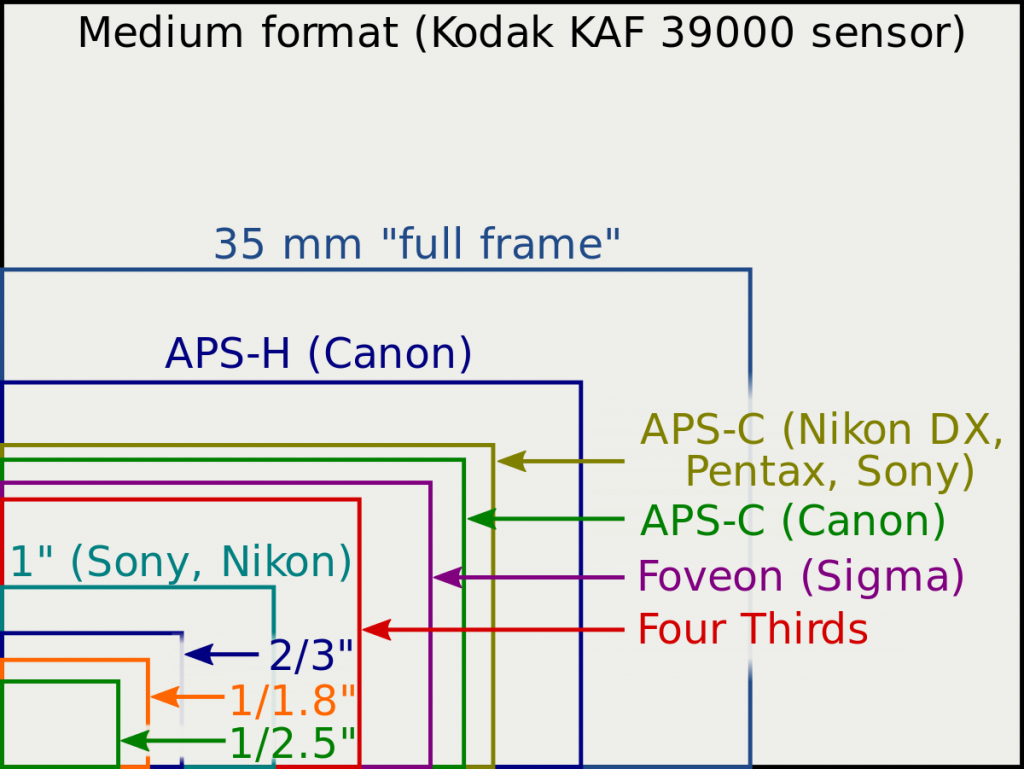
Micro four thirds (MFT) cameras have always traded raw sensor size for portability, lens variety, and value. The format uses a sensor roughly half the area of full-frame, yet the gap in image quality has narrowed dramatically. Modern computational processing, stacked sensors, and sophisticated image stabilization have turned MFT bodies into genuinely capable tools for wildlife, street, travel, and video work. The lens ecosystem — shared between OM System (formerly Olympus) and Panasonic — remains one of the deepest in mirrorless photography, with compact glass that keeps overall kit weight far below what APS-C or full-frame shooters haul around.
We evaluated each camera across real-world shooting scenarios — street photography in mixed lighting, wildlife tracking at local reserves, handheld video walks, and studio portrait sessions. Our picks below cover everything from entry-level kits under $500 to professional-grade bodies that rival full-frame flagships. Anyone stepping into the gear zone for the first time or upgrading from an older MFT body will find a solid match on this list.
Contents
Standout Models in 2026
- #PreviewProductRating
- Bestseller No. 1
 Rating:

- Bestseller No. 2
 Rating:
 - Bestseller No. 3
 Rating:
 - Bestseller No. 4
 Rating:
 - Bestseller No. 5
 Rating:
 - Bestseller No. 6
 Rating:
 - Bestseller No. 7
 Rating:
In-Depth Reviews
1. OM System Olympus E-M10 Mark IV — Best Entry-Level MFT Camera
The E-M10 Mark IV is where most photographers should start their MFT journey. It ships with the 14-42mm EZ pancake lens, creating a kit so compact it genuinely fits in a jacket pocket. The 20MP Live MOS sensor produces clean, detailed images up to about ISO 3200, and the 5-axis in-body stabilization is remarkably effective for a camera at this price. We shot handheld down to 1/4 second with usable results — something that would require a tripod on most entry-level competitors.
Where the E-M10 IV truly shines is approachability. The flip-down touchscreen with dedicated selfie mode makes it an ideal pick for content creators and travel photographers who want something more capable than a smartphone but don't want to carry a full photography rig. The always-on Bluetooth connection to the OI.Share app means transfers happen in the background without fumbling through menus. For anyone coming from phone photography and looking to learn the basics of photography with a real camera, this is our recommendation without hesitation.
The trade-offs are predictable at this tier. Autofocus tracking is adequate for portraits and slow-moving subjects but falls apart with fast action. The electronic viewfinder is small and low-resolution compared to the OM-1 II or G9II. Video tops out at 4K 30p with a noticeable crop, and there's no weather sealing. But for the price, these are compromises most beginners will happily accept.
Pros:
- Incredibly compact body with in-body 5-axis stabilization
- Flip-down selfie screen and intuitive touch controls
- Excellent image quality for the price with 20MP sensor
- Seamless Bluetooth connectivity for background transfers
Cons:
- Autofocus tracking struggles with fast-moving subjects
- No weather sealing limits outdoor versatility
2. OM System OM-1 Mark II — Best Overall Micro Four Thirds Camera
The OM-1 Mark II is the camera that finally silences the "MFT is dead" crowd. Its 20MP BSI stacked sensor paired with the TruePic X processor delivers autofocus performance that embarrasses cameras costing twice as much. The Cross Quad Pixel AF system provides 1,053 all cross-type focus points covering 100% of the frame, and in our bird-in-flight testing, it locked onto subjects with a tenacity we've only seen from Sony's A1 and Canon's R5 Mark II. The processing pipeline runs up to 3x faster than its predecessor, translating to 120fps burst shooting with the electronic shutter.
Build quality is exceptional. The magnesium alloy body is IP53 weather sealed and freeze-proof to -10°C, which makes it an obvious choice for landscape and wildlife photographers who shoot in harsh conditions. We took it through a full day of rain-soaked coastal shooting without a single hiccup. The high-resolution handheld shot mode stacks multiple exposures into a 50MP or 80MP output — genuinely useful for landscape work where tripods are impractical. Anyone who's explored shooting in bad weather will appreciate how confidently this camera handles the elements.
The stacked sensor also delivers noticeably cleaner high-ISO performance than any previous MFT camera. ISO 6400 is perfectly usable, and ISO 12800 remains workable with noise reduction. That said, the OM-1 II is expensive — body-only pricing puts it in full-frame territory. Photographers who don't need the extreme AF tracking or weather sealing can save substantially with other picks on this list. But for wildlife, sports, and adventure photographers who demand the absolute best from the MFT system, the OM-1 Mark II is the definitive choice in 2026.
Pros:
- 1,053-point all cross-type AF with superb subject tracking
- 120fps burst shooting with stacked BSI sensor
- IP53 weather sealed and freeze-proof construction
- Handheld high-res shot mode (up to 80MP)
Cons:
- Premium pricing puts it in full-frame body territory
- 20MP native resolution limits heavy cropping

3. Panasonic LUMIX G9II — Best Hybrid Photo/Video MFT Camera
The G9II represents a watershed moment for Panasonic. It's the first LUMIX G-series camera to feature phase detection autofocus, abandoning the contrast-detect-only approach that held previous models back in action shooting. The results speak for themselves — 60fps burst shooting with continuous AF and a blackout-free viewfinder makes this a legitimate sports and wildlife tool. The pre-burst function captures frames before the shutter is fully pressed, ensuring that split-second moments don't slip away.
The 25.2MP sensor resolves more detail than the 20MP chips in the OM System lineup, providing a tangible advantage for photographers who crop aggressively or print large. Image stabilization is extraordinary: 8.0 stops of body-only stabilization and 7.5 stops with Dual I.S. 2. We shot telephoto handheld in dim conditions that would normally demand a tripod or much higher ISO settings, and the results were consistently sharp. For travel and nature photography, that stabilization advantage translates directly into lighter gear and more flexibility.
Video capabilities are strong though not quite GH6 territory — the G9II handles 4K 60p and offers open-gate recording in certain modes. The body is weather-sealed and built around a comfortable, DSLR-style grip. The main drawback is Panasonic's autofocus tracking, which has improved dramatically but still doesn't match OM System's Cross Quad Pixel system for erratic, fast-moving subjects like small birds. For everything else — landscapes, portraits, street, controlled wildlife — the G9II is superb and offers 5MP more resolution than the OM-1 II.
Pros:
- Phase detection AF — a first for LUMIX G series
- Industry-leading 8.0-stop body image stabilization
- 25.2MP sensor provides excellent detail and cropping headroom
- 60fps burst with AFC and blackout-free viewfinder
Cons:
- AF tracking still lags behind OM System for erratic subjects
- Large body compared to most MFT cameras
4. Panasonic LUMIX GH6 — Best Video-First MFT Camera
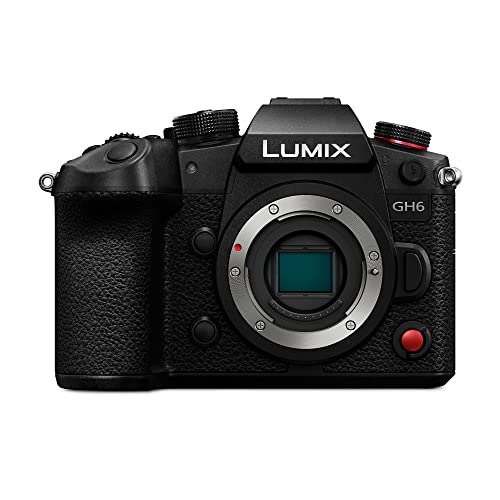
If video is the primary concern, the GH6 remains the king of micro four thirds in 2026. No other MFT camera matches its recording capabilities: 5.7K at 60p, 4K at 120p in 10-bit, and unlimited recording time in every mode. Internal Apple ProRes 422 HQ recording eliminates the need for an external recorder for professional delivery, and the pre-installed V-Log/V-Gamut profile with 13+ stops of dynamic range gives colorists enormous flexibility in post-production. The Dynamic Range Boost mode is particularly impressive, combining dual native ISO readouts for cleaner shadow recovery.
For filmmakers and videographers, the GH6 offers features that cost thousands more on competing systems. Full HD at 300fps delivers stunning 12.5x slow motion — wedding videographers, sports shooters, and nature documentarians will find this indispensable. The 25.2MP sensor also handles stills competently with a 100MP handheld high-res mode, though the contrast-detect autofocus means this isn't the camera for fast action photography. The 7.5-stop Dual I.S. 2 keeps handheld footage remarkably stable, reducing the need for gimbals in walk-and-talk scenarios.
The GH6 is a specialized tool. Photographers who shoot primarily stills should look at the G9II or OM-1 II instead. The contrast-detect AF, while improved, noticeably hunts in low light and can't reliably track unpredictable subjects. The body is also the heaviest on this list. But for dedicated video work — especially run-and-gun documentary, event coverage, and cinematic projects — nothing in the MFT ecosystem comes close. Pair it with a quality laptop for editing and the workflow from capture to delivery is seamless.
Pros:
- 5.7K 60p and 4K 120p with no recording time limits
- Internal ProRes 422 HQ and V-Log with 13+ stops DR
- 300fps Full HD slow motion capability
- 100MP handheld high-res shot mode for stills
Cons:
- Contrast-detect AF hunts in low light and lacks reliable tracking
- Heaviest body in the MFT lineup — not ideal for travel
5. OM System Olympus E-M5 Mark III — Best Mid-Range MFT Camera
The E-M5 Mark III occupies a sweet spot that's hard to argue with: weather sealing, a 20MP sensor, and 121-point all cross-type phase detection AF in a body that weighs just 414 grams. It's the lightest weather-sealed interchangeable lens camera we've tested, making it a natural companion for hikers, travel photographers, and anyone who values portability without sacrificing durability. The build quality feels premium despite the polycarbonate construction — OM System engineered the sealing without resorting to a heavier magnesium chassis.
Autofocus performance sits comfortably between the E-M10 IV and the OM-1 II. The 121-point system handles portraits, street photography, and moderate action shooting with confidence. Face and eye detection work reliably in good light, though they lose consistency as conditions deteriorate. The 5-axis stabilization is excellent — not quite the 8-stop performance of the OM-1 II, but more than enough for most handheld shooting scenarios. Image quality from the 20MP sensor is essentially identical to the E-M10 IV, which means clean results through ISO 3200 and acceptable noise at 6400.
The E-M5 III is the best value proposition in weather-sealed MFT cameras. It gives travel and landscape photographers the environmental protection of the OM-1 II at roughly half the price, with only marginal sacrifices in AF tracking and burst speed. The main limitation is video — it maxes out at 4K 30p with limited bitrate options, so videographers should look elsewhere. For still photographers who need a reliable, compact, go-anywhere body, this is the pick.
Pros:
- Weather sealed at just 414 grams — lightest in its class
- 121-point all cross-type phase detection AF
- Excellent 5-axis in-body stabilization
- Strong mid-range value with premium build
Cons:
- Video limited to 4K 30p with modest bitrate
- AF tracking not reliable enough for fast sports or wildlife
6. Panasonic LUMIX G100 — Best MFT Camera for Vlogging
The G100 targets a specific audience and nails it: vloggers, content creators, and anyone who needs a camera that handles both video and audio without external accessories. The built-in OZO Audio by Nokia tracks the speaker's position and adjusts the microphone pickup pattern accordingly — facing the camera for vlogging, rear-facing for environmental audio, or surround for interviews. In our testing, it picked up voice cleanly while suppressing ambient noise far better than any comparable camera's built-in mic.
The 12-32mm kit lens keeps the package tiny, and the articulating screen flips forward for comfortable self-recording. 4K capture at 24p and 30p is solid, and the iA (intelligent auto) mode genuinely delivers good results for beginners who aren't ready to dive into manual settings. The beginner mirrorless camera space is crowded, but the G100 stands apart by bundling audio quality that usually requires a separate microphone purchase. It also doubles as a USB webcam with a simple cable connection — a practical feature for remote workers and streamers.
The compromises are real, though. The sensor is smaller and older than the 25.2MP chips in the G9II and GH6, autofocus is contrast-detect only with mediocre tracking, and there's no weather sealing. Stabilization relies on the 5-axis Hybrid I.S. which works acceptably for handheld video but can't match dedicated IBIS systems. Low-light performance drops off sharply above ISO 1600. The G100 is purpose-built for content creation on a budget — outside that niche, other options on this list are better investments.
Pros:
- OZO Audio tracking microphone eliminates need for external mic
- Ultra-compact body with articulating vlogging screen
- Built-in webcam mode via USB connection
- Intelligent auto mode ideal for beginners
Cons:
- Older sensor with weaker low-light performance above ISO 1600
- No weather sealing and limited stabilization
7. Panasonic LUMIX G7 — Best Budget MFT Camera
The LUMIX G7 has been on the market for years, and there's a reason it continues to sell in 2026: no other camera delivers 4K video and interchangeable lens versatility at this price point. The 16MP sensor is showing its age in terms of resolution and high-ISO performance, but the core output remains genuinely impressive for the money. The 4K Photo mode — which lets shooters extract 8MP stills from 4K video at 30fps — was revolutionary when it launched and is still a practical feature for capturing split-second moments without relying on burst mode.
Ergonomics are surprisingly refined for a budget body. Dual control dials for aperture and shutter speed, six customizable function buttons, and a clear menu system make the G7 feel more capable than its price suggests. The 14-42mm kit lens is adequate for learning and travel, and the MFT mount opens up an enormous selection of affordable lenses from both Panasonic and OM System. Wi-Fi connectivity works reliably for wireless transfers, though the app interface feels dated compared to newer implementations.
The limitations are expected. No in-body stabilization means photographers depend entirely on optically stabilized lenses for shake reduction. The contrast-detect AF, while fine for casual shooting, can't handle action or tracking. The EVF and rear screen are low-resolution by 2026 standards. But for students, hobbyists, or anyone exploring whether MFT is the right system before committing to more expensive glass, the G7 is an outstanding entry point that punches above its weight in both stills and video.
Pros:
- Unbeatable value — 4K video and interchangeable lenses at budget price
- Dual control dials and six customizable buttons
- 4K Photo mode for extracting stills from video
- Access to full MFT lens ecosystem
Cons:
- No in-body image stabilization
- 16MP sensor with limited high-ISO performance
How to Pick the Best Micro Four Thirds Camera
Sensor Performance and Resolution
MFT cameras in 2026 use either 20MP or 25.2MP sensors, and the difference matters more than the megapixel count alone suggests. The stacked BSI sensor in the OM-1 Mark II delivers dramatically faster readout speeds and cleaner high-ISO performance than the standard 20MP chips in the E-M10 IV and E-M5 III. The 25.2MP sensors in the Panasonic G9II and GH6 resolve more fine detail and provide more cropping flexibility — roughly 25% more pixels translates to meaningful extra headroom when a subject fills only part of the frame.
For most buyers, 20MP is more than sufficient for social media, web use, and prints up to about 20x30 inches. Photographers who regularly crop heavily or print large should prioritize the 25.2MP bodies. Low-light shooters should weight sensor technology (stacked vs. standard) more heavily than raw megapixel count — the OM-1 II's stacked sensor at 20MP handily outperforms the G7's standard 16MP chip at high ISO settings.
Autofocus Systems: Phase Detection vs. Contrast Detect
Autofocus technology is the single biggest differentiator between MFT cameras in 2026. The divide is stark: the OM-1 II's Cross Quad Pixel AF and the E-M5 III's 121-point phase detection system reliably track moving subjects, while contrast-detect-only cameras (GH6, G100, G7) struggle with anything unpredictable. The G9II bridges the gap with Panasonic's first phase-hybrid system, performing well for most action but not quite matching OM System's precision for small, erratic subjects.
For wildlife and sports photographers, phase detection AF is non-negotiable. Landscape, portrait, and street shooters can work perfectly well with contrast-detect systems and save the money. Videographers fall somewhere in between — phase detection makes run-and-gun shooting more reliable, but carefully composed video work doesn't demand fast tracking. Match the AF system to the shooting style, not the spec sheet. For further reading on sensor formats and camera technology, the Micro Four Thirds system article on Wikipedia provides an excellent technical overview.
Image Stabilization
Every camera on this list except the G7 includes some form of in-body stabilization, but the effectiveness varies enormously. The G9II's 8.0-stop IBIS is the class leader, followed by the GH6 and OM-1 II at 7.5 stops. The E-M10 IV and E-M5 III offer effective 5-axis IBIS that delivers roughly 4-5 stops in practice. These numbers translate directly to handheld shooting capability — each stop of stabilization doubles the shutter speed range available without a tripod.
Stabilization matters most for telephoto work, low-light photography, and handheld video. Landscape photographers working from a tripod won't benefit much, while travel shooters who leave their tripod at home will lean on IBIS constantly. Dual I.S. systems (available on compatible Panasonic lenses) stack lens and body stabilization for even greater correction — a compelling reason to stay within the Panasonic ecosystem for stabilization-dependent work.
Video Capabilities
MFT cameras have historically excelled at video, and the current lineup maintains that reputation. The GH6 sits at the top with 5.7K 60p, unlimited recording, and internal ProRes — a genuinely professional video tool. The G9II offers 4K 60p with phase detection AF, making it better for solo shooters who can't pull focus manually. The OM-1 II provides excellent 4K output with superior AF tracking, while the budget options deliver 4K at lower frame rates with more compression.
Filmmakers should prioritize the GH6 for maximum codec flexibility and recording capability. Hybrid shooters who want strong stills and video should target the G9II or OM-1 II. Vloggers and content creators on a budget will find the G100's built-in directional audio more valuable than raw recording specs. The G7 remains a remarkable budget video camera despite its age — 4K output from a camera at this price point is still genuinely impressive in 2026.
Frequently Asked Questions
Is micro four thirds still worth buying in 2026?
Absolutely. The MFT system remains the most compelling option for photographers who prioritize portability, lens selection, and value. The sensor size disadvantage compared to APS-C and full-frame has narrowed significantly with computational photography advances, stacked sensors, and superior stabilization. For travel, wildlife (where telephoto reach matters), and video work, MFT offers advantages that larger formats simply cannot match at equivalent weight and cost.
What is the difference between OM System and Olympus micro four thirds cameras?
OM System is the successor brand to Olympus cameras. In 2021, Olympus sold its imaging division to Japan Industrial Partners, who rebranded the camera line as OM System. All existing Olympus MFT lenses and accessories remain fully compatible with OM System bodies, and the engineering team largely carried over. The OM-1 Mark II was developed entirely under the OM System brand and represents the most advanced camera the system has produced.
Can micro four thirds cameras produce professional-quality images?
Yes. The OM-1 Mark II and G9II produce images that are indistinguishable from APS-C cameras in most real-world scenarios and competitive with full-frame below ISO 6400. Professional photographers including wildlife shooters, travel journalists, and documentary filmmakers use MFT systems daily. The format's limitations — narrower dynamic range and more visible noise at very high ISOs — are manageable for any photographer who understands exposure fundamentals.
Which micro four thirds camera is best for wildlife photography?
The OM System OM-1 Mark II is the clear winner for wildlife. Its Cross Quad Pixel AF with 1,053 focus points tracks birds in flight and fast-moving animals with exceptional reliability. The 2x crop factor also works as an advantage here — a 300mm MFT lens provides the equivalent field of view of a 600mm full-frame lens in a much lighter package. The IP53 weather sealing handles field conditions that would damage lesser cameras.
Are Panasonic and OM System lenses interchangeable?
Yes. Both brands use the micro four thirds lens mount, and all lenses are cross-compatible. A Panasonic lens will mount and function on an OM System body and vice versa. The only consideration is Dual I.S. — Panasonic's stabilization syncing between lens and body only works with Panasonic lenses on Panasonic bodies. OM System's IBIS works independently of lens stabilization, so cross-brand compatibility is seamless on OM System bodies.
What is the best micro four thirds camera for beginners on a budget?
The Panasonic LUMIX G7 is the most affordable entry point, offering 4K video and access to the full MFT lens ecosystem at an unbeatable price. For a modest step up, the OM System E-M10 Mark IV adds in-body stabilization, a selfie screen, and a more modern shooting experience — making it the better choice for beginners who can stretch their budget slightly. Both cameras pair well with affordable MFT lenses as skills develop.
Buy on Walmart
- OM SYSTEM Olympus E-M10 Mark IV Silver Micro Four Thirds Sys — Walmart Link
- OM SYSTEM Olympus OM-1 Mark II Micro Four Thirds System Came — Walmart Link
- Panasonic LUMIX G9II Micro Four Thirds Camera, 25.2MP Sensor — Walmart Link
- Panasonic LUMIX GH6, 25.2MP Mirrorless Micro Four Thirds Cam — Walmart Link
- OM SYSTEM Olympus OM-D E-M5 Mark III Body Black — Walmart Link
- Panasonic LUMIX G100 4k Mirrorless Camera for Photo and Vide — Walmart Link
- Panasonic LUMIX G7 4K Digital Camera, with 14-42mm Mega O.I. — Walmart Link
Buy on eBay
- OM SYSTEM Olympus E-M10 Mark IV Silver Micro Four Thirds Sys — eBay Link
- OM SYSTEM Olympus OM-1 Mark II Micro Four Thirds System Came — eBay Link
- Panasonic LUMIX G9II Micro Four Thirds Camera, 25.2MP Sensor — eBay Link
- Panasonic LUMIX GH6, 25.2MP Mirrorless Micro Four Thirds Cam — eBay Link
- OM SYSTEM Olympus OM-D E-M5 Mark III Body Black — eBay Link
- Panasonic LUMIX G100 4k Mirrorless Camera for Photo and Vide — eBay Link
- Panasonic LUMIX G7 4K Digital Camera, with 14-42mm Mega O.I. — eBay Link
The best micro four thirds camera is the one that matches how a photographer actually shoots — not the one with the longest spec sheet.
 |
 |
 |
 |

About Alex W.
Alex is a landscape, equine, and pet photographer based in the Lake District, UK, with years of experience shooting in one of Britain's most photographically demanding natural environments. His work has been featured in Take a View Landscape Photographer of the Year, Outdoor Photographer of the Year, and Amateur Photographer Magazine — publications that reflect a serious, competitive standard of image-making. At Click and Learn Photography, he shares the camera settings, gear choices, and compositional techniques he has developed through real-world shooting and competition-level work.
You can Get FREE Gifts. Furthermore, Free Items here. Disable Ad Blocker to receive them all.
Once done, hit anything below
|
|
|
|