How to Photograph Fireworks – Tips for Shooting the Celebrations
by Alex W.
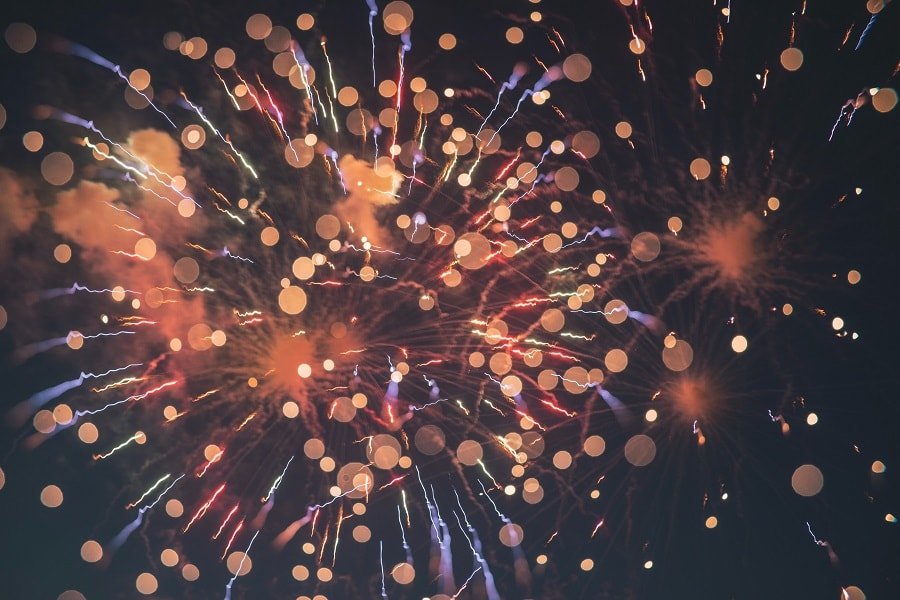
Over 16,000 fireworks displays light up skies across the United States each summer alone, and yet the vast majority of photos taken at these events end up as blurry, overexposed disappointments. Learning how to photograph fireworks is one of the most rewarding skills in our ultimate guides collection, because the techniques involved — long exposures, manual focus, precise timing — translate directly into stronger photography across every genre. Our team has spent years refining an approach that consistently delivers sharp, vibrant fireworks images, and we're laying out the entire process below.
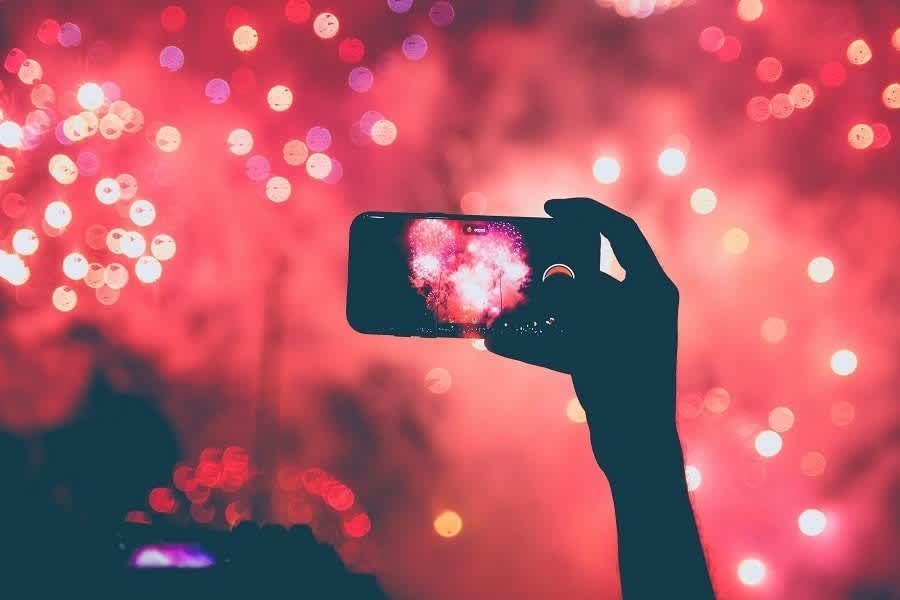
The challenge with fireworks photography sits at the intersection of night photography fundamentals and split-second creative decisions. Unlike studio work, there are no second takes — each burst is unique, and the entire show might last only 15 to 25 minutes. That constraint is exactly what makes the results so satisfying when everything clicks.
This guide covers the gear investment required at every budget level, the camera settings and composition techniques our team relies on, the mistakes that sabotage most attempts, and the progression from basic captures to advanced multi-exposure work. Whether someone owns a flagship mirrorless body or an entry-level DSLR, these principles apply equally.
Contents
Gear Essentials and What to Spend
Must-Have Equipment
Fireworks photography doesn't require top-tier gear, but a few items are genuinely non-negotiable. Here's what our team considers essential:
- A camera with manual mode — any interchangeable-lens camera works. Even older beginner DSLRs perform admirably since high ISO isn't needed.
- A sturdy tripod — this is the single most important accessory. Exposures of 2–10 seconds demand zero camera movement. Our Vanguard Veo 2 review covers a solid mid-range option.
- A remote shutter release or cable release — pressing the shutter button by hand introduces vibration. A basic wired release costs under $10 and eliminates the problem entirely.
- A wide-angle to mid-range lens — focal lengths between 18mm and 70mm cover most scenarios. Fast apertures are unnecessary since we're shooting at f/8–f/16.
Nice-to-Have Additions
Beyond the basics, a few extras can elevate results significantly:
| Item | Approx. Cost | Impact on Results |
|---|---|---|
| Wired remote release | $8–$15 | Eliminates shutter vibration — essential tier |
| Travel tripod (carbon fiber) | $120–$250 | Lighter carry, same stability |
| Budget telephoto lens | $100–$300 | Isolates individual bursts for abstract shots |
| Headlamp (red mode) | $10–$20 | Adjusts settings without ruining night vision |
| Lens cloth / rocket blower | $5–$10 | Clears condensation and smoke residue mid-show |
| Black card (thick cardboard) | $0–$2 | Enables multi-burst exposures on a single frame |
The total cost of entry for someone who already owns a camera with manual mode sits between $20 and $50 — just a remote release and a basic tripod. That's one of the lowest barriers to entry for any specialty photography genre.
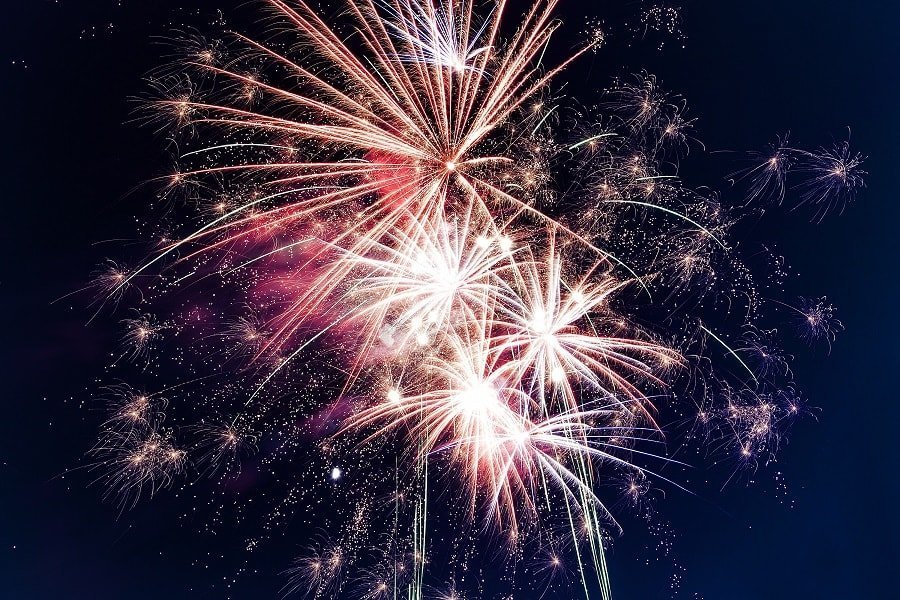
Proven Techniques for How to Photograph Fireworks
Camera Settings That Work
Our team has tested dozens of setting combinations over the years, and the following baseline delivers consistent results in virtually every fireworks scenario:
- Set the camera to Manual (M) mode. Aperture priority and shutter priority both struggle with the extreme brightness variations of fireworks.
- Choose ISO 100–200. Fireworks are bright. Low ISO keeps noise out and prevents overexposure.
- Set aperture to f/8–f/11. This range balances sharpness with the right amount of light gathering. Anyone wanting thinner light trails can stop down to f/16. Our f-stop chart is a handy reference for understanding the relationship between aperture and light.
- Use Bulb mode or shutter speeds between 2–8 seconds. Bulb mode offers the most flexibility — hold the shutter open when a burst launches, release when the trails fade. For a deeper dive into how shutter speed affects long-exposure work, our shutter speed cheat sheet breaks it all down.
- Switch to manual focus. Autofocus hunts in the dark and misses the moment. Focus on a distant light source before the show starts, then tape or lock the focus ring.
- Turn off image stabilization. On a tripod, IS/VR can actually introduce micro-vibrations.
- Shoot in RAW. White balance shifts dramatically between different pyrotechnic chemicals, and RAW files allow full correction in post.
Pro tip: Arrive at least 45 minutes early and pre-focus on a building or light at roughly the same distance as the launch site. Once locked, switch the lens to manual focus so it never hunts during the show.
Composition and Timing
Settings only get someone halfway there. Composition separates forgettable snapshots from images worth printing.
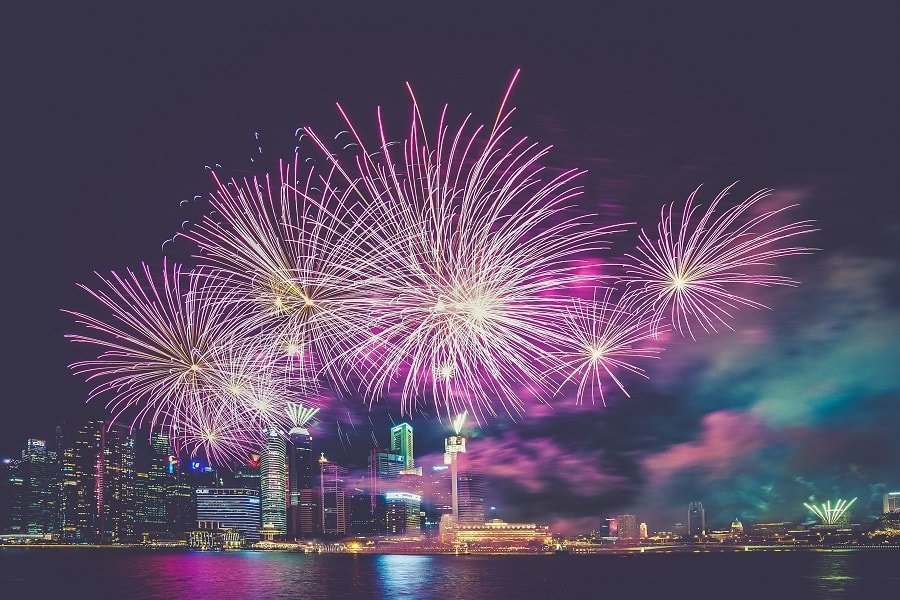
- Include foreground context. A skyline, bridge, body of water, or crowd gives the image scale and a sense of place. Fireworks against a pure black sky feel disconnected.
- Shoot wider than expected at first. The exact burst height and spread are unpredictable for the first few minutes. Start at 24–35mm and tighten framing once the pattern is clear.
- Use the rule of thirds. Place the horizon or launch point on the lower third, letting the bursts fill the upper two-thirds.
- Watch for wind direction. Smoke drifts and accumulates. Position upwind of the launch site whenever possible, or the later shots will look hazy.
- Time the shutter to the launch. Open the shutter as the rocket rises — capturing the ascending trail makes the burst look anchored rather than floating.
The techniques for including environmental context in fireworks shots share a lot of DNA with landscape photography settings, particularly the emphasis on deep depth of field and careful foreground selection.

Mistakes That Ruin Fireworks Photos
Exposure and Focus Errors
Our team sees the same handful of errors repeated by photographers at every skill level. Eliminating even two or three of these dramatically improves the hit rate.
- Leaving autofocus on. The camera locks onto smoke, nearby spectators, or nothing at all. Manual focus set before the show is the only reliable approach.
- Using too high an ISO. ISO 800 or above leads to blown highlights and ugly noise in the dark sky. Fireworks provide their own light — ISO 100 is almost always sufficient.
- Exposing too long. Anything beyond 10 seconds on a single burst creates overexposed, washed-out trails. Shorter exposures (2–6 seconds) preserve color saturation.
- Ignoring white balance. Auto white balance shifts between frames, making a consistent series impossible. Setting a fixed white balance (Daylight or around 5500K) keeps colors uniform across the entire shoot.
- Chimping after every shot. Staring at the LCD between bursts means missing the best moments. Review a few shots early to confirm settings, then keep eyes on the sky.
Warning: Smoke buildup is the hidden killer of late-show images. If the wind is calm, move position or zoom in tighter to minimize haze in the frame.
Planning and Location Failures
Technical settings mean nothing if the location is wrong. These planning oversights are just as damaging:
- Arriving late and losing the best vantage point. Prime spots fill up 1–2 hours before large displays. Scouting the location in daylight is always worth the effort.
- Positioning downwind. A location directly downwind of the launch site guarantees smoke-filled frames by the halfway point.
- Ignoring obstructions. Trees, buildings, and tall spectators standing up at the wrong moment block the frame. A slightly elevated position — a hill, parking garage, or bridge — solves most obstruction problems.
- Forgetting spare batteries. Long exposures drain batteries significantly faster than normal shooting. In our experience, bringing two fully charged spares is the minimum for a full show.
Many of these planning principles mirror the preparation needed for lightning photography, where location scouting and patience are equally critical to success.
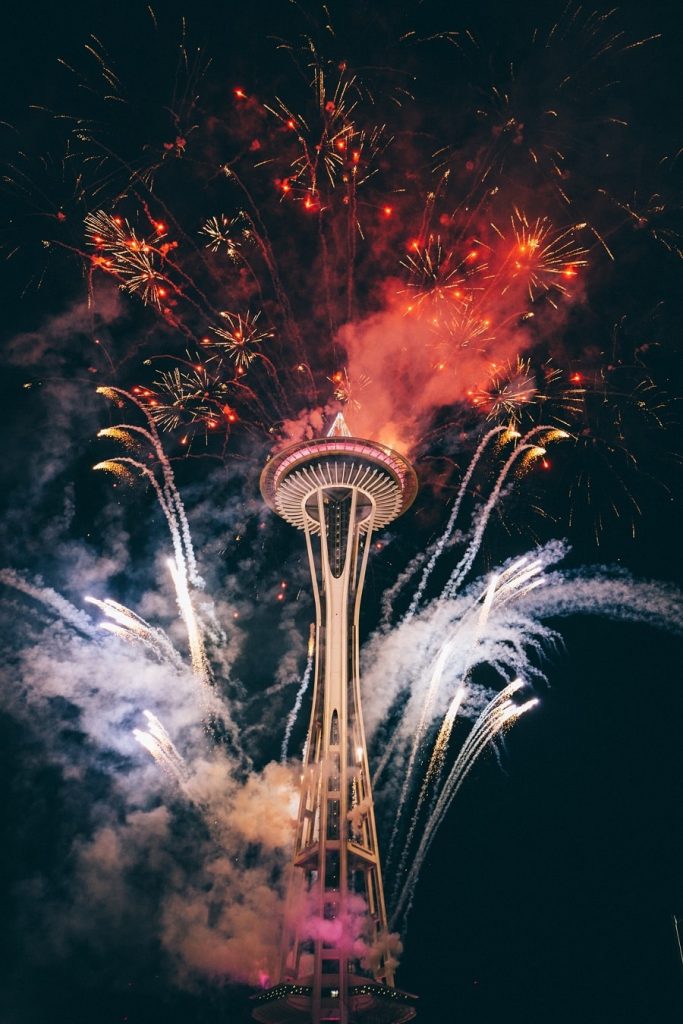
From First Attempt to Portfolio-Worthy Shots
The Beginner Approach
Anyone picking up a camera for fireworks the first time should keep the process simple. Complexity is the enemy of success when there are only 15 minutes to work with.
- Set up the tripod with the camera at a comfortable height. Frame wide — 24mm to 35mm on a crop sensor, 18mm to 24mm on full frame.
- Dial in the baseline settings: ISO 100, f/11, 4-second shutter speed.
- Pre-focus on a distant object and lock the focus ring.
- Attach the remote release and wait.
- When the first bursts go up, fire the shutter. Check the result. Adjust aperture or shutter speed by one stop if needed.
- Keep shooting. Most people find that out of 50–80 frames, 5–10 are keepers. That ratio is completely normal.
The simplicity of this approach means it works with almost any camera body — even the sub-$500 options in our reviews perform well since fireworks photography depends far more on technique than sensor quality.

Advanced Creative Techniques
Once the fundamentals are second nature, the creative possibilities open up dramatically. These are the techniques our team reaches for when chasing more distinctive images:
- Multi-burst / black card technique. Set the camera to Bulb mode with a very long exposure (30+ seconds). Hold a piece of black cardboard over the lens between bursts, removing it only when a new firework explodes. This stacks multiple bursts into a single dense, dramatic frame without overexposing the sky.
- Intentional camera movement (ICM). During a 2–4 second exposure, deliberately zoom the lens or rotate the camera. The result is abstract light patterns that look nothing like traditional fireworks photos — a great portfolio differentiator.
- Reflections. Positioning near a lake, river, or harbor doubles the visual impact. The water mirrors the bursts and adds symmetry. A polarizing filter can fine-tune how much reflection appears.
- Telephoto isolation. Switching to a 70–200mm lens at the midpoint of a show allows tight crops on individual bursts. The resulting images have an abstract, almost painterly quality. According to the Wikipedia entry on fireworks, different chemical compounds produce distinct colors — isolating a single burst at telephoto range makes those color variations far more visible.
- Composite blending in post. Shooting many frames and blending the best bursts in Photoshop using Lighten blend mode creates images that are denser and more spectacular than any single exposure. This is how many professional fireworks images are made.
Key Takeaways
- A tripod, remote release, and manual mode at ISO 100 / f/11 / 2–8 seconds form the foundation for sharp, well-exposed fireworks images regardless of camera body.
- Pre-focusing in manual mode before the show starts and locking the focus ring eliminates the most common cause of blurry fireworks photos.
- Location scouting, wind awareness, and arriving early matter as much as camera settings — no amount of post-processing fixes a smoke-filled frame or a blocked vantage point.
- Once the basics are consistent, techniques like the black card multi-burst method and telephoto isolation open the door to portfolio-level creative fireworks photography.
 |
 |
 |
 |

About Alex W.
Alex is a landscape, equine, and pet photographer based in the Lake District, UK, with years of experience shooting in one of Britain's most photographically demanding natural environments. His work has been featured in Take a View Landscape Photographer of the Year, Outdoor Photographer of the Year, and Amateur Photographer Magazine — publications that reflect a serious, competitive standard of image-making. At Click and Learn Photography, he shares the camera settings, gear choices, and compositional techniques he has developed through real-world shooting and competition-level work.
You can Get FREE Gifts. Furthermore, Free Items here. Disable Ad Blocker to receive them all.
Once done, hit anything below
|
|
|
|